Quick Picks
Short on time? Here are our top recommendations:
- Mammotion LUBA Mini AWD 1500 (~$1,100) — Best overall, all-wheel drive for slopes
- ECOVACS Goat O1000 LiDAR PRO (~$1,000) — Best navigation with LiDAR and edge cutting
- Segway Navimow i110N (~$1,000) — Best RTK accuracy for complex yards
- Husqvarna Automower 115H 4G (~$1,100) — Most trusted brand, proven reliability
- LawnMaster OcuMow (~$400) — Best budget pick for small yards
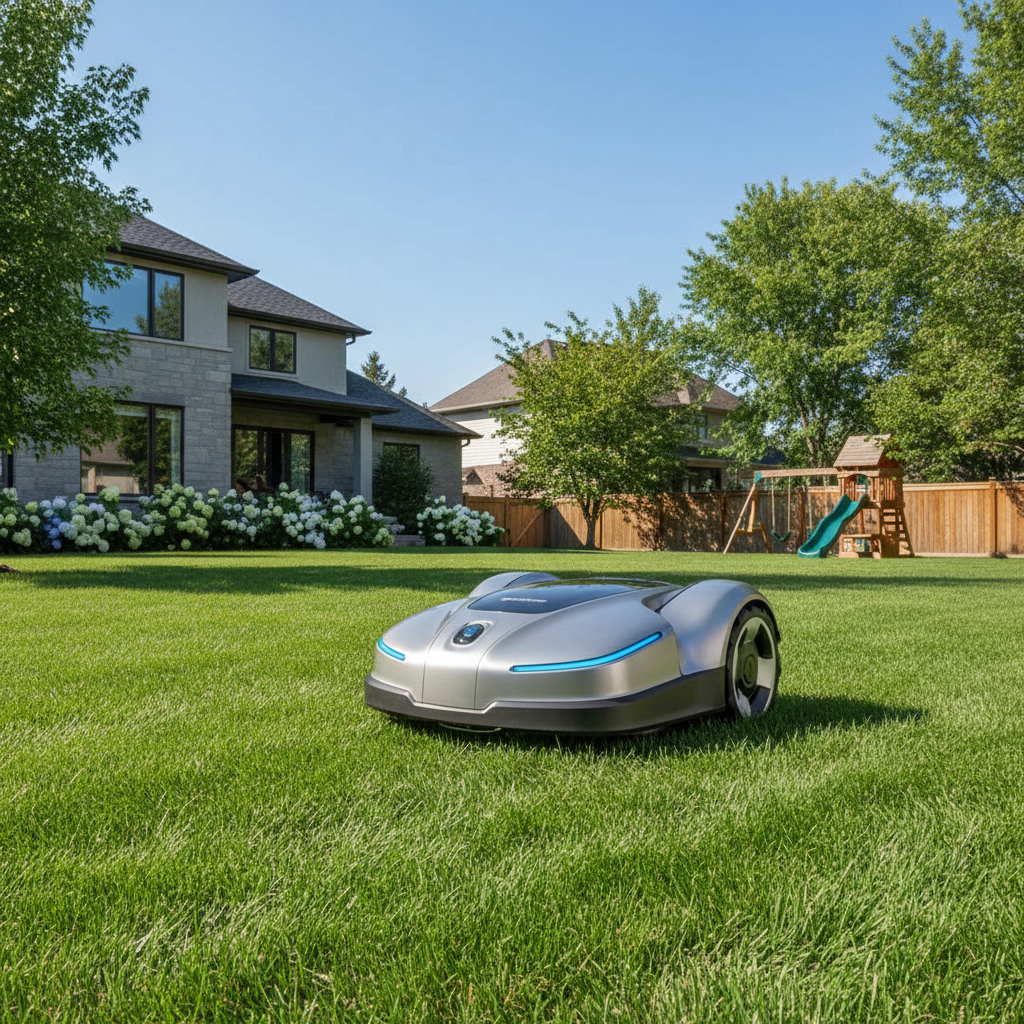
Robot lawn mowers used to be glorified Roombas that bumped into trees and got stuck in flower beds. Not anymore. The 2026 models use GPS, RTK positioning, LiDAR, and AI-powered cameras to map your yard, navigate obstacles, and cut in efficient patterns — all without buried boundary wires. You set it up with an app, draw your lawn boundaries on a satellite map, and let it run on a schedule while you spend your weekends doing something you actually enjoy.
The technology has reached a tipping point where these machines genuinely work. They handle slopes, dodge garden furniture, return to their charging dock when the battery runs low, and pick up where they left off. Most models connect to your phone for scheduling, progress tracking, and alerts. Some integrate with Alexa or Google Home so you can start a mow with a voice command.
If you’re already investing in outdoor smart home tech like cameras and sprinklers, a robot mower is the logical next addition. We researched the top models on Amazon and picked five that cover different yard sizes, budgets, and feature sets. Here’s what’s worth your money in 2026.
Our Top Picks Reviewed
Mammotion LUBA Mini AWD 1500 — Best Overall
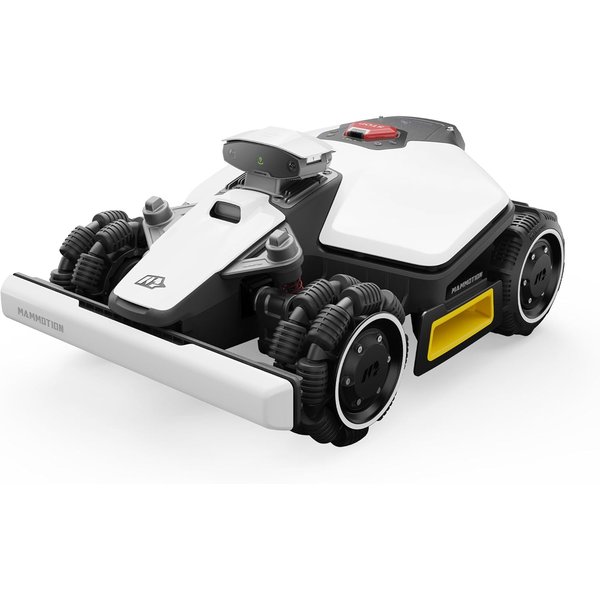
The Mammotion LUBA Mini earns the top spot because it combines the features that matter most: all-wheel drive, wire-free setup, and smart navigation — all in a package that handles up to 0.37 acres (about 16,000 sq ft). That covers most suburban lawns with room to spare.
The AWD system is the standout feature. While most robot mowers are two-wheel drive and struggle on slopes, the LUBA Mini handles inclines up to 80% grade. If your yard has hills, slopes, or uneven terrain, this is the one that won’t get stuck halfway up and send you an SOS notification.
Setup is entirely wire-free. Mammotion uses a combination of 4G connectivity and AI vision positioning instead of RTK base stations or buried wires. You download the app, walk the perimeter of your lawn with your phone, and the mower builds its map. You can set no-go zones for garden beds, define multiple mowing areas, and adjust the cutting height from 0.8” to 2.6” depending on the season.
The mower runs quietly enough that you could run it while neighbors are having a conversation over the fence. It returns to its charging station automatically when the battery gets low and resumes from where it stopped. The Mammotion app gives you real-time status, mowing history, and scheduling controls.
Key Features:
- All-wheel drive for slopes up to 80% grade
- Wire-free setup with 4G + AI vision positioning
- Covers up to 0.37 acres (16,000 sq ft)
- Adjustable cutting height: 0.8” to 2.6”
- Auto-recharge and resume
- Multi-zone management with no-go areas
Pros:
- AWD handles slopes and uneven terrain that stop other mowers
- Completely wire-free — no RTK base station or boundary wire
- Quiet operation won’t bother you or neighbors
- Clean, efficient mowing patterns (not random bouncing)
- Solid app with scheduling and real-time tracking
Cons:
- Premium price point (~$1,100)
- 0.37 acre coverage may not be enough for larger properties
- 4G connectivity requires cellular service in your area
- Relatively new brand compared to Husqvarna
ECOVACS Goat O1000 LiDAR PRO — Best Navigation
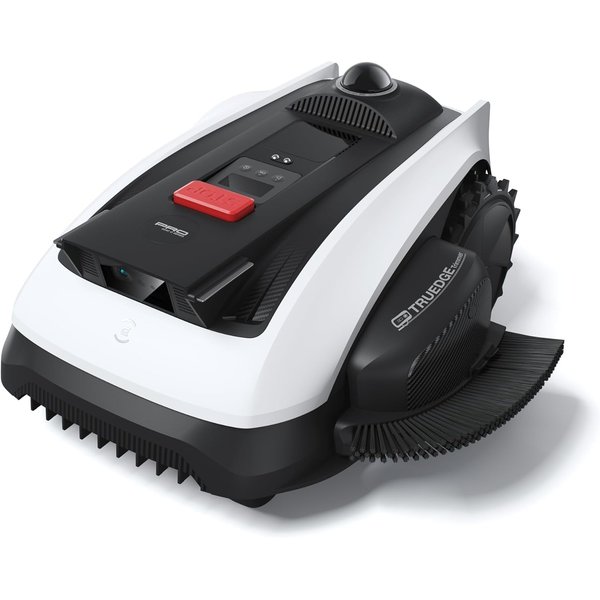
ECOVACS built its reputation on robot vacuums, and they’ve brought that same navigation expertise to lawn care. The Goat O1000 LiDAR PRO uses a 360-degree LiDAR sensor combined with AIVI 3D obstacle avoidance — the same kind of technology that makes self-driving cars work. It doesn’t just follow a map; it actively scans its environment and routes around obstacles in real time.
The result is impressively precise mowing. The Goat O1000 cuts in straight, parallel lines and gets remarkably close to edges — ECOVACS calls it “zero-edge cutting,” and while it’s not literally zero, the untrimmed strip is narrower than what most competitors leave behind. If you hate having to follow up with a string trimmer, this is the mower that minimizes that chore.
Setup is wire-free with LiDAR mapping. The mower drives around your lawn’s perimeter, builds a 3D map, and you’re ready to go. It handles up to 1/4 acre and slopes up to 45%. The TruEdge trimmer attachment (included with the PRO model) extends the cutting disc closer to boundaries and obstacles.
The ECOVACS app is polished and well-designed — not surprising given how long they’ve been building smart home apps. You get detailed mowing maps, scheduling, zone management, and integration with both Alexa and Google Home.
Key Features:
- 360-degree LiDAR + AIVI 3D obstacle avoidance
- Zero-edge cutting with TruEdge trimmer
- Wire-free setup with automatic mapping
- Covers up to 1/4 acre (10,890 sq ft)
- 45% slope capability
- Alexa and Google Home compatible
Pros:
- Best-in-class obstacle detection and avoidance
- Edge cutting is noticeably better than competitors
- Polished, reliable app from a proven smart home brand
- LiDAR mapping is fast and accurate
- Voice assistant integration works well
Cons:
- 1/4 acre coverage is on the smaller side
- 45% slope limit — not as capable on hills as the Mammotion
- LiDAR dome on top adds height (won’t fit under low obstacles)
- Premium pricing for the PRO model
Segway Navimow i110N — Best RTK Accuracy
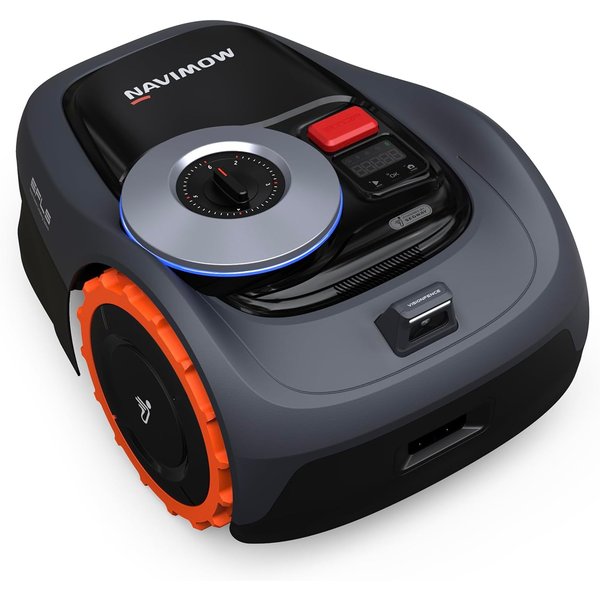
Segway — yes, the same company that makes the scooters — has quietly become one of the most respected names in robot mowing. The Navimow i110N uses RTK (Real-Time Kinematic) GPS combined with vision-based navigation to achieve centimeter-level positioning accuracy. It knows exactly where it is on your lawn at all times, which means clean parallel mowing lines and zero overlap waste.
RTK works by using a fixed base station (included) that corrects the GPS signal in real time, giving the mower positioning accuracy within about 2 centimeters. This is the same technology surveyors use. The advantage over LiDAR-only systems is that RTK works perfectly in wide-open areas with no landmarks — exactly the kind of space that LiDAR can struggle with.
The i110N also adds AI vision for obstacle avoidance, so it handles both the big-picture navigation (RTK) and the close-range stuff (camera) effectively. Coverage is up to 1/4 acre, and the mower operates at just 58 dB — about the volume of a normal conversation.
The virtual boundary system means no wires to bury. You define your lawn’s edges in the Segway app, set schedules, and manage multiple zones. The app also provides mowing reports so you can see coverage and track performance over time.
Key Features:
- RTK + Vision dual navigation for centimeter-level accuracy
- Wire-free with virtual boundary mapping
- 58 dB operating noise (whisper quiet)
- Covers up to 1/4 acre (10,890 sq ft)
- Multi-zone management via app
- Includes RTK base station
Pros:
- RTK positioning is the most accurate navigation method available
- Extremely quiet at 58 dB — run it any time without complaints
- Clean, stripe-pattern mowing lines look professionally done
- App is intuitive with good mowing reports
- Trusted Segway engineering and support
Cons:
- RTK base station needs a clear sky view (mount on a post or fence)
- 1/4 acre maximum coverage
- RTK signal can degrade under heavy tree canopy
- Base station installation adds an extra setup step vs. LiDAR-only models
Husqvarna Automower 115H 4G — Most Trusted Brand
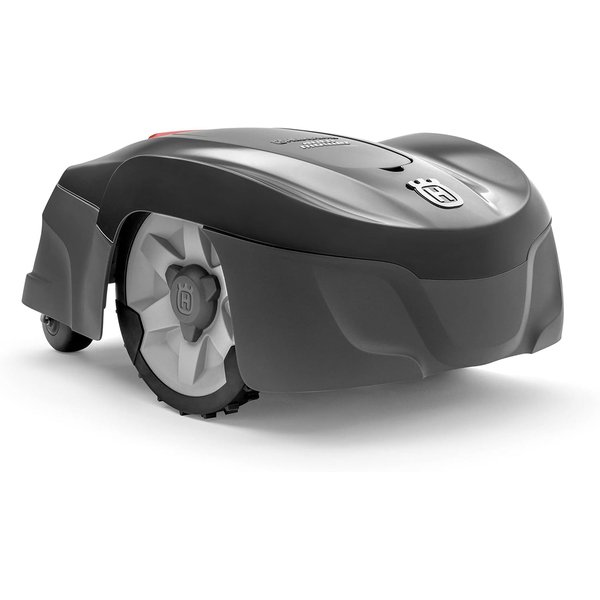
Husqvarna has been making robot mowers longer than anyone else — over 25 years. While newer brands chase flashy features, Husqvarna focuses on the fundamentals: reliable cutting, weather resistance, and long-term durability. The Automower 115H 4G is their entry-level model, and it’s the safest choice if you want something that will just work, season after season.
The 115H uses Husqvarna’s patented guidance system for navigation. It handles up to 0.4 acres and operates in a random mowing pattern rather than straight lines. This might seem less efficient than parallel-line mowing, but Husqvarna’s approach has a benefit: the randomized pattern means no visible tire tracks or wear lines in your lawn. Over time, the grass looks uniformly healthy because no single path gets repeated.
The 4G model connects to Husqvarna’s cloud platform via cellular for remote monitoring and control. You can check status, adjust schedules, and receive alerts from anywhere. It also has built-in GPS tracking for theft protection — if someone picks up your $1,100 mower, you’ll know where it went.
Build quality is noticeably premium. The chassis is designed for Nordic weather, which means it handles rain, morning dew, and temperature swings without issue. The blades are razor-style rather than disc-style, which Husqvarna claims gives a cleaner cut that’s healthier for the grass.
Key Features:
- 25+ years of robot mower engineering heritage
- Covers up to 0.4 acres (17,400 sq ft)
- 4G connectivity for remote monitoring and control
- GPS tracking for theft protection
- All-weather operation (rain or shine)
- Self-installation with guided setup
Pros:
- Most proven and reliable brand in the category
- Built to last through years of outdoor use
- Randomized mowing pattern avoids lawn wear lines
- GPS theft tracking gives peace of mind
- Handles rain and wet grass without issues
- Largest coverage area in this roundup (0.4 acres)
Cons:
- Uses boundary wire (not wire-free like the others)
- Random mowing pattern looks less precise than parallel lines
- Higher price for a boundary-wire model
- Navigation technology is older-gen compared to LiDAR/RTK competitors
- No voice assistant integration
LawnMaster OcuMow — Best Budget Option
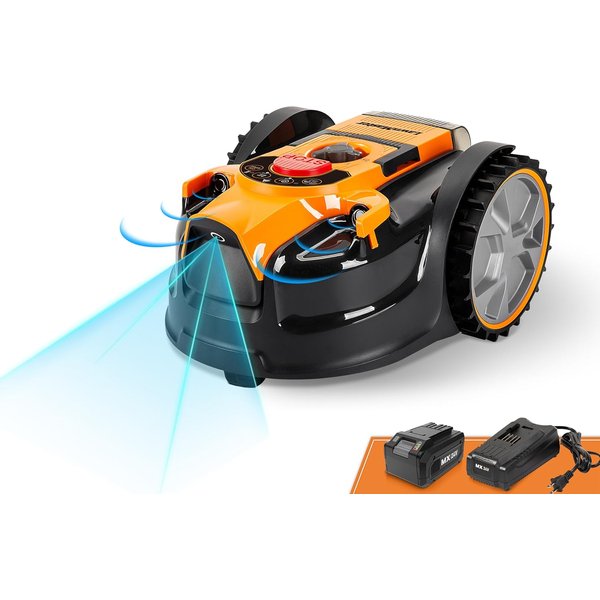
If you’ve been eyeing robot mowers but can’t justify spending over a grand, the LawnMaster OcuMow is the entry point that actually delivers. At roughly $400, it’s less than half the price of the other models in this roundup — and it still covers the essentials: wire-free operation, app control, and obstacle avoidance.
The OcuMow uses optical navigation (camera-based) instead of RTK or LiDAR. It’s less precise than those systems, but it works well enough for straightforward small-to-medium lawns (1,000 to 2,000 sq ft). The camera detects obstacles, the mower builds a rough map of your yard, and it covers the area in an efficient pattern. No wires, no base station.
Obstacle avoidance is functional — it spots garden furniture, toys, and other objects and routes around them. It won’t match the reaction speed of LiDAR-equipped models, but for a $400 mower, the detection is solid. The low-noise motor means you can run it without annoying anyone.
The app provides scheduling, zone management, and a “no-go” function for areas you want to protect. Build quality is reasonable for the price — it’s clearly not Husqvarna-level, but it’s not flimsy either. If you have a smaller yard and want to test whether robot mowing fits your lifestyle before committing to a premium model, this is the smart way to start.
Key Features:
- Wire-free with optical (camera) navigation
- Covers 1,000-2,000 sq ft
- Obstacle avoidance via camera detection
- App control with scheduling and no-go zones
- Low noise operation
- Budget-friendly price point (~$400)
Pros:
- Fraction of the price of premium models
- Wire-free — no boundary wire installation
- Good enough performance for small, flat lawns
- Simple app setup
- Low risk entry point into robot mowing
Cons:
- Limited to small yards (2,000 sq ft max)
- Optical navigation is less precise than RTK or LiDAR
- Won’t handle significant slopes
- Build quality isn’t as robust as premium options
- Fewer smart home integrations
- No voice assistant support
Comparison Table
| Feature | Mammotion LUBA Mini | ECOVACS Goat O1000 | Segway Navimow i110N | Husqvarna 115H 4G | LawnMaster OcuMow |
|---|---|---|---|---|---|
| Price | ~$1,100 | ~$1,000 | ~$1,000 | ~$1,100 | ~$400 |
| Coverage | 0.37 acre | 0.25 acre | 0.25 acre | 0.4 acre | 2,000 sq ft |
| Navigation | 4G + AI Vision | LiDAR + AIVI 3D | RTK + Vision | Guided (random) | Optical (camera) |
| Wire-Free | Yes | Yes | Yes | No (boundary wire) | Yes |
| Max Slope | 80% | 45% | N/A | N/A | Flat only |
| Noise | Quiet | Quiet | 58 dB | 56 dB | Low |
| Smart Home | App only | Alexa, Google | App only | 4G cloud app | App only |
| Edge Cutting | Standard | Zero-edge (TruEdge) | Standard | Standard | Standard |
| Best For | Hilly yards | Precise navigation | Complex layouts | Long-term reliability | Budget/small yards |
How to Choose the Right Robot Lawn Mower
Yard Size Matters Most
This is the first filter. Every robot mower has a maximum coverage area, and you want headroom — a mower rated for 10,000 sq ft will strain to keep up with a 9,500 sq ft lawn because it has to account for overlap, charging time, and missed spots.
- Under 2,000 sq ft: LawnMaster OcuMow handles this at a fraction of the cost
- Up to 1/4 acre (10,890 sq ft): ECOVACS Goat O1000 or Segway Navimow i110N
- Up to 0.4 acre (17,400 sq ft): Husqvarna Automower 115H 4G or Mammotion LUBA Mini
If your yard is larger than half an acre, you’ll need to look at the higher-tier models from these brands (Mammotion LUBA 2, Husqvarna 430X, etc.).
Slopes and Terrain
Flat lawn? Any mower on this list works. But if you have hills:
- Steep slopes (over 45%): Mammotion LUBA Mini is the only realistic choice with its AWD system and 80% grade rating
- Moderate slopes (under 45%): ECOVACS Goat O1000 handles these well
- Mostly flat with minor grades: Any model works fine
Wire-Free vs. Boundary Wire
Four of our five picks are completely wire-free — you set boundaries through the app and never dig a trench. The Husqvarna 115H is the exception; it uses a traditional boundary wire that you bury around your lawn’s perimeter. The wire approach is proven and reliable, but installation takes a few hours and the wire can break if you aerate or edge aggressively.
If you want the simplest installation, go wire-free. If you want the most battle-tested approach from the most experienced brand, Husqvarna’s wire system has a 25-year track record.
Smart Home Integration
Most robot mowers are app-controlled but don’t integrate deeply with broader smart home platforms. The ECOVACS Goat O1000 is the notable exception — it works with both Alexa and Google Home, so you can start a mow with a voice command or build automations. If smart home integration matters, ECOVACS is the pick. If you’re starting a smart home from scratch, our beginner’s guide covers the foundations.
FAQ
How long does a robot lawn mower take to mow a yard?
It depends on yard size and the model. Most mowers in this roundup take 1-3 hours to complete a 1/4 acre lawn. They’re slower than a ride-on mower, but the whole point is that you’re not involved — the mower runs on a schedule (often daily) and keeps the grass consistently short with frequent, light trims rather than weekly heavy cuts.
Are robot lawn mowers safe around kids and pets?
Yes, with reasonable precautions. All models in this roundup have blade-stop sensors that halt the cutting disc if the mower is lifted or tilted. The obstacle avoidance cameras and sensors detect objects in the mowing path. That said, it’s best practice to keep young children and small pets away from the mowing area while the mower is running — the same way you would with any mower.
Do robot mowers work in the rain?
Most can. The Husqvarna Automower is explicitly designed for all-weather operation and will mow through rain without issue. The other models can technically operate in rain, but most manufacturers recommend scheduling mowing during dry conditions because wet grass clumps and doesn’t cut as cleanly. Most apps let you set rain delays.
How often do robot mower blades need replacing?
Blade life varies by model and usage, but expect to replace blades every 1-3 months during mowing season. Replacement blades are inexpensive — usually $10-20 for a full set. Some models (like Husqvarna) use small, individual razor blades on a spinning disc, while others use larger fixed blades. Both approaches work well when the blades are sharp.
Can a robot mower replace a regular mower entirely?
For most suburban yards, yes. Robot mowers keep the grass consistently trimmed through frequent, light cuts. You might still want a string trimmer for tight edges that the mower can’t reach, but you won’t need a push mower or ride-on for the main lawn. If you also want to automate your watering, check out our smart sprinkler controller guide — pairing automated mowing with automated watering is the ultimate hands-free lawn care setup.
Ready to automate more of your outdoor space? Our smart sprinkler controllers guide covers the best WiFi-connected irrigation systems, and our outdoor smart cameras roundup helps you keep an eye on everything — including your new robot mower while it works.