Quick Picks
Short on time? Here are our top recommendations:
- Roborock S8 Pro Ultra — Best overall
- iRobot Roomba j7+ ($799) — Best for obstacle avoidance
- Eufy X10 Pro Omni ($599) — Best value
This article contains affiliate links. We may earn a commission at no extra cost to you.
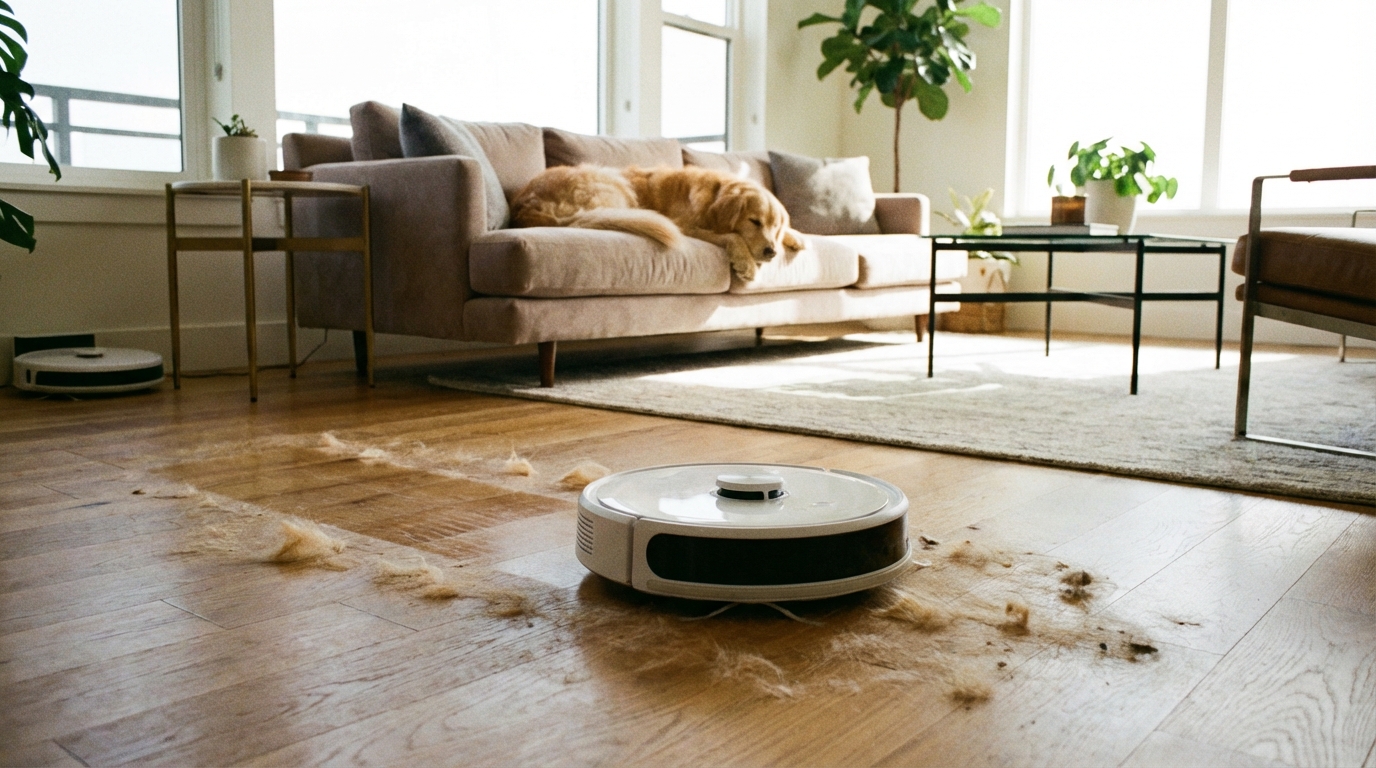
If you’re a pet owner, you already know the struggle: fur tumbleweeds rolling across your floors, embedded hair in carpets, and that never-ending battle with shedding season. Finding the best robot vacuum for pet hair can transform your cleaning routine from a daily chore into something that happens automatically while you’re at work or relaxing with your furry friend.
The right robot vacuum needs more than just suction power. It requires tangle-free brushes, smart navigation to find hidden fur clusters, and enough battery life to cover your entire home. Based on extensive research of user reviews, manufacturer specifications, and expert analysis, this guide breaks down the top robot vacuums specifically designed to handle pet hair in 2026.
What Makes a Robot Vacuum Good for Pet Hair?
Suction Power and Brush Design
Pet hair demands serious suction power, typically measured in Pascals (Pa). According to industry standards, robot vacuums for pet owners should offer at least 2,000 Pa of suction, though many top models now exceed 4,000 Pa.
The brush design matters just as much as raw power. Traditional bristle brushes tend to tangle with long pet hair, requiring frequent maintenance. The most effective designs use rubber extractors or specialized anti-tangle brushes that guide hair directly into the dustbin rather than wrapping around the roller.
Filtration Systems
Pet dander isn’t just about what you can see—it’s the microscopic allergens that affect air quality. High-efficiency particulate air (HEPA) filters capture 99.97% of particles as small as 0.3 microns, which includes most pet allergens.
Look for sealed filtration systems where air can’t escape without passing through the filter. This prevents allergens from being blown back into your home during cleaning.
Top Robot Vacuums for Pet Hair in 2026
1. Roborock S8 Pro Ultra — Best Overall
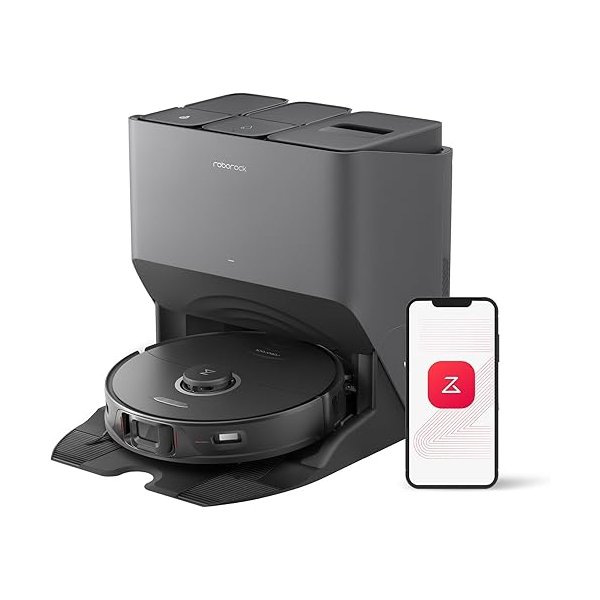
Price: Around $1,599
The Roborock S8 Pro Ultra consistently ranks at the top of user reviews for pet hair management. With 6,000 Pa of HyperForce suction and a DuoRoller brush system, this model is widely regarded as one of the most effective options for homes with multiple pets.
Key Features: – Dual rubber roller brushes that resist tangling – Self-emptying base with 2.5L dust bag capacity – ReactiveAI 2.0 obstacle avoidance (recognizes and avoids pet accidents) – VibraRise 2.0 sonic mopping system – Up to 180 minutes of runtime
Pros: – User reviews consistently praise its ability to handle long pet hair without tangling – Auto-empty dock means less frequent maintenance – Smart enough to navigate around pet bowls and toys – Excellent carpet deep-cleaning performance based on published specs
Cons: – Premium price point may not fit all budgets – Large charging dock requires significant floor space – Some users report the app setup can be complex initially
Verdict: If budget isn’t your primary concern, the S8 Pro Ultra offers the most comprehensive pet hair solution available in 2026. The combination of powerful suction, tangle-resistant brushes, and intelligent navigation makes it ideal for multi-pet households.
2. iRobot Roomba j7+ — Best for Obstacle Avoidance
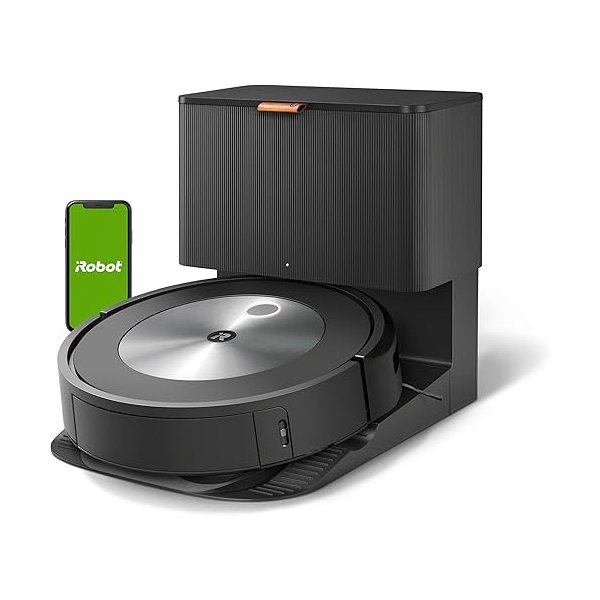
Price: Around $799
The Roomba j7+ has earned its reputation through PrecisionVision Navigation, which specifically identifies and avoids pet waste—a game-changer for homes with puppies or senior pets. iRobot even offers a Pet Owner Official Promise (P.O.O.P.) guarantee, replacing units that fail to avoid solid pet accidents.
Key Features: – PrecisionVision Navigation with pet waste detection – Self-emptying Clean Base (holds up to 60 days of debris) – 3-stage cleaning system with dual multi-surface rubber brushes – Imprint Smart Mapping for customized cleaning schedules – Works with Alexa, Google Assistant, and Siri
Pros: – According to user feedback, best-in-class obstacle recognition – Rubber brushes effectively prevent hair tangling – Pet waste avoidance provides peace of mind – Strong customer support and warranty backing
Cons: – Lower suction power (reported around 2,000 Pa) compared to competitors – No mopping functionality – More expensive than similar suction-power models
Verdict: The j7+ excels if your priority is smart navigation and avoiding accidents. While it doesn’t have the highest suction specs, the practical benefits of obstacle avoidance make it a solid choice for unpredictable pet environments.
3. Eufy X10 Pro Omni — Best Value
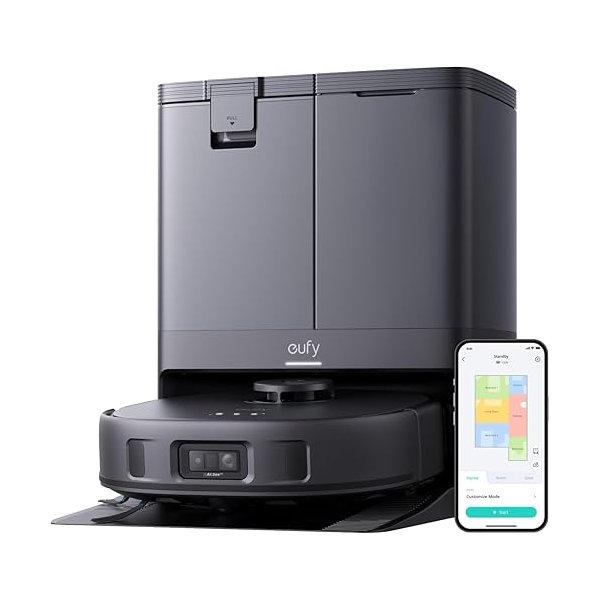
Price: Around $599
For budget-conscious pet owners, the Eufy X10 Pro Omni delivers impressive features at roughly half the price of premium models. User reviews frequently highlight its exceptional value proposition, offering 8,000 Pa suction—higher than many competitors.
Key Features: – 8,000 Pa suction power – All-in-one station with auto-empty, mop washing, and drying – Dual rotating mop pads – AI obstacle detection – 180-minute runtime
Pros: – Exceptional suction power for the price point – Complete auto-cleaning station included – User reviews praise effectiveness on both carpet and hard floors – Quiet operation compared to competitors (measured around 55 dB)
Cons: – Obstacle avoidance not as sophisticated as premium models – Smaller dustbin in the unit itself (though auto-empty compensates) – Less established brand reputation than iRobot or Roborock
Verdict: The X10 Pro Omni offers the best value for pet owners who want premium features without the premium price tag. The high suction power makes it particularly effective for homes with heavy shedding.
4. Shark AI Ultra 2-in-1 — Best for Deep Carpet Cleaning
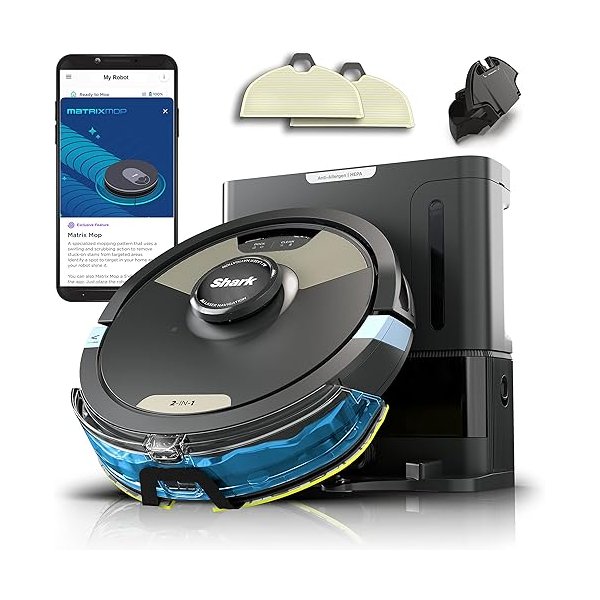
Price: Around $549
The Shark AI Ultra combines vacuuming and mopping with a focus on carpet performance. Its PowerFins brushroll technology is specifically designed to dig deep into carpet fibers where pet hair loves to hide.
Key Features: – Self-emptying base (60-day capacity) – PowerFins brushroll with active hair-wrap prevention – Matrix Clean navigation (multiple passes) – Sonic mopping technology – LIDAR navigation mapping
Pros: – According to specs, particularly effective on thick carpets – Hair-wrap prevention technology receives positive user feedback – Good app features with room-specific scheduling – More affordable than Roomba with similar features
Cons: – Slightly louder during operation – Mopping function is basic compared to dedicated systems – Navigation occasionally requires manual intervention per user reports
Verdict: If your home has primarily carpeted areas and multiple pets, the Shark AI Ultra’s carpet-focused design makes it a strong contender, especially considering its mid-range price point.
5. Dreame L10s Ultra — Best Premium Alternative
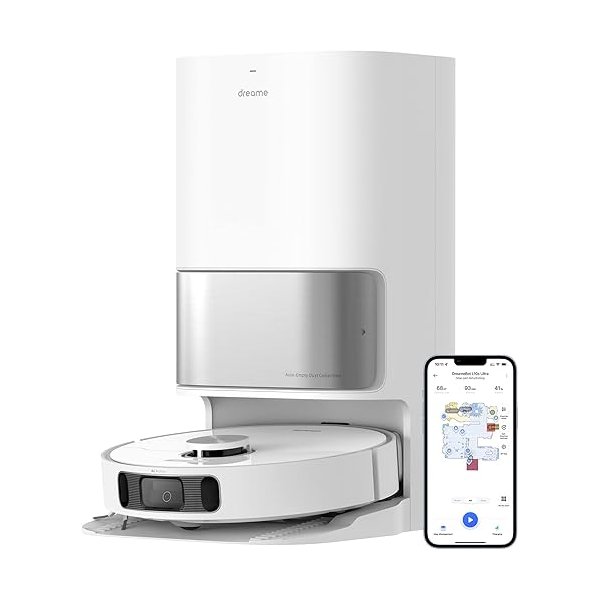
Price: Around $1,199
The Dreame L10s Ultra has gained traction in 2026 as a premium alternative to Roborock, offering similar features with some unique advantages. User reviews frequently mention its exceptional navigation efficiency and powerful cleaning performance.
Key Features: – 5,300 Pa suction – Advanced base station with mop washing, hot air drying, and auto-refill – AI Action obstacle recognition – Carpet detection with automatic mop lifting – 210-minute maximum runtime
Pros: – Comprehensive base station handles most maintenance automatically – Hot air drying prevents mop odors – Strong performance on various floor types according to user feedback – Slightly more affordable than comparable Roborock models
Cons: – Less brand recognition in North America – Customer service can be slower per some user reports – Large base station footprint
Verdict: For those wanting premium features with a slight cost savings compared to Roborock, the Dreame L10s Ultra delivers excellent pet hair management with impressive automation features.
Comparison Table: Quick Overview
| Model | Price | Suction Power | Auto-Empty | Best For |
|---|---|---|---|---|
| Roborock S8 Pro Ultra | $1,599 | 6,000 Pa | Yes | Overall best, multi-pet homes |
| iRobot Roomba j7+ | $799 | ~2,000 Pa | Yes | Obstacle avoidance, accident prevention |
| Eufy X10 Pro Omni | $599 | 8,000 Pa | Yes | Best value, budget buyers |
| Shark AI Ultra | $549 | Not specified | Yes | Carpet cleaning |
| Dreame L10s Ultra | $1,199 | 5,300 Pa | Yes | Premium alternative |
Key Features to Consider When Shopping
Battery Life and Coverage Area
Runtime directly impacts how much area your robot vacuum can clean in one session. Most modern units offer 90-210 minutes per charge, but actual performance varies based on floor type and suction settings.
Measure your home’s square footage before buying. As a general rule, you’ll want at least 100 minutes of runtime for homes over 1,500 square feet. Many models automatically return to their dock when battery runs low and resume cleaning afterward—a crucial feature for larger spaces.
Smart Home Integration
Voice control through Alexa or Google Assistant adds convenience, letting you start cleaning sessions hands-free. More advanced integrations allow you to create routines (like automatically cleaning after you leave for work) or link with other smart home devices.
According to user preferences, app quality matters significantly. Look for models with reliable apps that offer features like room-specific scheduling, no-go zones, and cleaning history. The ability to adjust suction power and cleaning patterns through the app provides greater control.
Maintenance Requirements
Even self-emptying models require some maintenance. Check how frequently you’ll need to replace filters (typically every 2-3 months), clean sensors, and empty the base station.
For pet owners specifically, consider how accessible the brushes are for cleaning. User reviews consistently emphasize that easier maintenance leads to better long-term performance, as owners are more likely to keep up with necessary cleaning tasks.
Special Considerations for Pet Owners
Multi-Pet Households
If you have multiple pets, prioritize models with larger dustbins and auto-empty stations. A single large dog or multiple cats can fill a standard dustbin after just one cleaning cycle.
Higher suction power becomes increasingly important with multiple pets. Models offering 4,000 Pa or more maintain effectiveness even when dealing with concentrated fur deposits.
Specific Pet Types
Dogs: Large breeds with thick coats (like Golden Retrievers or German Shepherds) shed heavily and require maximum suction power. Look for models with wide cleaning paths to cover more area efficiently.
Cats: Cat hair tends to be finer and embeds deeply in fabrics. Models with rubber brushes and strong carpet agitation perform better. If you have litter boxes, obstacle avoidance becomes crucial to prevent litter tracking.
Long-haired pets: Tangling is your primary concern. Dual rubber roller designs (like those in Roborock and Roomba models) dramatically reduce hair wrap compared to bristle brushes.
Noise Sensitivity
Some pets panic when the vacuum runs. According to user experiences, quieter models (under 60 dB) cause less stress. Most robot vacuums allow you to schedule cleaning when pets are outside or in another part of the house.
Some models offer “quiet” or “gentle” cleaning modes with reduced suction and noise, though these are less effective for heavy pet hair. It’s often better to schedule regular cleaning when pets aren’t around rather than compromising performance.
Real User Priorities: What Actually Matters
The Auto-Empty Feature is Worth It
Based on user feedback across multiple platforms, pet owners overwhelmingly recommend investing in auto-empty functionality. The convenience of not emptying the dustbin after every cleaning session—especially important given how quickly pet hair fills standard bins—justifies the additional cost for most users.
Auto-empty bases typically hold 30-60 days of debris, meaning you only interact with dust and hair monthly rather than daily.
Tangle Prevention is Non-Negotiable
User reviews consistently identify hair tangling as the most frustrating aspect of robot vacuum ownership. Models with rubber extractors receive significantly higher satisfaction ratings from pet owners compared to those with traditional bristle brushes.
Even ten minutes of weekly maintenance adds up to nearly nine hours annually. Tangle-free designs dramatically reduce this time investment.
Navigation Quality Affects Results
Smart navigation isn’t just about efficiency—it impacts cleaning thoroughness. According to user experiences, models with LIDAR or advanced camera navigation create more systematic cleaning patterns, ensuring no fur-covered corners get missed.
Random-pattern navigation may miss 10-15% of floor space during a typical cleaning cycle, which becomes noticeable in high-traffic pet areas.
Frequently Asked Questions
How often should a robot vacuum run in a pet-friendly home?
For homes with shedding pets, running your robot vacuum daily is ideal. Most users report that daily cleaning prevents hair accumulation and keeps allergen levels low. During heavy shedding seasons (typically spring and fall), some pet owners run their robot vacuums twice daily—once in the morning and once in the evening. Modern models with efficient batteries and auto-empty stations handle this frequency without issue.
Can robot vacuums handle wet pet accidents?
Most robot vacuums cannot handle liquid messes and may spread them or damage internal components if they encounter wet accidents. However, models like the iRobot Roomba j7+ feature pet waste detection that identifies and avoids both solid and some liquid accidents. If accidents are common in your home, prioritize models with advanced obstacle avoidance and consider keeping the robot vacuum off until you’re confident your pet is fully trained.
Do I still need a traditional vacuum if I get a robot vacuum for pet hair?
According to user experiences, most pet owners keep a traditional vacuum for deep cleaning and spot treatments, even with high-end robot vacuums. Robot vacuums excel at daily maintenance and keeping hair under control, but traditional vacuums still perform better for furniture, stairs, car interiors, and quarterly deep-cleaning sessions. Think of robot vacuums as reducing your traditional vacuuming frequency by 80-90% rather than eliminating it entirely.
How long do robot vacuums last in homes with pets?
With proper maintenance, quality robot vacuums typically last 3-5 years in pet-friendly homes. Pet hair is more demanding on components than regular dust, so longevity depends heavily on maintenance consistency. Users who clean brushes weekly, replace filters on schedule, and keep sensors clear report longer lifespans. Premium models with replaceable parts and good warranty support (like iRobot’s 1-year warranty) offer better long-term value.
Are expensive robot vacuums worth it for pet hair, or do budget models work just as well?
The performance gap between budget and premium models is significant for pet owners. While budget options under $300 can handle light pet hair, they typically lack auto-empty stations, powerful suction, and tangle-free brushes—features that user reviews identify as essential for pet owners. Mid-range models ($500-800) offer the best value proposition, providing most premium features at reasonable prices. Premium models ($1,200+) justify their cost in multi-pet households or homes with heavy shedding breeds where superior performance directly translates to cleaner living spaces.
Maintenance Tips for Longevity
Weekly Maintenance Tasks
To keep your robot vacuum performing optimally with pet hair, plan for about 5-10 minutes of weekly maintenance. Even tangle-resistant brushes benefit from quick inspections and hair removal.
Clean the dustbin filter weekly by tapping out loose debris. Most filters are washable, but ensure they’re completely dry before reinstalling. Wipe down sensors and charging contacts with a microfiber cloth to maintain navigation accuracy.
Monthly Deep Cleaning
Once monthly, perform a more thorough cleaning. Remove and wash all washable components according to manufacturer instructions. Check wheels for hair wrapped around axles, which can affect movement efficiency.
Inspect the charging dock and auto-empty station (if equipped) for dust accumulation. Clean the dock’s contact points and empty the base station bag if it’s more than 75% full, even if the indicator hasn’t triggered.
Replacement Schedule
Based on typical usage in pet homes: – Filters: Every 2-3 months (monthly for heavy shedding) – Side brushes: Every 3-6 months – Main brushes: Every 6-12 months – Auto-empty bags: Every 30-60 days
Keep spare parts on hand so you’re not caught without a functioning vacuum during peak shedding season.
Budget Considerations: What Should You Spend?
Under $400: Entry-Level Options
Entry-level robot vacuums can handle light pet hair but lack features that make pet ownership easier. You’ll manually empty the dustbin frequently (daily with pets) and may encounter tangling issues.
These work best for single-pet households, smaller living spaces under 1,000 square feet, or as supplementary cleaning tools.
$500-$800: Sweet Spot for Most Pet Owners
This range offers the