Quick Picks
Short on time? Here are our top recommendations:
- Lutron Serena Smart Shades ($300) — Best overall
- SwitchBot Blind Tilt ($69) — Best for retrofitting
Tired of manually adjusting your blinds throughout the day to block harsh sunlight or struggling to reach those high windows? Smart blinds and shades offer an elegant solution that goes beyond convenience—they help reduce energy costs, enhance privacy on command, and integrate seamlessly with your smart home ecosystem.
Finding the best smart blinds and shades for your home means balancing factors like compatibility with Alexa or Google Home, battery life versus hardwired options, and of course, your budget. This guide breaks down the top options available in 2026 based on expert analysis, user reviews, and technical specifications to help you make an informed decision without the guesswork.
What Are Smart Blinds and Shades?
Smart blinds and shades are motorized window treatments you can control remotely through smartphone apps, voice assistants, or automation schedules. Unlike traditional window coverings, they integrate with your smart home ecosystem to adjust automatically based on time of day, sunlight intensity, or room temperature.
The technology has evolved significantly in recent years. Modern smart blinds feature quieter motors, longer battery life, and broader compatibility with platforms like Apple HomeKit, Amazon Alexa, Google Assistant, and SmartThings.
How Smart Blinds Differ from Motorized Blinds
While all smart blinds are motorized, not all motorized blinds are “smart.” Basic motorized blinds operate via remote control but lack app connectivity or smart home integration. True smart blinds connect to your Wi-Fi or smart home hub, enabling features like scheduling, voice control, and integration with other smart devices like lights and thermostats.
Key Features to Consider Before Buying
Smart Home Compatibility
Before purchasing, verify which platforms the blinds support. According to user reviews, compatibility issues rank among the top frustrations with smart window treatments. The best smart blinds and shades in 2026 typically support multiple platforms, giving you flexibility if you switch ecosystems later.
Most quality options work with Alexa and Google Assistant, but HomeKit support remains less common and often comes at a premium price point.
Power Source: Battery vs. Hardwired
Battery-powered smart blinds offer easier installation without hiring an electrician. Based on manufacturer specs, most rechargeable batteries last 4-12 months depending on usage frequency. USB-C charging has become the standard in 2026, replacing older micro-USB ports.
Hardwired options eliminate battery concerns entirely but require professional installation unless you’re comfortable with electrical work. They’re ideal for new construction or major renovations where running power cables is feasible.
Noise Level
Motor noise varies considerably between brands. User reviews consistently highlight that premium models operate at 35-45 decibels—roughly equivalent to a whisper or quiet library. Budget options may produce noticeable whirring sounds that some find disruptive, especially in bedrooms.
Top Smart Blinds and Shades for 2026
Best Overall: Lutron Serena Smart Shades
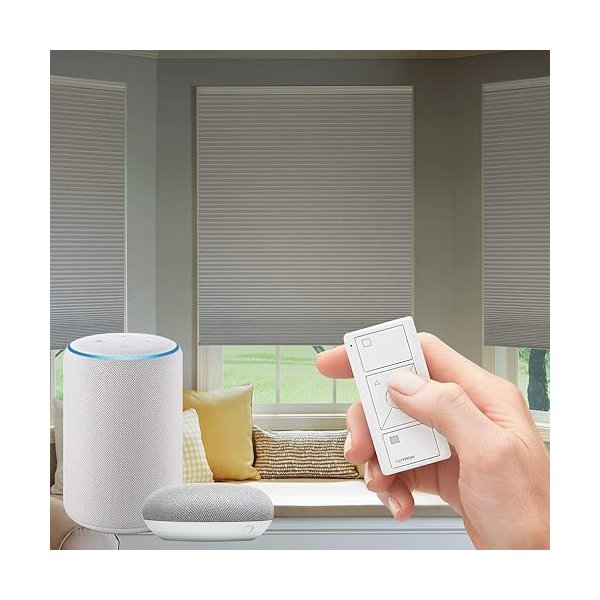
Price Range: $300-$600+ per window
Lutron’s Serena line is widely regarded as the gold standard for smart window treatments. These shades work with virtually every major smart home platform, including the notoriously selective Apple HomeKit.
Key Specifications: – Compatible with Alexa, Google Assistant, HomeKit, SmartThings – Rechargeable battery lasts up to 12 months – Quiet motor operation (under 40 decibels) – Available in roller shades, honeycomb shades, and Roman shades – Requires Lutron Smart Bridge ($80) for smart features
Pros: – Exceptional build quality based on user feedback – Seamless integration across all major platforms – Professional appearance with hidden motor housing – Precise positioning control (adjust to exact percentages) – Strong customer support reputation
Cons: – Premium pricing – Requires separate hub (Smart Bridge) – Limited fabric and color options compared to traditional blinds
Verdict: If budget allows, Lutron Serena shades deliver reliability and compatibility that justify the investment. They’re particularly recommended for those heavily invested in Apple’s HomeKit ecosystem.
Best for Retrofitting: SwitchBot Blind Tilt
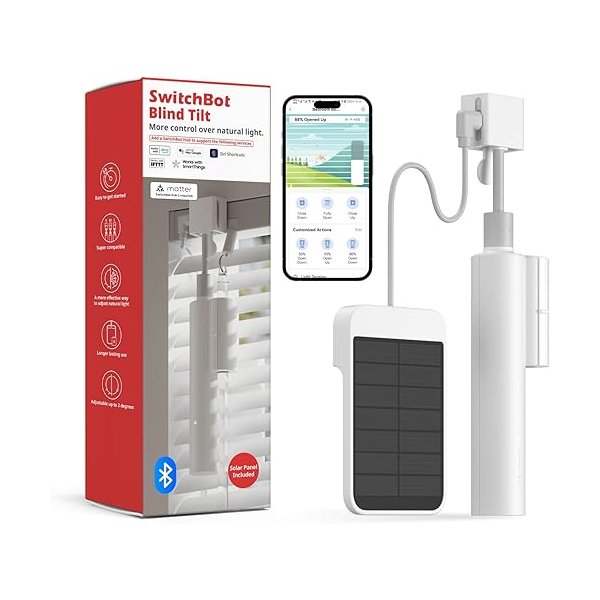
Price Range: $69-$89 per device
Rather than replacing your existing blinds, the SwitchBot Blind Tilt adds smart functionality to horizontal blinds you already own. This innovative adapter attaches to your blind’s tilt wand or beaded chain.
Key Specifications: – Works with Alexa, Google Assistant, Siri Shortcuts, IFTTT – Solar panel option eliminates battery changes – Installs in minutes with no tools required – Compatible with most horizontal blinds – Bluetooth and Wi-Fi connectivity
Pros: – Extremely affordable smart blind solution – Preserves your existing blinds and décor – Solar panel option is environmentally friendly – Simple installation process – Small, unobtrusive device
Cons: – Only tilts blinds (doesn’t raise/lower) – Not compatible with all blind types – Less sophisticated than purpose-built smart blinds – May be visible depending on window configuration
Verdict: The SwitchBot Blind Tilt is an ingenious solution for adding smart control to existing horizontal blinds. It’s ideal for budget-conscious users or those hesitant to replace perfectly good window treatments.
Best Premium Option: Somfy Motorized Shades
Price Range: $400-$800+ per window
Somfy has decades of experience in motorized window treatments, and their smart shade offerings reflect that expertise. These are frequently specified by architects and interior designers for high-end installations.
Key Specifications: – Compatible with Alexa, Google Assistant, HomeKit, Control4 – Battery or hardwired power options – Whisper-quiet motors (35 decibels) – Extensive fabric and style choices – Professional installation recommended – Somfy TaHoma hub required for smart features ($230)
Pros: – Exceptional build quality and durability – Ultra-quiet operation – Highly customizable aesthetics – Precise control with intermediate positioning – Strong warranty and support
Cons: – Premium pricing throughout – Requires expensive hub – Professional measurement and installation add to costs – May be overkill for simple applications
Verdict: Somfy shades represent a long-term investment in your home. They’re best suited for luxury renovations or new construction where professional installation is already part of the budget.
Best for Large Windows: IKEA KADRILJ Roller Blinds
Price Range: $159-$199 per window
IKEA’s KADRILJ line offers similar smart functionality to the FYRTUR but with light-filtering fabric instead of blackout material. They’re particularly well-suited for living areas and larger windows.
Key Specifications: – Identical smart features to FYRTUR – Light-filtering fabric allows ambient light – Same battery and connectivity options – Available in slightly larger sizes – Requires TRÅDFRI gateway for smart control
Pros: – Excellent value proposition – Perfect for spaces where complete blackout isn’t needed – Easy installation process – Reliable performance based on user feedback
Cons: – Same limitations as FYRTUR regarding customization – Limited color palette – Basic feature set
Verdict: The KADRILJ offers the same excellent value as its FYRTUR sibling but for spaces where you want natural light filtration rather than complete darkness.
Smart Blinds Comparison Table
| Brand | Price Range | Power Source | Battery Life | Hub Required | Best For |
|---|---|---|---|---|---|
| Lutron Serena | $300-$600+ | Battery | 12 months | Yes ($80) | Overall best quality |
| IKEA FYRTUR | $129-$179 | Battery | 6 months | Yes ($30) | Budget-conscious buyers |
| SwitchBot Blind Tilt | $69-$89 | Battery/Solar | 8 months/Unlimited | Optional | Retrofitting existing blinds |
| Somfy | $400-$800+ | Battery/Hardwired | 12+ months/N/A | Yes ($230) | Premium installations |
| IKEA KADRILJ | $159-$199 | Battery | 6 months | Yes ($30) | Light filtering needs |
Installation Considerations
DIY vs. Professional Installation
Most battery-powered smart blinds are designed for DIY installation. According to user reviews, average installation time ranges from 30 minutes to 2 hours per window, depending on your experience level and the specific product.
Professional installation makes sense for hardwired options, extremely large windows, or when ordering custom sizes that require precise measurements. Installation costs typically range from $75-$150 per window based on market research.
Measuring Your Windows
Accurate measurements are critical for smart blinds. Manufacturers typically offer detailed guides, but the basic principle involves deciding between inside mount (fitting within the window frame) or outside mount (covering the frame entirely).
Inside mounts provide a cleaner look but require sufficient depth in your window frame—usually at least 2-3 inches. Outside mounts are more forgiving with irregular windows but may require additional clearance for the motor housing.
Smart Home Integration and Automation Ideas
Creating Schedules and Routines
The best smart blinds and shades shine when automated. Popular routines based on user implementations include:
Morning Wake-Up: Schedule blinds to open gradually 30 minutes before your alarm, simulating natural sunrise to improve waking experiences.
Energy Saving: Program blinds to close during peak afternoon heat in summer, reducing air conditioning costs by up to 15% according to energy studies.
Security Mode: When you’re away, create random opening and closing patterns to simulate occupancy, deterring potential intruders.
Movie Time: Integrate with your entertainment system to automatically close blinds when starting a movie or gaming session.
Voice Control Tips
Voice commands work best when you assign clear, simple names to each blind or room group. Instead of “Guest Bedroom North Window,” use “guest room blinds” for easier voice control.
Most platforms support percentage-based commands like “set living room blinds to 50%” for precise light control throughout the day.
Smart Blinds and Energy Efficiency
Reducing Heating and Cooling Costs
Smart blinds contribute to energy efficiency beyond basic insulation. Automated scheduling allows you to leverage passive solar heating in winter (opening south-facing blinds during sunny days) while blocking heat gain in summer.
Cellular or honeycomb shades provide the best insulation properties with R-values ranging from 2.0 to 5.0, according to manufacturer specifications. This trapped air design significantly reduces heat transfer through windows.
Integration with Smart Thermostats
Pairing smart blinds with thermostats like Nest or Ecobee creates a comprehensive climate control system. Some advanced setups use temperature sensors to trigger blind adjustments automatically, maintaining comfortable temperatures with less HVAC usage.
Common Issues and Troubleshooting
Connectivity Problems
Based on user forums, connectivity issues are the most common complaint about smart blinds. Most problems stem from weak Wi-Fi signal at window locations or hub placement too far from the blinds.
Solutions include adding Wi-Fi extenders, relocating the smart home hub closer to your windows, or choosing blinds with Bluetooth backup options for local control when Wi-Fi fails.
Battery Life Shorter Than Expected
If your smart blinds drain batteries faster than manufacturer estimates, excessive usage is typically the culprit. Each open/close cycle consumes power, so if you’re adjusting blinds dozens of times daily, batteries naturally deplete faster.
Consider hardwired power or solar charging accessories if available for your model. Also, review your automation routines—you may have unintentional triggers causing unnecessary movements.
Calibration Issues
Smart blinds occasionally lose calibration, resulting in incomplete opening or closing. Most systems include a recalibration process in their app, typically involving manually adjusting the blind to fully open and closed positions to reset the motor’s position memory.
Frequently Asked Questions
Are smart blinds worth the investment?
Smart blinds provide value through convenience, energy savings, and home automation capabilities. Based on user feedback, they’re most worthwhile for frequently adjusted windows, hard-to-reach locations, or when building a comprehensive smart home ecosystem. The energy savings alone can offset costs over 3-5 years in climates with extreme temperatures.
Can I install smart blinds myself?
Most battery-powered smart blinds are designed for DIY installation and include mounting hardware and instructions. According to user reviews, people with basic DIY skills successfully install them in under an hour per window. Hardwired options typically require professional electrical work unless you have experience with home wiring.
Do smart blinds work without Wi-Fi?
Functionality varies by model. Many smart blinds offer Bluetooth control that works without Wi-Fi for basic app control and scheduling. However, remote access away from home, voice assistant integration, and advanced automation typically require Wi-Fi connectivity. Some models like SwitchBot include physical button controls as a backup option.
How long do smart blind batteries last?
Battery life ranges from 4-12 months based on manufacturer specifications and usage patterns. Factors affecting battery life include how frequently the blinds operate, the weight of the shade material, and environmental conditions. Models with solar panel accessories can achieve indefinite battery life in windows with adequate sunlight exposure.
Can smart blinds be hacked?
Like all connected devices, smart blinds have potential security vulnerabilities. However, according to cybersecurity experts, they represent a low-priority target for hackers compared to cameras or door locks. Minimize risk by using strong passwords, keeping firmware updated, and choosing brands with established security track records like Lutron or Somfy.
Conclusion
The best smart blinds and shades for your home ultimately depend on your specific needs, budget, and existing smart home ecosystem. For most users, the Lutron Serena offers the ideal balance of reliability, compatibility, and features, while the IKEA FYRTUR provides exceptional value for budget-conscious buyers.
If you’re testing the waters with smart window treatments, consider starting with one or two windows in your most-used rooms. The SwitchBot Blind Tilt offers an incredibly low-risk entry point for under $100. As you experience the convenience firsthand, you can expand to additional windows with confidence.
Remember that smart blinds are an investment in daily comfort and long-term energy efficiency. Choosing quality products from established brands typically results in years of reliable operation and better resale value for your home.
Related Topics to Explore: Learn about [integrating smart blinds with home security systems], discover [the best smart thermostats to pair with automated window treatments], or explore [complete smart home automation guides for beginners].