Quick Picks
Short on time? Here are the best smart espresso machines for 2026:
- Ninja Luxe Café Premier 3-in-1 (~$600) — Best overall for most people
- De’Longhi Eletta Explore (~$1,900) — Best app-connected machine
- Philips 5500 Series LatteGo (~$870) — Easiest to use and clean
- Breville Oracle Jet (~$2,000) — Best for espresso enthusiasts
- De’Longhi Rivelia (~$1,300) — Best for switching between beans
- Philips 3300 Series LatteGo (~$550) — Best budget super-automatic
A daily café latte adds up fast. At $6 a cup, a household with two coffee drinkers can spend thousands a year. A good espresso machine at home pays for itself, and the newest smart espresso machines take the hard part out of making café drinks yourself.
What makes an espresso machine “smart”? It does the steps baristas train for. The machines here grind fresh beans, dose and tamp automatically, guide you to the right grind size, and froth milk on their own, all from a touchscreen. One connects to an app for custom recipes and profiles. The result is a latte, cappuccino, or cold brew in about a minute, with one tap and almost no mess.
We picked machines from about $550 to $2,000, covering two styles: super-automatic (press a button, get a drink) and guided semi-automatic (you handle the portafilter with help from smart features). Every listing was checked on Amazon to make sure it’s the exact model we describe. Espresso machines also make an outstanding holiday gift for the coffee lover in your life. If you prefer drip coffee or pods, see our guide to the best smart coffee makers.
Super-Automatic vs Guided Semi-Automatic
Super-automatic machines (De’Longhi Eletta Explore and Rivelia, Philips 3300 and 5500) do everything inside the machine: grind, brew, and froth. You pick a drink on the screen and it’s done. They’re the easiest choice for households where several people want different drinks, and cleanup is minimal.
Guided semi-automatic machines (Breville Oracle Jet, Ninja Luxe Café) use a traditional portafilter, the handle you lock into the machine, but automate the tricky parts: grinding the right dose, tamping, and steaming milk. You get more control and café-style espresso with a bit more hands-on time. They’re best for people who enjoy the ritual.
What to Look For in a Smart Espresso Machine
Built-in grinder. Every machine here grinds fresh beans, the biggest factor in espresso flavor. More grind settings mean finer control.
Automatic milk frothing. Look for automatic milk systems with settings for dairy and plant-based milks, plus cold foam if you like iced drinks.
Drink menu and profiles. Super-automatics offer anywhere from 6 to 50+ drinks. Saved user profiles remember each person’s favorite.
Ease of cleaning. Milk systems with no tubes, like Philips LatteGo, rinse clean in seconds. Automatic rinse and descaling reminders save effort.
Guidance features. Smart grind adjustment, bean-adapt settings, and extraction feedback help you dial in a new bag of beans without wasting shots.
Size. Measure under your cabinets. Hoppers on top add height.
The Best Smart Espresso Machines for 2026
Ninja Luxe Café Premier 3-in-1 — Best Overall for Most People
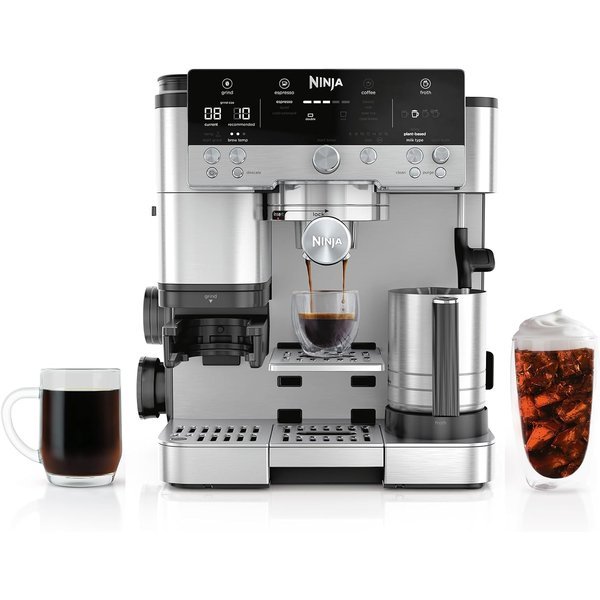
Ninja’s Luxe Café Premier is the best espresso machine for most homes, and with over 2,500 reviews averaging 4.2 stars, it’s one of the most popular espresso makers sold. It’s genuinely three machines in one: espresso (double or quad shot), drip coffee in three styles, and cold brew, so it suits households where one person wants a latte and another wants a regular cup of coffee.
Its smart feature is Barista Assist Technology, which guides you through every step. A built-in conical burr grinder with 25 settings suggests the right grind for each drink, weight-based dosing measures the coffee precisely, and an assisted tamper presses a perfect puck. It’s the easiest way to make real portafilter espresso without a learning curve.
The Dual Froth System combines a spinning whisk with an automatic steamer for silky microfoam, with four presets including cold foam. Just pour the milk, pick a style, and walk away. A cold-pressed espresso setting makes smooth espresso martinis and iced lattes. Built-in accessory storage keeps the counter tidy.
Pros:
- Espresso, drip coffee, and cold brew in one machine
- Barista Assist guides grind, dose, and tamp
- Hands-free frothing, including cold foam
- Weight-based dosing for consistent shots
- Excellent value for the features
Cons:
- Still requires handling a portafilter
- No app connectivity
- Large footprint
De’Longhi Eletta Explore — Best App-Connected Machine
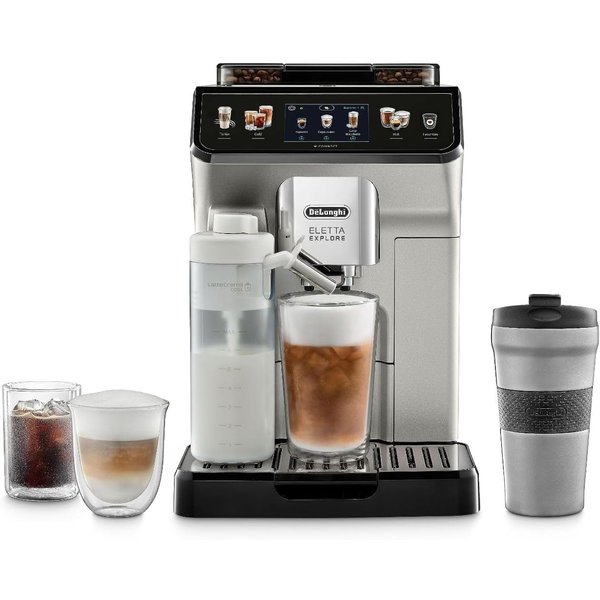
The Eletta Explore is the smartest machine on this list and the one to get if you want true app control. Through the De’Longhi Coffee Link app and the machine’s Connected Technology, you can set up personal profiles and craft custom recipes from your phone, then brew with a tap.
It has the biggest drink menu here, with 50+ one-touch hot and cold recipes, including iced lattes and cold brew. Cold Extraction Technology makes real cold brew in under 3 minutes, instead of the usual 12+ hours. Two LatteCrema milk systems handle hot foam and cold foam separately, so iced cappuccinos come out as good as hot ones.
De’Longhi’s Bean Adapt Technology walks you through optimizing grind and extraction for whatever beans you load, and the built-in grinder has 13 settings. A 3.5-inch full-touch color display makes navigating recipes easy. It’s expensive, but for a household that drinks a wide range of coffee drinks, it replaces a café run every day.
Pros:
- App control with profiles and custom recipes
- 50+ hot and cold one-touch drinks
- Cold brew in under 3 minutes
- Separate hot and cold foam systems
- Bean Adapt guidance for new beans
Cons:
- Expensive
- Two milk systems mean more parts to clean
- Super-automatic espresso isn’t quite as rich as a good portafilter shot
Philips 5500 Series LatteGo — Easiest to Use and Clean
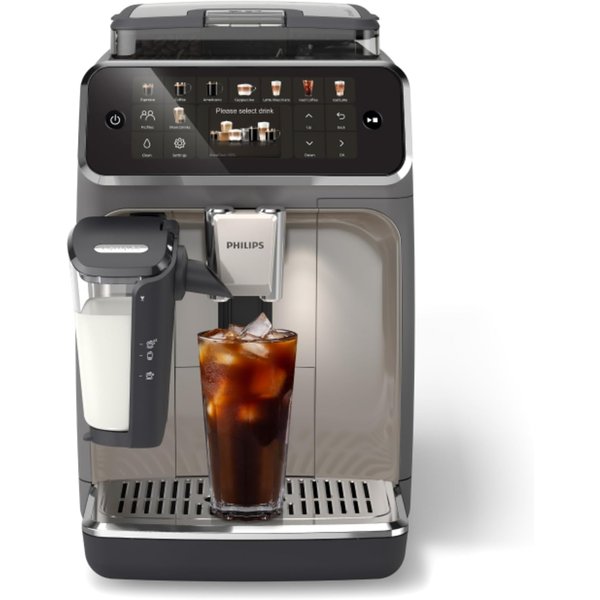
Philips’ super-automatic machines are known for one thing above all: the easiest milk system to clean. LatteGo has just three parts, with no internal tubes or hidden compartments, and it’s dishwasher safe or rinses clean in about 10 seconds. For anyone who has given up on a milk frother because of the cleanup, that alone makes it worth it.
The 5500 offers 20 presets, from espresso and cappuccino to iced coffee, all made with one touch on a color display. It automatically grinds, tamps, and brews, and you can adjust strength, volume, and milk, then save up to 4 profiles for different people in the house.
It’s also fast and quiet. QuickStart has it ready in 3 seconds, and SilentBrew sound shielding makes it 40% quieter than earlier models, certified by Quiet Mark, which is great for early mornings when others are asleep. Philips says it’s the best-selling super-automatic in the US and Canada.
Pros:
- LatteGo cleans in seconds, no tubes
- 20 one-touch drinks, including iced coffee
- 4 saved user profiles
- Ready in 3 seconds
- Quiet SilentBrew operation
Cons:
- No app control
- LatteGo foam is airy, less suited to latte art
- Pricier than the 3300 Series
Breville Oracle Jet — Best for Espresso Enthusiasts
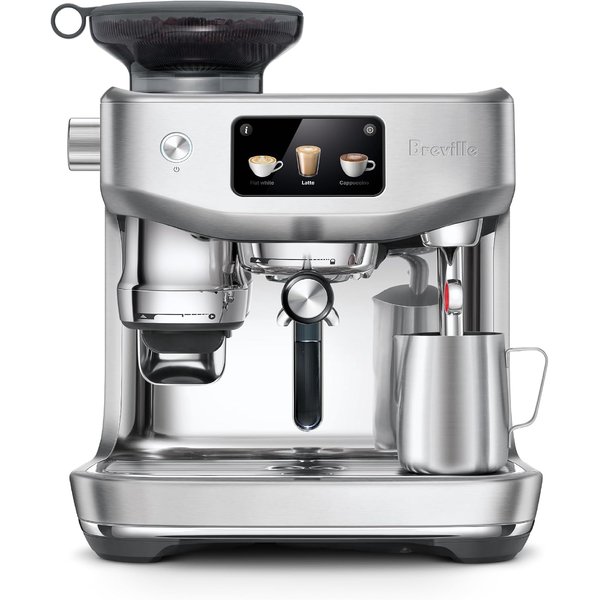
If you care about the quality of the espresso itself, the Breville Oracle Jet is the machine to get. It uses a professional 58mm stainless steel portafilter with a 22-gram dose, the same format as café machines, but it automatically grinds, doses, and tamps for you with Baratza European precision burrs and 45 grind settings.
Its smartest feature is Barista Guidance. It detects whether a shot was over- or under-extracted and tells you how to adjust the grind, which is how you dial in a perfect shot without wasting a bag of beans. The ThermoJet heating system heats up fast and is up to 32% more energy efficient than older designs, and you can tune the group head temperature in one-degree steps.
Auto MilQ steams true microfoam for latte art, with settings for dairy, soy, almond, and oat milk, adjustable temperatures from 104°F to 167°F, and eight texture levels. Auto Queue lets you start the milk while the shot pulls. It also makes cold brew and cold espresso. It’s the most expensive machine here and has a learning curve, but it produces the best espresso.
Pros:
- Café-style 58mm portafilter with auto grind, dose, and tamp
- Barista Guidance fixes extraction for you
- True steamed microfoam for latte art
- Precise temperature control
- Cold brew and cold espresso
Cons:
- Most expensive machine here
- More hands-on than super-automatics
- Mixed reviews on reliability
De’Longhi Rivelia — Best for Switching Between Beans
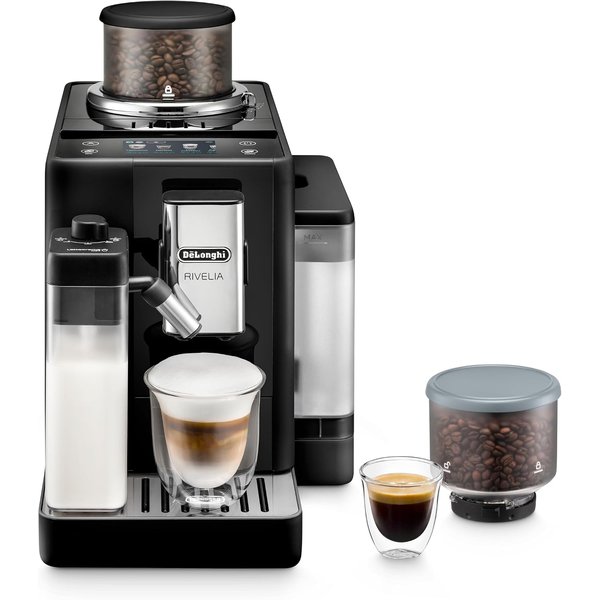
The Rivelia solves a common super-automatic problem: you’re stuck with whatever beans are in the hopper. It comes with two removable 8.8-ounce bean hoppers, so you can keep an espresso roast in one and decaf or a lighter roast in the other, and swap them in seconds.
With one touch, it grinds, doses, brews, and froths for 18 preset recipes, including latte, cappuccino, cortado, flat white, and iced coffee. You can adjust intensity and quantity and add an extra shot. A step-by-step guided setup helps you set the ideal grind, dose, and temperature for each bean type, and it saves those settings automatically.
The LatteCrema Hot system froths dairy or plant-based milk with an auto-clean function, and you can add cold foam with the optional LatteCrema Cool accessory. It’s a well-designed middle ground between the Philips machines and the Eletta Explore.
Pros:
- Two swappable bean hoppers
- Saves grind and dose settings per bean
- 18 one-touch recipes
- Auto-clean milk system
- Guided setup
Cons:
- No app control
- Cold foam requires an extra accessory
- Pricier than the Philips machines
Philips 3300 Series LatteGo — Best Budget Super-Automatic
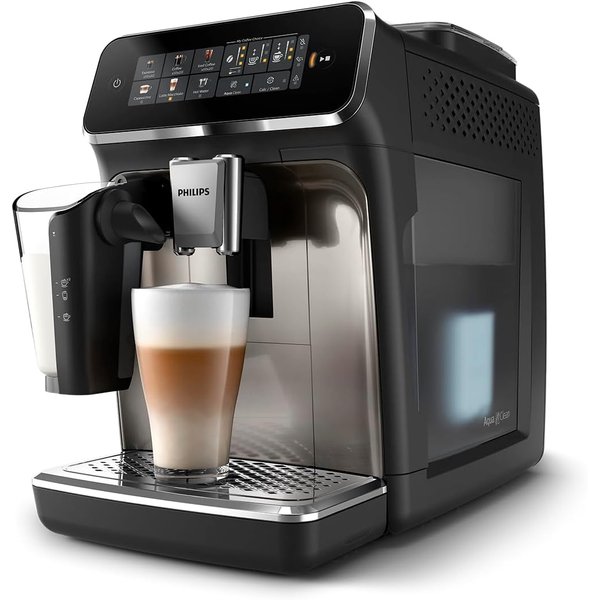
The Philips 3300 is the most affordable way to get push-button lattes at home, and with over 2,200 reviews averaging 4.2 stars, it’s a proven favorite. It has the same easy LatteGo milk system as the 5500, here with just two parts and no tubes.
A modern touchscreen with colored icons offers six drinks: espresso, coffee, iced coffee, cappuccino, latte macchiato, and hot water. My Coffee Choice adjusts strength, length, and milk froth level. The 100% ceramic grinder stays quiet and consistent, and SilentBrew keeps it quiet overall.
Its AquaClean filter is a practical bonus: change the filter when the machine prompts you, and you won’t need to descale for up to 5,000 cups. You give up the larger menu and saved profiles of the 5500, but for one or two coffee drinkers who mostly want lattes and cappuccinos, it’s the best value.
Pros:
- Lowest price here
- LatteGo milk system cleans in seconds
- Up to 5,000 cups between descaling with AquaClean
- Quiet ceramic grinder
- Proven, well-reviewed
Cons:
- Only six drinks
- No user profiles
- No app control
Smart Espresso Machine Comparison
| Machine | Best For | Price | Type | Drinks | Standout Smart Feature |
|---|---|---|---|---|---|
| Ninja Luxe Café Premier | Most people | ~$600 | Guided semi-auto | Espresso, drip, cold brew | Barista Assist, weight-based dosing |
| De’Longhi Eletta Explore | App control | ~$1,900 | Super-automatic | 50+ hot and cold | Coffee Link app, 3-min cold brew |
| Philips 5500 LatteGo | Easy use and cleaning | ~$870 | Super-automatic | 20 | 4 profiles, LatteGo |
| Breville Oracle Jet | Enthusiasts | ~$2,000 | Guided semi-auto | Espresso, milk drinks, cold brew | Barista Guidance, auto tamp |
| De’Longhi Rivelia | Switching beans | ~$1,300 | Super-automatic | 18 | Two hoppers, saved bean settings |
| Philips 3300 LatteGo | Budget | ~$550 | Super-automatic | 6 | AquaClean, LatteGo |
Does an Espresso Machine Pay for Itself?
It usually does, and fairly quickly. At about $6 for a café latte, one drink a day costs roughly $2,000 a year. Beans and milk for a home latte cost well under $1 per drink. Even the most expensive machine here pays for itself in about a year for a daily latte drinker, and the Philips 3300 pays for itself in a few months.
The real savings depend on how often you’d otherwise buy coffee, but for daily café visitors, an espresso machine is one of the few kitchen upgrades that saves money.
How to Choose
Want espresso and regular coffee from one machine? The Ninja Luxe Café Premier.
Want app control and the biggest menu? The De’Longhi Eletta Explore.
Want push-button drinks with the easiest cleanup? The Philips 5500, or the 3300 on a budget.
Care most about espresso quality and latte art? The Breville Oracle Jet.
Switch between beans or keep decaf on hand? The De’Longhi Rivelia.
Building out a smart kitchen? Pair your machine with a smart kettle for tea, and see our complete smart kitchen guide.
Frequently Asked Questions
What’s the difference between a smart espresso machine and a regular one?
Smart espresso machines automate the skilled steps: grinding the right dose, tamping, timing the shot, and frothing milk. Many add touchscreens, saved profiles, and guided adjustments, and some, like the De’Longhi Eletta Explore, connect to an app. A traditional machine leaves all of that to you.
Can I turn on an espresso machine with a smart plug?
Usually not. Most automatic espresso machines don’t turn on by themselves when power is restored, and some need a button press to start their warm-up and rinse cycle. Use the machine’s own timer or app features instead.
Are super-automatic espresso machines hard to clean?
They’re easier than most people expect. Run the automatic rinse daily, empty the grounds container and drip tray, and clean the milk system after use. Philips LatteGo systems rinse clean in seconds. Descale every few months, or less often with a water filter.
Do these machines work with oat and almond milk?
Yes. The Breville Oracle Jet has specific settings for dairy, soy, almond, and oat milk, and the De’Longhi and Philips milk systems handle plant-based milks. Barista-edition plant milks foam best.
Is an espresso machine a good gift?
It’s one of the best splurge gifts for a coffee lover, especially during holiday sales. For something smaller, see our smart home gifts under $50 or our main smart home gift guide.
The Bottom Line
For most people, the Ninja Luxe Café Premier is the best smart espresso machine: espresso, drip, and cold brew in one, with Barista Assist making great shots easy. The De’Longhi Eletta Explore is the pick for app control and the widest menu, the Philips 5500 is the easiest to live with, and the Breville Oracle Jet makes the best espresso. Switch beans often? Get the De’Longhi Rivelia. On a budget, the Philips 3300 delivers push-button lattes for less.