Quick Picks
Short on time? Here are our top recommendations:
- ChargePoint HomeFlex Level 2 EV Charger J1772 — Best overall smart charger for most EVs
- ChargePoint HomeFlex Level 2 EV Charger, Hardwired NACS — Best for Tesla and NACS-equipped vehicles
- Autel Home Level 2 EV Charger up to 50Amp — Best premium hardwired option
- Enphase IQ EV Charger 2 — Best for solar and whole-home energy systems
- EVIQO Level 2 EV Charger, 40 Amp — Best budget smart Level 2 charger
- AIMILER Level 2 Electric Vehicle (EV) Charger — Best portable plug-in for renters
Charging your EV at home should be one of the simplest parts of owning an electric car — but the wrong charger can turn it into a daily annoyance. Slow charging, unreliable apps, weak Wi-Fi, no scheduling, no energy tracking. A good smart Level 2 charger fixes all of that. It refills your car overnight on cheap off-peak power, talks to your phone, and gives you real numbers on how much you’re spending per mile.
We tested the top smart Wi-Fi Level 2 EV chargers available on Amazon in 2026, focusing on the things that actually matter: real charging speed, app reliability, installation requirements, weatherproofing, and whether the smart features add value or just add complexity. The lineup below covers every realistic budget — from a $190 plug-in unit that works for renters to a $1,124 charger that integrates directly with home solar.
Whether you drive a Tesla, a Ford Lightning, a Hyundai Ioniq 5, or any other modern EV, one of these will fit your home setup.
What to Look For in a Smart Home EV Charger
Before picking a model, a handful of specs will determine whether it’s actually right for your home, your car, and your electrical panel.
Amperage and kW Output
This is the single biggest factor in charging speed. A Level 2 charger uses a 240V circuit, but the amps determine how fast you actually add miles per hour of charging.
- 16-24 amps (3.8-5.7 kW): Adds about 15-20 miles per hour. Fine for short commutes.
- 32 amps (7.7 kW): Adds 25-30 miles per hour. The most common home setup.
- 40 amps (9.6 kW): Adds 30-35 miles per hour. A great sweet spot.
- 48-50 amps (11.5 kW+): Adds 35-45 miles per hour. The fastest practical home charging.
Higher amperage requires a beefier circuit breaker and wiring. A 40-amp charger needs a 50-amp circuit, a 48-amp charger needs a 60-amp circuit, and you may not have the panel capacity for the biggest units without a service upgrade. Plug-in models on a NEMA 14-50 outlet are capped at 40 amps by code, so anything 48 amps or higher has to be hardwired.
J1772 vs. NACS (Tesla)
The plug shape matters. J1772 is the universal North American connector used by every non-Tesla EV from 2010 through about 2024 — Ford, GM, Hyundai, Kia, Nissan, Volkswagen, Honda, and all the rest. NACS is the connector Tesla pioneered, which is now becoming the new North American standard. Most 2025+ EVs ship with NACS, and older EVs can use a J1772-to-NACS adapter (or vice versa).
If you have a Tesla, you want an NACS charger (or J1772 with the Tesla adapter that comes with the car). If you have anything else, a J1772 charger is the right call — and many EV households are now buying NACS chargers since adapters are cheap and the connector is the future standard.
Hardwired vs. Plug-In
A hardwired charger is permanently connected to your home’s electrical panel by an electrician. It looks cleaner, supports higher amperage (48A and up), and can usually be installed outdoors more easily.
A plug-in charger uses a NEMA 14-50 outlet (the same kind RVs use) and is capped at 40 amps. The advantage: if you move, you can take it with you. For renters or anyone unsure about long-term home plans, plug-in is the safer call.
Smart App Features That Actually Matter
A lot of “smart” features are marketing fluff. The ones that genuinely save you money or hassle:
- Scheduled charging. Charge only during off-peak hours when electricity is cheap (typically 11pm-7am). On a time-of-use rate plan, this can cut your charging cost in half.
- Energy monitoring. Real kWh tracking per session so you know exactly what each charge cost.
- Load management. Some chargers can throttle their output if other heavy loads (oven, dryer, AC) kick on, preventing a tripped breaker.
- Notifications. Get pinged when charging finishes, when there’s a fault, or if your car gets unplugged.
Indoor vs. Outdoor and Weatherproofing
If you have a detached garage, a carport, or just a driveway, your charger needs to handle weather. Look for an IP66 or NEMA 4 rating at minimum, which means it’s dust-tight and resistant to heavy rain. Cable temperature rating matters too — cheap cables get stiff at 0°F and crack over years of cold-weather flexing.
Our Top Smart Home EV Charger Picks for 2026
1. ChargePoint HomeFlex Level 2 EV Charger J1772 — Best Overall {#chargepoint-home-flex}
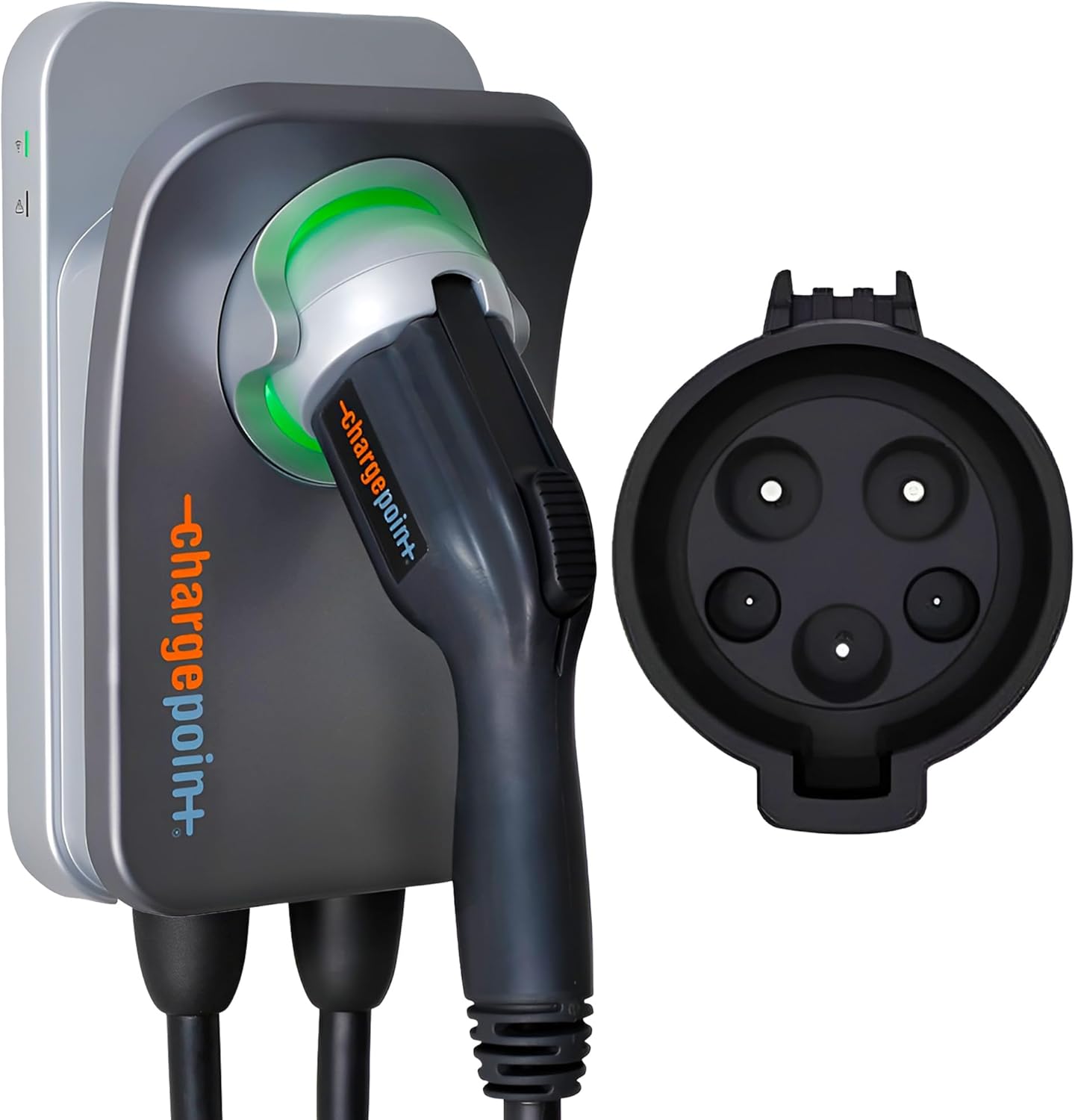
The ChargePoint HomeFlex Level 2 EV Charger J1772 is the smart EV charger we recommend to almost everyone. ChargePoint runs the largest public charging network in North America, which means their app, account system, and software stack are battle-tested in a way no upstart brand can match. Plug in at home, drive cross-country, and you’re using the same account at public stations along the way.
What makes the HomeFlex stand out is its adjustable amperage from 16 to 50 amps. Buy once, use it on any house. If you move into a place with a smaller panel, you dial it down. If you upgrade to a 60-amp circuit later, you dial it up. Most chargers lock you into a single amp setting at install — this one adapts. It ships with a NEMA 14-50 plug for plug-in installation (capped at 40A in that config), or you can have an electrician hardwire it for the full 50A capability.
The ChargePoint app is genuinely good. Set up off-peak charging schedules, see exact kWh and dollars per session, and get push notifications when your car is full. It works with both 2.4GHz Wi-Fi and Bluetooth backup, plus voice control through Alexa, Google Home, and Apple HomeKit. The 23-foot cable reaches almost any garage or driveway layout.
Specs:
- Output: 16-50 amps, up to 12 kW (240V)
- Connector: J1772
- Cable: 23 ft
- Install: NEMA 14-50 plug-in or hardwired
- Connectivity: 2.4GHz Wi-Fi, Bluetooth
- Smart home: Alexa, Google Home, Apple HomeKit
- Certifications: ETL, Energy Star, indoor/outdoor rated
Pros:
- Adjustable 16-50A range fits any panel
- Best-in-class app with public charging network integration
- Works with all major smart home platforms
- Sturdy build quality, holds up outdoors year-round
- 3-year manufacturer warranty
Cons:
- Capped at 40A in plug-in mode (still plenty for most cars)
- Premium price compared to budget brands
- Slightly larger physical footprint than newer competitors
2. ChargePoint HomeFlex Level 2 EV Charger, Hardwired NACS — Best for Tesla {#chargepoint-homeflex-nacs}
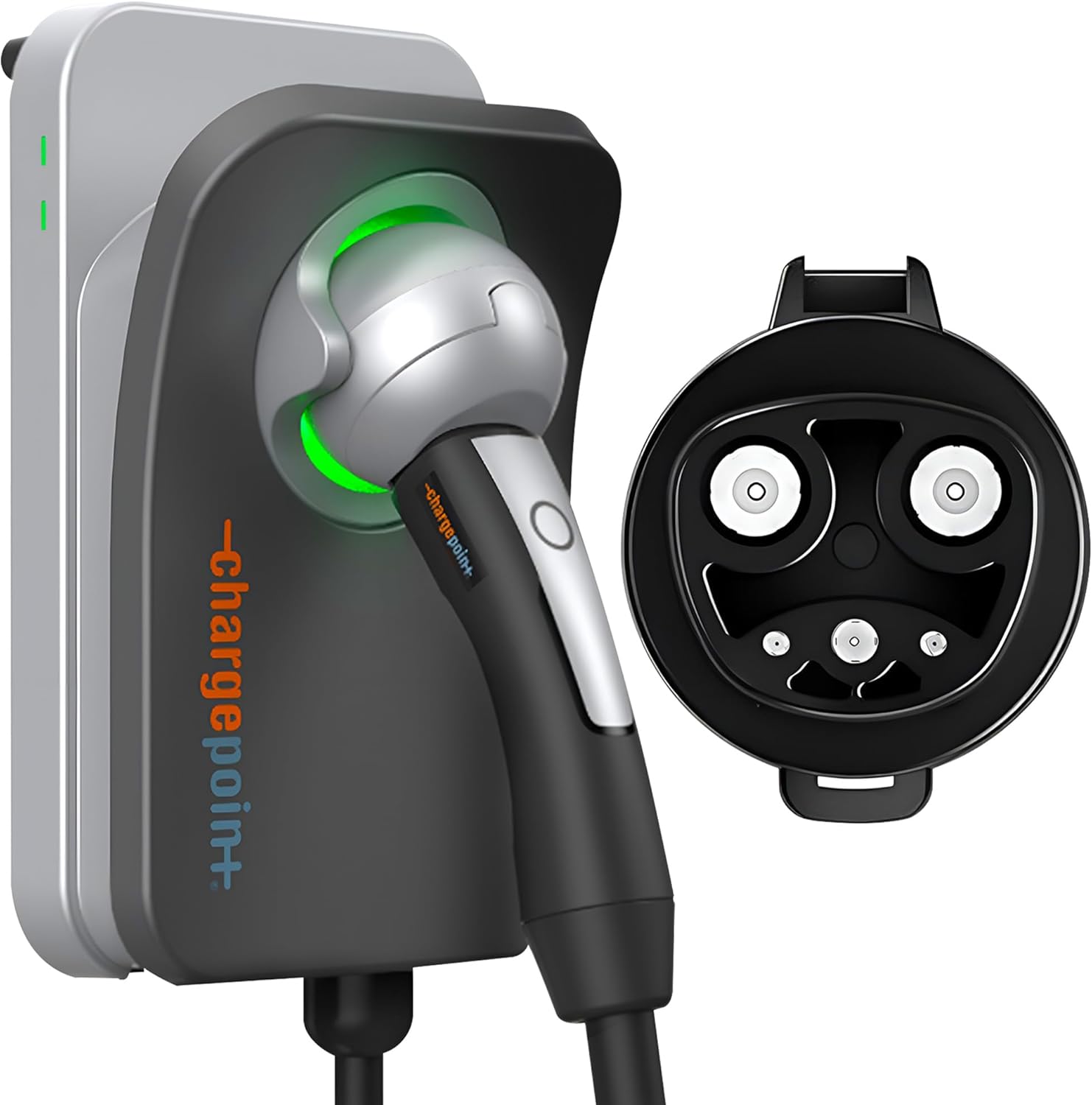
If you drive a Tesla — or any 2025+ EV with a native NACS port — this is the smart charger to buy. The ChargePoint HomeFlex Level 2 EV Charger, Hardwired NACS is the same proven HomeFlex platform as our top overall pick, but with the Tesla-native NACS connector built right in. No adapters, no fumbling, just plug and charge.
Tesla’s own Wall Connector is great, but it’s locked into Tesla’s app and ecosystem. The ChargePoint NACS version gives you the same fast charging with a more open app, public charging integration, and broader smart home support (Alexa, Google, HomeKit). For households with one Tesla and one non-Tesla EV, this is the more future-proof choice — Ford and GM owners can use a cheap NACS-to-J1772 adapter to share the same charger.
The hardwired-only design means an electrician handles the install, but you get the full 50A capability for the fastest possible Level 2 charging. The unit is fully outdoor-rated, and the 23-foot cable handles most garage and driveway layouts.
Specs:
- Output: 16-50 amps, up to 12 kW (240V)
- Connector: NACS (Tesla compatible)
- Cable: 23 ft
- Install: Hardwired only
- Connectivity: 2.4GHz Wi-Fi, Bluetooth
- Smart home: Alexa, Google Home, Apple HomeKit
- Certifications: ETL, Energy Star, indoor/outdoor rated
Pros:
- Native NACS plug — no Tesla adapter needed
- Works with any non-Tesla EV via cheap NACS-to-J1772 adapter
- Full 50A hardwired capability
- ChargePoint’s network app and public station integration
- 3-year warranty
Cons:
- Hardwired only — requires electrician install
- Pricier than Tesla’s own Wall Connector
- No plug-in option for renters
3. Autel Home Level 2 EV Charger up to 50Amp — Best Premium {#autel-home-50a}
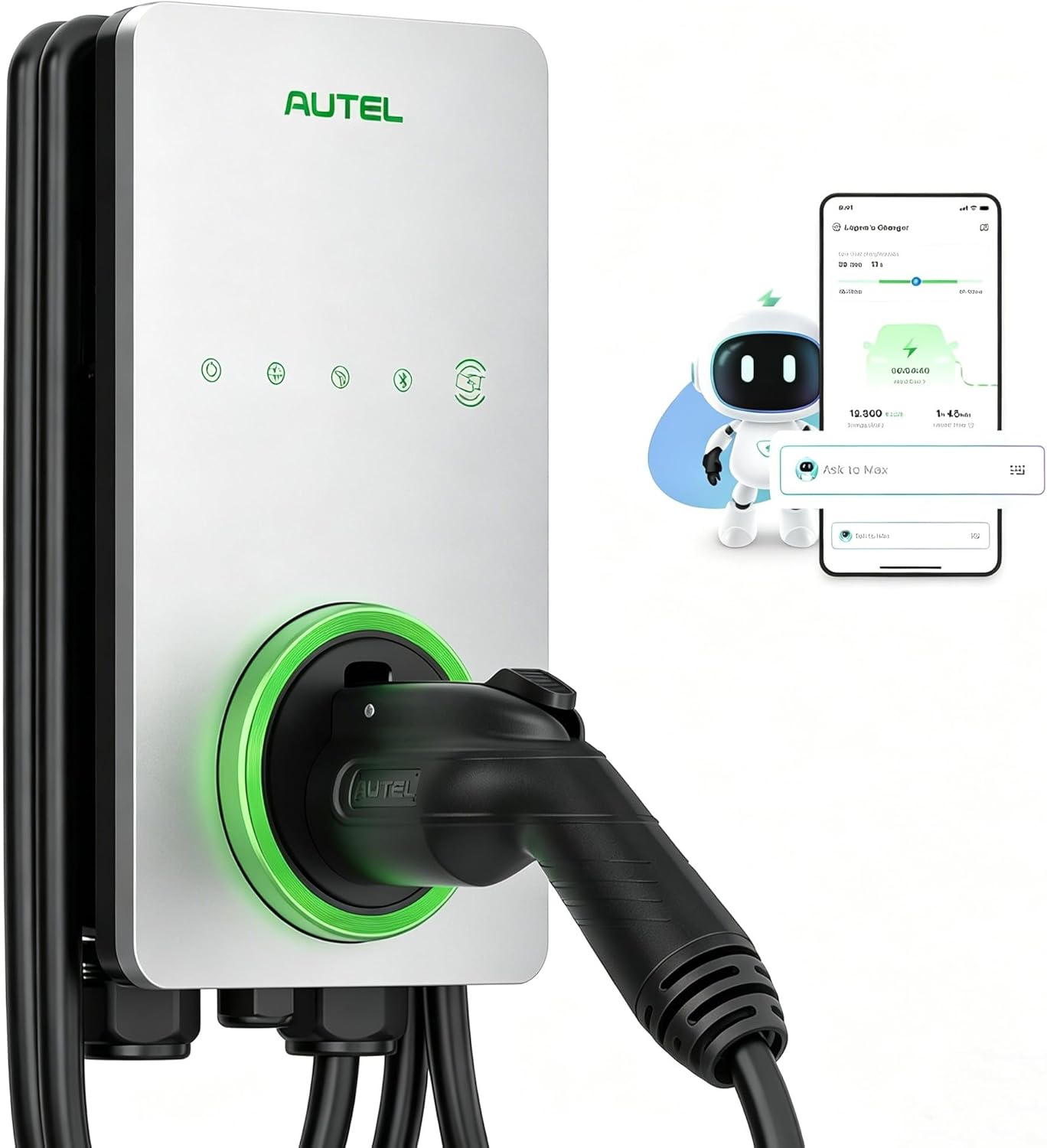
The Autel Home Level 2 EV Charger up to 50Amp is the charger to buy if you want maximum charging speed and pro-level features without paying ChargePoint money. Autel is best known for automotive diagnostic tools — they make the OBD-II scanners professional mechanics use — and that engineering background shows up in this charger. The build quality is genuinely premium, with a brushed silver finish and a heavy-duty 25-foot cable that’s noticeably more flexible in cold weather than competitors.
At 50 amps hardwired (up to 12 kW), it’s one of the fastest residential chargers you can buy. The MaxiCharger app handles scheduled charging, real-time energy monitoring, multi-user access for households with multiple drivers, and load balancing if you install more than one Autel charger. Indoor/outdoor rating is IP66 / NEMA 4, so it shrugs off heavy rain.
The headline smart feature is adaptive load management — if you pair two Autel chargers, they automatically share the available current so a 60-amp circuit can charge two cars without tripping. For two-EV households, that’s a meaningful capability that ChargePoint reserves for its commercial product line.
Specs:
- Output: up to 50 amps, up to 12 kW (240V)
- Connector: J1772
- Cable: 25 ft
- Install: Hardwired
- Connectivity: 2.4GHz Wi-Fi, Bluetooth
- Smart home: Alexa, Google Home
- Certifications: ETL, FCC, IP66 / NEMA 4
Pros:
- 50A hardwired delivers the fastest practical home charging
- Beautiful premium build, all-metal enclosure
- 25-foot cable (longest in this roundup)
- Two-charger load balancing for multi-EV households
- Heavy-duty cable stays flexible in cold weather
Cons:
- Hardwired only
- App is solid but lacks ChargePoint’s public network integration
- Higher up-front cost than budget brands
4. Enphase IQ EV Charger 2 — Best for Solar Homes {#enphase-iq}
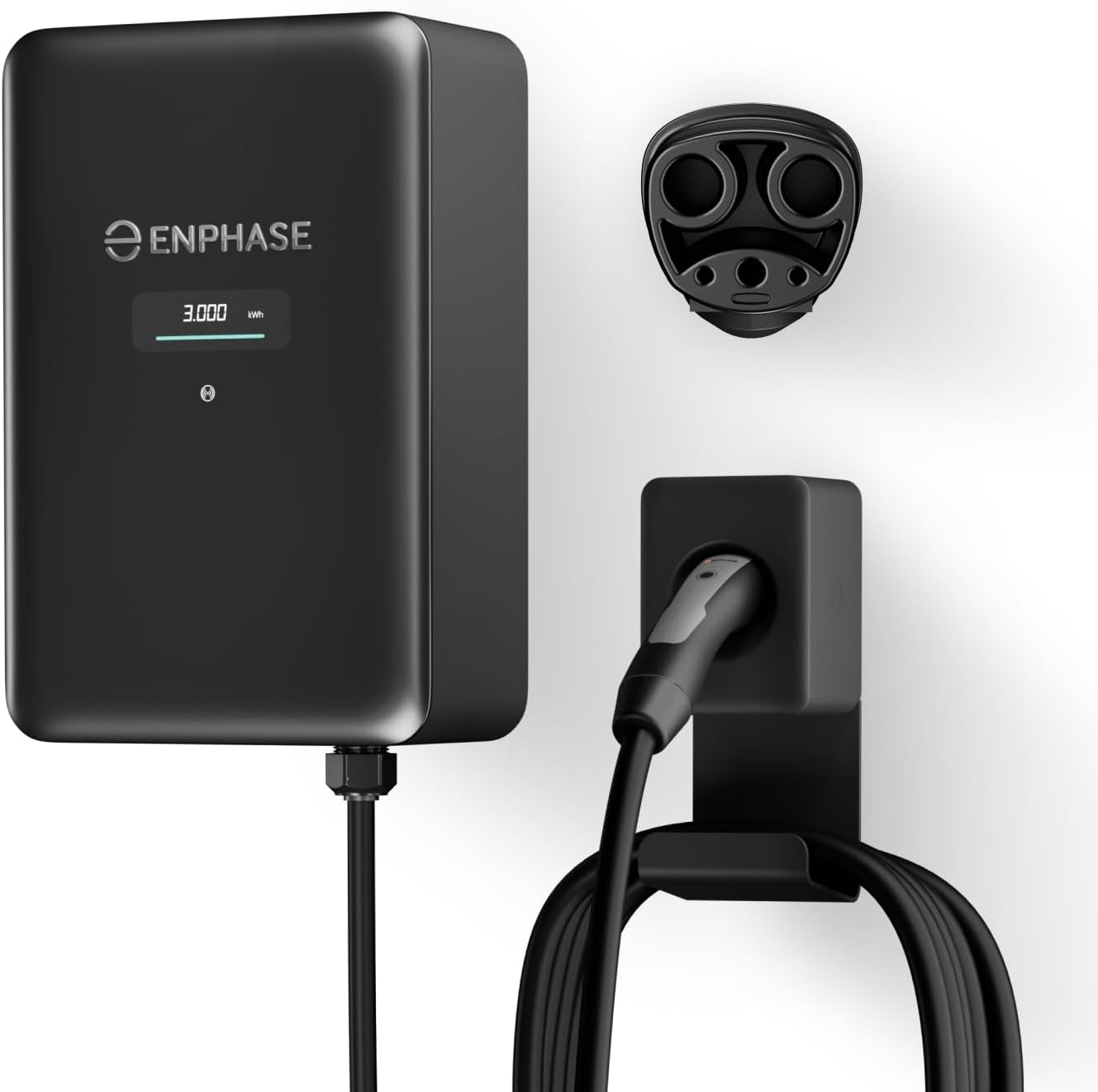
If you have a home solar system — or you’re planning one — the Enphase IQ EV Charger 2 is the smart pick. Enphase is the dominant brand in residential solar microinverters, and the IQ EV Charger 2 plugs directly into their ecosystem. From the Enphase app, you can see your solar production, your home consumption, your battery storage state, and your EV charging on a single dashboard — and you can set the car to charge only when there’s excess solar, effectively driving on sunlight for free.
For non-solar households, it’s still a strong charger: 48 amps hardwired (up to 11.5 kW), NACS connector for Tesla compatibility (J1772 adapter compatible), Wi-Fi and Bluetooth connectivity, full indoor/outdoor rating, and a 25-foot cable. UL certified, ETL listed, and the build quality matches Enphase’s premium positioning in the solar industry.
The catch is the price. At $1,124, it’s by far the most expensive charger in this roundup. If you’re not running an Enphase solar system, the smart features don’t justify the cost over a ChargePoint or Autel. But if you have Enphase microinverters and an IQ Battery, this charger turns your house into a fully integrated clean energy system, and the value is hard to match.
Specs:
- Output: up to 48 amps, up to 11.5 kW (240V)
- Connector: NACS (Tesla compatible)
- Cable: 25 ft
- Install: Hardwired
- Connectivity: Wi-Fi, Bluetooth
- Smart home: Enphase app, Alexa, Google Home
- Certifications: UL, indoor/outdoor rated
Pros:
- Deep integration with Enphase solar and battery storage
- Solar-aware “charge from sun” mode for free driving energy
- NACS connector covers Tesla and 2025+ EVs natively
- Premium UL-certified build quality
- 25-foot cable
Cons:
- Expensive at $1,124 (the highest price in this guide)
- Best value only if you own an Enphase solar system
- Hardwired install required
- Newer product, less long-term field reliability data
5. EVIQO Level 2 EV Charger, 40 Amp — Best Budget {#eviqo-40a}
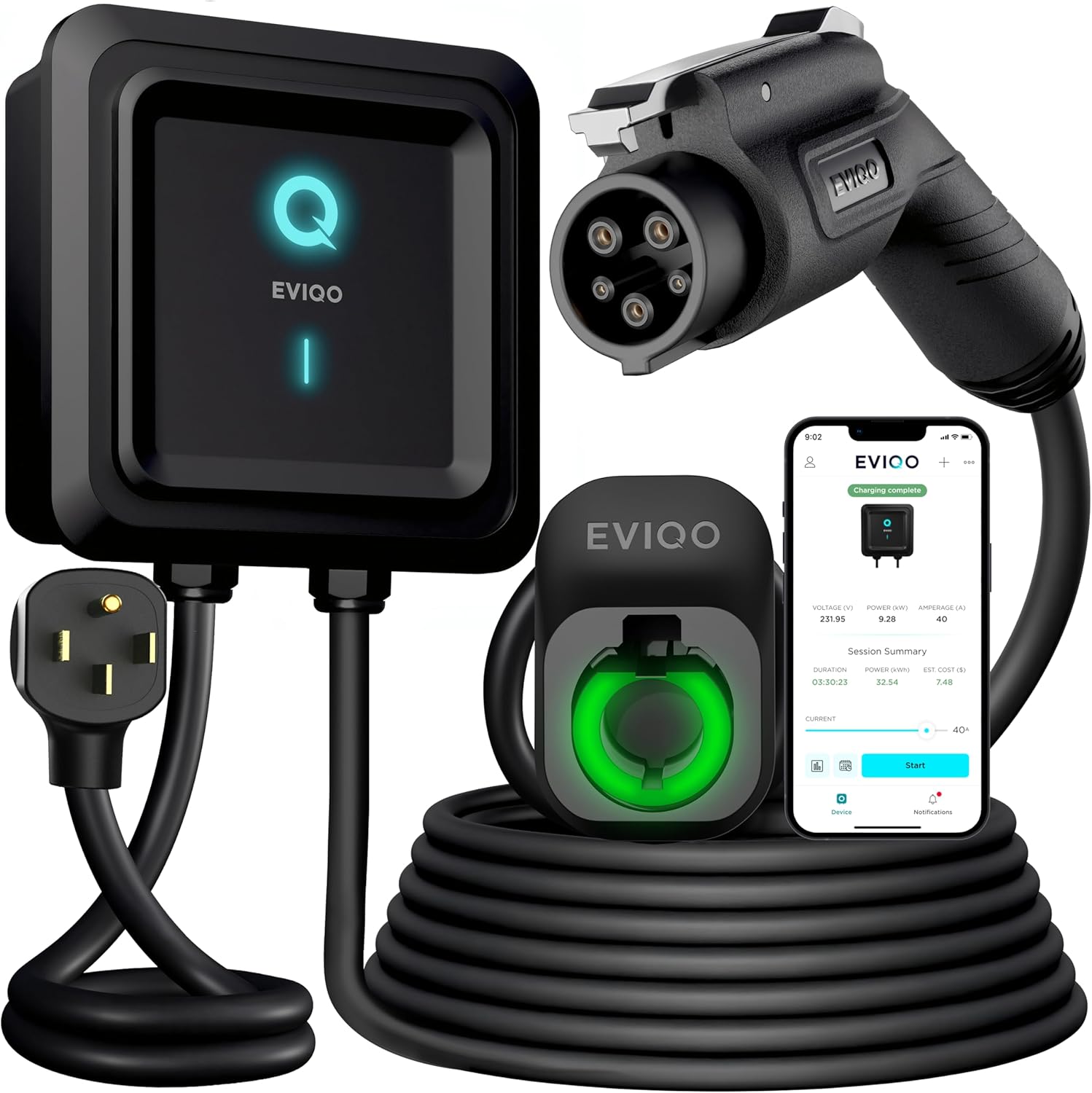
If you want real smart-charger features without paying name-brand prices, the EVIQO Level 2 EV Charger, 40 Amp is the value pick of 2026. At under $400, it delivers 40 amps (9.6 kW), full Wi-Fi smart app control, a 25-foot cable, and IP66/NEMA 4 weatherproofing — specs that match chargers costing nearly twice as much.
The EVIQO app handles the basics well: scheduled charging on off-peak rates, real-time amperage adjustment from 6 to 40 amps, kWh and cost tracking per session, and push notifications. UL and ETL certifications mean it meets U.S. electrical safety standards, and the plug-in NEMA 14-50 design means you can install it on any 50-amp outlet without an electrician (assuming the outlet already exists).
EVIQO is a newer brand without the public charging network or 10+ year track record of ChargePoint or Enphase, but the unit itself is solid. The app is responsive, the build feels substantial, and the cable stays flexible in cold weather. For most homeowners who just want fast, reliable, app-controlled charging without breaking the bank, this is the smart choice.
Specs:
- Output: 6-40 amps, up to 9.6 kW (240V)
- Connector: J1772
- Cable: 25 ft
- Install: NEMA 14-50 plug-in
- Connectivity: 2.4GHz Wi-Fi
- Smart home: EVIQO app
- Certifications: UL, ETL, IP66 / NEMA 4
Pros:
- Under $400 with full smart features
- 40A output adds 30+ miles per hour
- 25-foot cable handles most installs
- IP66 weatherproof for outdoor use
- Plug-in install — no electrician needed if outlet exists
Cons:
- Newer brand without long-term reliability history
- No HomeKit support (Alexa and Google only)
- Cannot scale to 48A (capped at 40A in plug-in mode)
- No public charging network integration
6. AIMILER Level 2 Electric Vehicle (EV) Charger — Best Portable {#aimiler-32a}
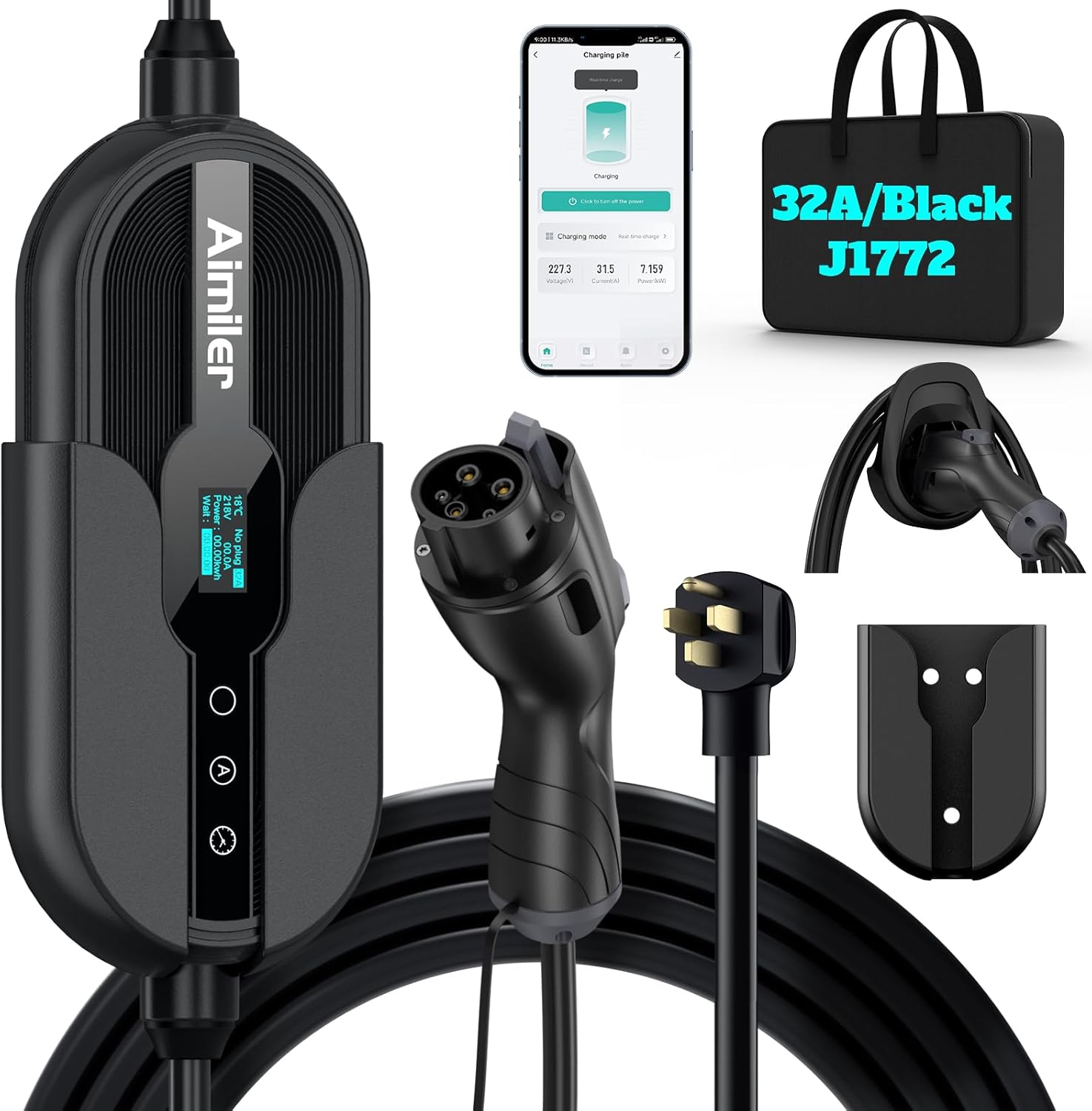
The AIMILER Level 2 Electric Vehicle (EV) Charger is the smart pick if you’re renting, traveling with your EV, or just want a backup charger to keep in the trunk. At around $190, it’s the cheapest legitimate Level 2 smart charger we’d recommend. It runs at 32 amps (7.7 kW) on a NEMA 14-50 plug, adds 25-30 miles per hour, and packs into a compact carrying case for easy transport.
The Wi-Fi smart app is basic but functional — scheduled charging, current adjustment from 10 to 32 amps (handy if you’re plugging into a smaller circuit than 50A), and session energy tracking. ETL certified for safety. The 25-foot cable gives you flexibility on where you can park, and the unit weighs under 14 pounds, making it genuinely portable.
For renters, this is the smart-charger answer to “I don’t want to install anything permanent and I might move next year.” Plug it into any NEMA 14-50 outlet (or use an adapter for NEMA 6-20 / 6-50), and you’ve got Level 2 charging without committing to a wall-mounted installation. It’s also a great second charger to keep in the trunk for visiting friends or family who have an outlet but no charger.
Specs:
- Output: 10-32 amps, up to 7.7 kW (220-240V)
- Connector: J1772
- Cable: 25 ft
- Install: NEMA 14-50 plug-in, portable
- Connectivity: 2.4GHz Wi-Fi
- Smart home: AIMILER app
- Certifications: ETL
Pros:
- Cheapest Level 2 smart charger worth buying
- Truly portable — fits in a carrying case
- Adjustable current works on smaller circuits
- 25-foot cable
- Decent smart app for scheduled off-peak charging
Cons:
- 32A max — slower than 40A and 48A models
- No IP66 weatherproofing rating (portable design)
- Budget brand, lower-tier app polish
- No premium smart home integrations (HomeKit, etc.)
Smart Home EV Charger Comparison Table
| Charger | Max Amps | Connector | Install | Cable | Smart Home | Best For |
|---|---|---|---|---|---|---|
| ChargePoint HomeFlex J1772 | 50A | J1772 | Plug-in or hardwired | 23 ft | Alexa, Google, HomeKit | Most buyers |
| ChargePoint HomeFlex NACS | 50A | NACS | Hardwired | 23 ft | Alexa, Google, HomeKit | Tesla owners |
| Autel Home 50A | 50A | J1772 | Hardwired | 25 ft | Alexa, Google | Premium / multi-EV |
| Enphase IQ EV Charger 2 | 48A | NACS | Hardwired | 25 ft | Enphase, Alexa, Google | Solar homes |
| EVIQO 40 Amp | 40A | J1772 | Plug-in | 25 ft | Alexa, Google | Budget buyers |
| AIMILER 32A | 32A | J1772 | Plug-in / portable | 25 ft | App only | Renters / travel |
How to Choose the Right Smart EV Charger for You
The right charger depends on three things: your car, your home’s electrical capacity, and how you actually charge.
If you have a Tesla or a 2025+ EV with NACS: Get the ChargePoint HomeFlex NACS or the Enphase IQ EV Charger 2 (if you have solar). No adapters, faster connections, future-proof for the new standard.
If you have a Ford, GM, Hyundai, Kia, Nissan, VW, or other J1772 EV: Get the ChargePoint HomeFlex J1772 for the best overall experience, or the Autel Home 50A if you want premium build and multi-charger load balancing. EVIQO is the strong budget alternative.
If you have a 200-amp main panel with room to spare: Go for 48-50 amps to maximize charging speed.
If you have a 100- or 150-amp main panel, or older wiring: Stick with a 32-40 amp charger. Adding a 60-amp circuit to a smaller panel often triggers a service upgrade that costs $1,500-$3,000.
If you rent or might move soon: The AIMILER portable or any NEMA 14-50 plug-in charger comes with you. Don’t hardwire a charger into a home you don’t own.
If you have home solar: The Enphase IQ EV Charger 2 (for Enphase systems) integrates so deeply that it justifies the price. For other solar brands, any of these chargers can be scheduled to run during peak solar hours, even without direct integration.
For the broader picture on integrating an EV charger into a full smart energy setup, our guide to the best portable power stations of 2026 covers how to add backup power that pairs well with an EV charger during outages. And if you’re building a smart garage from scratch, see our smart garage door opener review for the WiFi controllers that integrate cleanly with EV charging schedules.
Installation: Plug-In vs. Hardwired
This is where a lot of buyers get confused, so here’s the simple version.
Plug-in install (NEMA 14-50): A NEMA 14-50 is the same 240V outlet RVs use. If you already have one in your garage, you’re done — just plug in the charger. If you don’t have one, an electrician can install one for $200-$800 depending on how far it is from your panel. Plug-in is capped at 40 amps by U.S. code, no matter what the charger is rated for.
Hardwired install: An electrician runs wire from your panel directly to the charger’s terminals. This unlocks the full 48A or 50A capability of higher-end units, looks cleaner (no big outlet visible), and is generally required for outdoor installations where the outlet would be exposed. Cost is similar to plug-in — usually $300-$1,000 depending on distance and panel work.
Permit and inspection: Most jurisdictions require a permit for a new 240V circuit. Your electrician handles this. Skipping the permit can void your homeowner’s insurance if there’s ever an electrical fire — don’t skip it.
How Much Does Home EV Charging Cost?
This is one of the best things about owning an EV. At the national average electric rate of about $0.16/kWh, a full 60 kWh charge (a typical mid-size EV battery) costs $9.60. That same range from gasoline at $3.50/gallon and 30 MPG costs roughly $30. You’re saving $20+ per fill-up, every time, and the savings stack up to $1,000-$2,000 per year for the average driver.
On a time-of-use rate plan with off-peak rates as low as $0.08/kWh (common in California, Texas, and many other states), the same charge drops to $4.80. That’s where the smart scheduling features of these chargers really pay off — you set it once to charge from 11pm to 7am, and your charging cost gets cut almost in half.
For a complete look at smart energy savings, our guide on smart plugs and energy monitoring covers the broader picture of cutting your home electric bill.
FAQ
Do I really need a Level 2 charger? Can I just use the cord that came with my car?
The Level 1 (120V) cord that ships with most EVs adds 3-5 miles of range per hour. If you drive less than 30 miles a day and have all night to charge, technically yes — Level 1 works. But for anyone with a daily commute over 30 miles, a road trip occasionally, or simply not wanting to plan around charging, Level 2 changes the experience entirely. You plug in when you get home, and the car is full by morning. Every time.
Will a 48-amp charger fit my house?
Probably not without checking. A 48A charger needs a 60-amp dedicated circuit, which requires both panel capacity and at least 6-gauge copper wire. Most U.S. homes built before 2010 don’t have spare 60-amp capacity, and adding it often means upgrading your service from 100A to 200A — a $1,500-$3,000 project. Have an electrician do a load calculation before buying anything bigger than 40 amps.
What’s the difference between J1772 and NACS, really?
J1772 is the old North American standard. NACS (formerly the Tesla connector) is the new one. Tesla opened it up in 2022, and every major automaker has committed to using NACS on their 2025+ models. Both connectors deliver the same Level 2 AC charging at the same speeds — the difference is purely physical shape and which adapter (if any) you need. Adapters between the two are cheap and reliable. Buy the connector that matches your car today, and use an adapter for the other one when needed.
Can I install a Level 2 charger myself?
In most jurisdictions, no — running a new 240V circuit requires a licensed electrician and a permit. Even if you’re confident in your DIY skills, the permit and insurance implications make this one of the few smart home installs we’d hand off. The exception: if you already have a NEMA 14-50 outlet and you’re buying a plug-in charger, you can install the charger itself yourself (mounting bracket and plug, no electrical work).
Is Wi-Fi required for the charger to work?
No. Every charger in this guide will charge your car without Wi-Fi connected — you just lose the smart features (scheduling, energy tracking, notifications). If your garage Wi-Fi is weak, look at a mesh extension. For chargers in detached garages, Bluetooth backup (ChargePoint, Enphase) is a nice fallback when Wi-Fi drops.
Will these chargers work with my Tesla Powerwall or solar battery?
Yes, all of them will run from grid power, solar, or battery — they don’t know or care where the electricity comes from. The Enphase IQ EV Charger 2 is the only one with direct app-level integration to a home battery system (Enphase IQ Battery). For other ecosystems (Tesla Powerwall, Franklin, Generac PWRcell), you can schedule the charger to run during peak solar hours from the charger’s own app, but the integration isn’t as tight.
Are these chargers safe outdoors in winter?
Yes, every charger except the AIMILER portable is rated for outdoor permanent installation in U.S. climates. IP66 / NEMA 4 ratings cover dust, heavy rain, and snow. Charging cables should still be stored off the ground when not in use (cable holsters are included with most units) to keep them from getting buried in snow or damaged by foot traffic.
How long do these chargers last?
The chargers themselves typically last 10+ years with no maintenance. The most common failure point is the cable, where years of cold-weather flexing eventually crack the outer jacket. ChargePoint and Enphase offer the longest warranties (3 and 5 years respectively), which is a reasonable proxy for expected lifespan. Replacement cables are available aftermarket for most major brands when the original eventually wears out.
The Bottom Line
For most EV drivers in 2026, the ChargePoint HomeFlex Level 2 EV Charger J1772 is the smart home EV charger to buy. It hits every box: adjustable 16-50 amp range to fit any panel, the best app on the market, public charging network integration, full smart home support (Alexa, Google, HomeKit), and a 23-foot cable that reaches anywhere. Buy once, use anywhere.
If you drive a Tesla or a 2025+ EV with NACS, get the ChargePoint HomeFlex Level 2 EV Charger, Hardwired NACS for the same software experience with the right connector. If you want a premium build with multi-charger load balancing for a two-EV household, the Autel Home Level 2 EV Charger up to 50Amp is the upgrade pick. Solar homeowners with Enphase systems should jump straight to the Enphase IQ EV Charger 2 for full ecosystem integration.
On a tight budget, the EVIQO Level 2 EV Charger, 40 Amp delivers 80% of the experience at half the price. And for renters or anyone who travels with their EV, the AIMILER Level 2 Electric Vehicle (EV) Charger is a smart, portable, affordable backup that goes wherever you do.
Whichever you pick, 2026 is the right time to install Level 2 charging at home. Off-peak electricity rates make EV ownership genuinely cheaper than gas, smart scheduling cuts your charging bill nearly in half, and every model on this list will keep doing its job for the next decade. Pick the one that fits your panel and your car, get it installed, and stop thinking about where to plug in.