
Quick Picks
Short on time? Here are our top recommendations:
- Sonos Arc Ultra (~$999) — Best overall, 9.1.4 Dolby Atmos with room-filling sound
- Bose Smart Ultra Soundbar (~$900) — Best spatial audio with ADAPTiQ room calibration
- Samsung HW-Q990F (~$1,200) — Best full surround with wireless rear speakers
- Sonos Beam Gen 2 (~$450) — Best compact for smaller rooms
- Samsung S60D (~$280) — Best mid-range all-in-one
- Polk Audio React (~$200) — Best budget with Alexa built in
A smart soundbar does two things a regular soundbar can’t: it replaces your smart speaker and it connects to your entire smart home. Instead of buying an Echo or Nest speaker and a separate soundbar, you get both in one device. Say “Alexa, play jazz” or “Hey Google, dim the living room lights” without picking up a remote or your phone.
Beyond voice control, the best smart soundbars in 2026 support Dolby Atmos for immersive surround sound, stream music directly over WiFi from Spotify, Apple Music, and other services, and integrate with your existing smart home ecosystem — Alexa routines, Google Home groups, Apple AirPlay, or all of the above.
The catch is that “smart” gets slapped on a lot of soundbars that just have Bluetooth. A truly smart soundbar needs WiFi connectivity, a built-in voice assistant, and the ability to work as part of your smart home — not just pair with your phone. We researched the top options to find six that actually deliver, from a $200 budget pick to a $1,200 full surround system.
Our Top Picks Reviewed
Sonos Arc Ultra — Best Overall
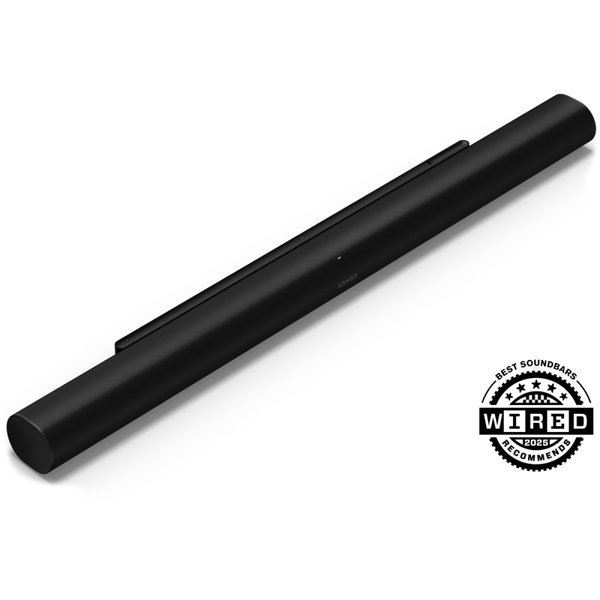
The Sonos Arc Ultra is the best smart soundbar you can buy right now. It’s a 9.1.4-channel system packed into a single bar — no separate subwoofer or rear speakers needed out of the box, though you can add them later. Sonos’s proprietary Sound Motion driver technology pushes deep, room-shaking bass from the bar itself, which is something most competitors need a separate sub to achieve.
For smart home integration, the Arc Ultra supports both Alexa and Google Assistant built in. You pick which one you want during setup, or you can switch later. It works with Sonos voice control too if you’d rather keep things in-ecosystem. Voice commands handle music playback, volume, smart home device control, weather, timers — the same stuff an Echo or Nest speaker does, but through your TV’s sound system.
The Dolby Atmos performance is genuinely impressive. The bar has upward-firing speakers that bounce sound off your ceiling to create overhead effects, and the wide soundstage fills a room in a way that makes action movies and live music feel three-dimensional. Sonos’s Trueplay tuning (available on iOS or via the built-in microphone) analyzes your room’s acoustics and adjusts the EQ automatically.
WiFi streaming is where Sonos really shines. The Arc Ultra streams directly from Spotify, Apple Music, Amazon Music, Tidal, YouTube Music, and more — no phone needed once you set it up. You can also group it with other Sonos speakers throughout your house for whole-home audio. AirPlay 2 support means iPhone and Mac users can cast audio directly.
At $999, it’s not cheap. But you’re getting a premium soundbar, a smart speaker, and a multi-room audio hub in one device. If you’re already in the Sonos ecosystem or building a smart home around Alexa or Google, this is the one to get.
Key Features:
- 9.1.4-channel Dolby Atmos with Sound Motion bass
- Alexa, Google Assistant, and Sonos voice control
- Trueplay room calibration (auto-tuning via built-in mic)
- WiFi streaming: Spotify, Apple Music, Amazon Music, Tidal, more
- AirPlay 2, Spotify Connect, Bluetooth 5.0
- HDMI eARC, optical audio input
- Expandable with Sonos Sub and surround speakers
Pros:
- Exceptional bass without a separate subwoofer
- True Dolby Atmos with upward-firing speakers
- Dual voice assistant support (Alexa + Google)
- Direct music streaming without a phone
- Multi-room audio with other Sonos speakers
- Trueplay auto-calibration actually works
Cons:
- $999 is a significant investment
- Large size (45 inches wide) — won’t fit under smaller TVs
- Trueplay was iOS-only until recent update
- No DTS:X support
- Adding Sub and rears pushes total cost past $2,000
Bose Smart Ultra Soundbar — Best Spatial Audio
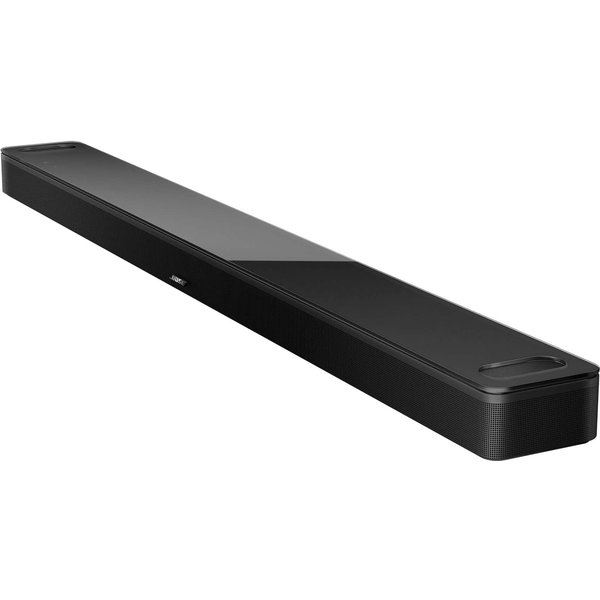
Bose has always been strong on audio quality, and the Smart Ultra Soundbar is their best voice-controlled bar yet. It uses six custom-engineered drivers including two upward-firing transducers for Dolby Atmos, plus Bose’s TrueSpace processing that analyzes non-Atmos content and upmixes it to sound more immersive. So even regular TV shows and older movies get the spatial treatment.
Both Alexa and Google Assistant are built in with far-field microphones, meaning you can talk to it from across the room even while audio is playing. The mic array is good enough that you rarely need to raise your voice, which is a problem with some cheaper smart soundbars. A physical mute button on top disables the mics for privacy.
Bose’s ADAPTiQ room calibration is one of the best in the business. You wear a small headset (included), sit in five different spots in your room, and the soundbar maps your space to optimize audio for where you actually sit — not just one sweet spot. It makes a real difference, especially in rooms with hard floors or open floor plans that create echoes.
For streaming, the Bose Smart Ultra connects to Spotify Connect, AirPlay 2, Chromecast, and Bluetooth. The Bose Music app lets you manage presets, set alarms, and group the soundbar with other Bose smart speakers. It also works as a standalone music speaker when the TV is off.
At around $900, it’s priced close to the Sonos Arc Ultra. The decision between them comes down to preference: Bose has slightly better voice pickup and room calibration, while Sonos has better bass and multi-room integration. Either way, you’re getting a top-tier smart soundbar.
Key Features:
- 6 custom drivers with 2 upward-firing for Dolby Atmos
- Bose TrueSpace spatial audio upmixing
- Alexa and Google Assistant with far-field mics
- ADAPTiQ room calibration with headset
- Spotify Connect, AirPlay 2, Chromecast, Bluetooth
- HDMI eARC, optical, USB-C input
- Expandable with Bose Bass Module and surround speakers
Pros:
- ADAPTiQ calibration tailors sound to your specific room
- TrueSpace upmixes non-Atmos content effectively
- Excellent voice pickup even at high volumes
- Physical mic mute button for privacy
- Clean, understated design fits any room
- Works with both major voice assistants
Cons:
- ~$900 price tag is steep
- Bass is good but not as deep as Sonos Arc Ultra without a sub
- Bose ecosystem is smaller than Sonos for multi-room
- ADAPTiQ calibration process takes 10-15 minutes
- No DTS:X support
Samsung HW-Q990F — Best Full Surround System
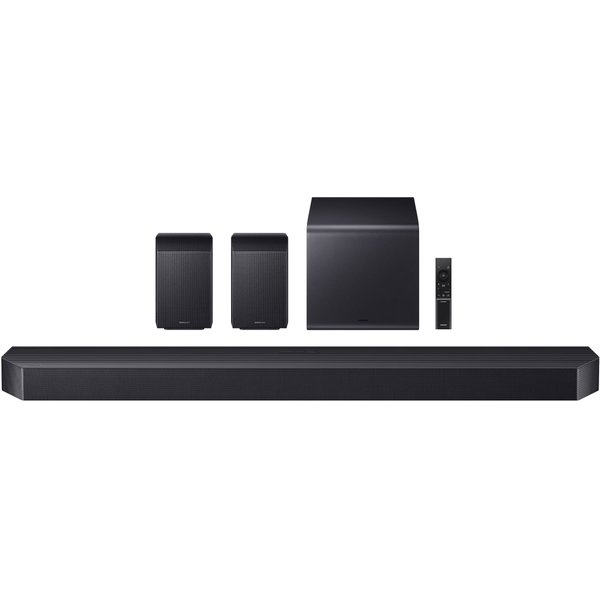
If you want the closest thing to a real home theater without running speaker wire, the Samsung HW-Q990F is it. This is a 11.1.4-channel system that comes with a wireless subwoofer and two wireless rear speakers included in the box. Seventeen total drivers create a true surround sound experience with overhead Dolby Atmos effects — no upmixing tricks needed.
Samsung’s Q-Symphony technology is the smart home integration angle here. If you pair the Q990F with a Samsung TV, the TV’s built-in speakers work together with the soundbar instead of being replaced by it. This creates an even wider, more enveloping sound field. It’s one of those features that sounds like marketing fluff until you hear it — the difference is real.
For voice control, the Q990F works with Alexa built in and supports Samsung’s SmartThings ecosystem. You can control it by voice, set it to adjust volume automatically based on content type with Adaptive Sound Pro, and use Game Mode Pro to reduce audio latency when gaming. SpaceFit Sound Pro analyzes your room using the bar’s built-in microphone and adjusts output accordingly.
The wireless subwoofer delivers genuinely deep bass — the kind you feel in your chest during explosions and bass drops. And because the rear speakers are wireless too, setup takes about ten minutes with no cable routing required.
At around $1,200, it’s the most expensive option on this list. But you’re getting a complete 11.1.4 surround system with three separate wireless components. To build something comparable from a competitor, you’d spend $1,500+ buying a soundbar, sub, and rears separately.
Key Features:
- 11.1.4 channels, 17 drivers with Dolby Atmos and DTS:X
- Wireless subwoofer + wireless rear speakers included
- Q-Symphony TV speaker collaboration (Samsung TVs)
- Alexa built in, SmartThings compatible
- SpaceFit Sound Pro room calibration
- Adaptive Sound Pro and Game Mode Pro
- WiFi, Bluetooth, HDMI eARC, optical
Pros:
- True 11.1.4 surround without any wires between components
- Subwoofer and rear speakers included — nothing extra to buy
- Q-Symphony with Samsung TVs is genuinely impressive
- Both Dolby Atmos AND DTS:X support
- Adaptive Sound Pro automatically optimizes for content type
- Game Mode Pro reduces latency for gaming
Cons:
- $1,200 is the highest price on this list
- Q-Symphony only works with Samsung TVs
- Three separate components take up more space
- Alexa only — no Google Assistant option
- SmartThings ecosystem is less mature than Alexa/Google Home
- Rear speakers need power outlets near their placement spots
Sonos Beam Gen 2 — Best Compact
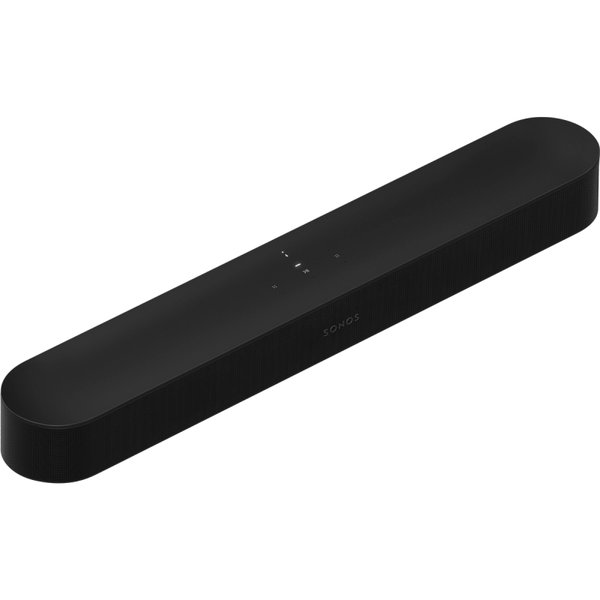
Not everyone needs a 45-inch soundbar dominating their entertainment center. The Sonos Beam Gen 2 is just 25.6 inches wide — small enough to fit under a 43-inch TV or sit on a bedroom nightstand — but it sounds significantly bigger than its size suggests. Sonos packed five drivers and three passive radiators into this compact frame, and the processing wizardry creates a convincingly wide soundstage.
Like the Arc Ultra, the Beam Gen 2 supports Alexa, Google Assistant, and Sonos voice control. Pick your assistant during setup and use it for music, smart home control, and the usual voice assistant features. The far-field microphone array picks up commands well even at moderate volumes, though it’s not quite as good as the Bose at high volumes.
Dolby Atmos support was one of the biggest upgrades from the original Beam. The Gen 2 doesn’t have upward-firing speakers, so it processes Atmos content using psychoacoustic techniques to simulate overhead effects. It’s not the same as physical upward-firing drivers, but the sense of height and space is noticeable compared to standard stereo.
The real reason to pick the Beam Gen 2 is the Sonos ecosystem. It streams directly from all major music services over WiFi, works with AirPlay 2, groups with other Sonos speakers, and acts as a smart hub for your room. For a bedroom, office, or apartment where space is tight, it delivers the Sonos smart experience in a much smaller package.
At $450, it’s the sweet spot between the premium options and budget soundbars. You get genuine smart home integration, solid Atmos support, and the full Sonos platform — just in a smaller box.
Key Features:
- 5 Class-D amplifiers with 3 passive radiators
- Dolby Atmos via processing (no upward-firing speakers)
- Alexa, Google Assistant, and Sonos voice control
- WiFi streaming from all major music services
- AirPlay 2, Spotify Connect, Bluetooth
- HDMI eARC, optical input
- Compact: 25.6” wide x 2.7” tall
Pros:
- Fits under small TVs and in tight spaces
- Full Sonos ecosystem and multi-room audio support
- Dolby Atmos adds noticeable height effects
- Three voice assistant options
- Excellent sound quality for the size
- Clean design in black or white
Cons:
- $450 is premium for a compact bar
- No physical upward-firing Atmos speakers
- Bass is limited without adding a Sonos Sub ($799)
- Doesn’t get as loud as full-size soundbars
- Trueplay tuning historically required iOS (now supports Android)
Samsung S60D — Best Mid-Range Value

The Samsung S60D is a 5.0-channel all-in-one soundbar that hits an impressive sweet spot: Dolby Atmos, WiFi streaming, Alexa built in, and solid sound quality — all for around $280. No separate subwoofer or rear speakers, just one bar with seven internal speakers doing all the work.
The sound quality punches above the price. Samsung packed in 200 watts of total power with dedicated center, side, and upward-firing channels. The bass won’t shake your floor, but it’s more than adequate for most rooms. Adaptive Sound automatically optimizes audio based on what you’re watching — dialogue gets boosted in news and drama, effects get louder in action scenes.
Alexa is built right in with far-field microphones. Ask it to play music, control your lights, check the weather, set timers — the full Alexa experience without needing a separate Echo device. It also supports AirPlay 2 and Chromecast, so both Apple and Android users can stream directly from their phones.
If you have a Samsung TV, Q-Symphony lets the TV and soundbar speakers work together for wider sound. And SpaceFit Sound uses the bar’s microphone to analyze your room and auto-adjust — a simplified version of what the Q990F does. For gaming, there’s a Game Mode that reduces audio delay.
At $280, this is the soundbar we’d recommend to anyone who wants smart features and Dolby Atmos without spending $500+. It doesn’t have the audiophile-grade drivers of the Bose or the multi-room platform of Sonos, but for the price, you’re getting a lot.
Key Features:
- 5.0 channels, 7 speakers, 200 watts total
- Wireless Dolby Atmos (upward-firing channels)
- Alexa built in with far-field microphones
- AirPlay 2, Chromecast, Bluetooth, WiFi
- Q-Symphony (Samsung TVs), SpaceFit Sound
- Adaptive Sound, Game Mode
- HDMI eARC, optical input
Pros:
- Outstanding value — Dolby Atmos + Alexa for ~$280
- All-in-one design with no separate components
- 200 watts is plenty of power for medium rooms
- AirPlay 2 AND Chromecast (works with everything)
- SpaceFit Sound auto-adjusts to your room
- Sleek, low-profile design
Cons:
- Bass is decent but can’t match systems with a dedicated sub
- Alexa only — no Google Assistant option
- Samsung ecosystem features require a Samsung TV
- No Spotify Connect (must use AirPlay/Chromecast instead)
- All-in-one means no upgrade path for surround
Polk Audio React — Best Budget
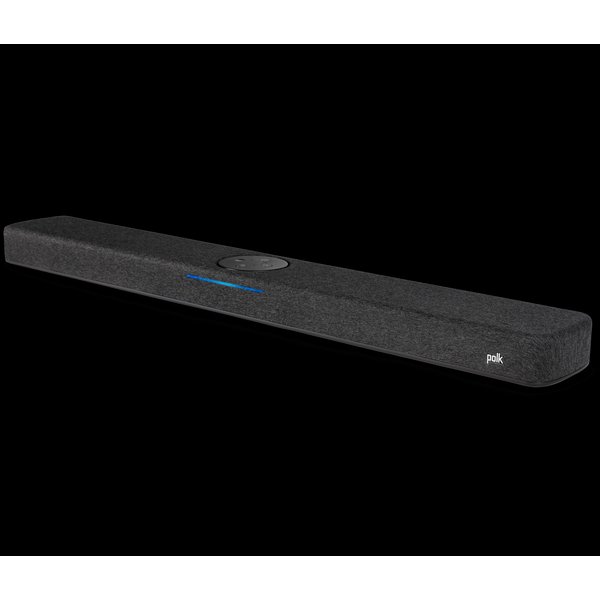
The Polk Audio React is the most affordable way to get a genuinely good soundbar with a real voice assistant built in. At around $200, it’s half the price of the Sonos Beam Gen 2 and still delivers solid audio quality with full Alexa integration — not just “works with Alexa,” but Alexa actually lives in the bar.
Polk uses their Voice Adjust technology to keep dialogue clear and natural, which is the number one complaint people have about their TV audio. You can fine-tune how much dialogue stands out from background sounds, which is genuinely useful for movies where everyone mumbles. The bar produces virtual surround sound that does a reasonable job of creating width beyond the physical speakers.
Alexa is always listening (with a mute button for privacy) through far-field microphones. You get the complete Alexa experience: music streaming from Amazon Music and other services, smart home control, routines, timers, news briefings, and everything else an Echo can do. The React essentially replaces both your TV speaker and your Echo device.
Build quality is solid for the price. The fabric grille gives it a modern look, and at 34 inches wide, it fits under most TVs. It connects via HDMI ARC, optical, Bluetooth, and has a 3.5mm aux input — more connection options than some bars twice the price. You can also pair two Polk SR2 wireless surrounds and a Polk React Sub to build out a surround system later.
The tradeoffs at $200 are predictable: no Dolby Atmos, no WiFi streaming (just Bluetooth), and no Google Assistant option. But for the core job of “make my TV sound way better and give me a voice assistant” — the React delivers.
Key Features:
- Alexa built in with far-field microphones
- Polk Voice Adjust dialogue enhancement
- Virtual surround sound processing
- HDMI ARC, optical, Bluetooth 5.0, 3.5mm aux
- Expandable with Polk React Sub and SR2 surround speakers
- 34 inches wide, compact design
Pros:
- Best smart soundbar value at ~$200
- Full Alexa integration, not just compatibility
- Voice Adjust keeps dialogue clear and prominent
- Multiple connection options including HDMI ARC
- Expandable with matching sub and rears
- Solid build quality with modern design
Cons:
- No Dolby Atmos support
- No WiFi streaming — Bluetooth only for music
- Alexa only — no Google Assistant
- Bass is limited without adding the React Sub (~$200 extra)
- No room calibration feature
- Virtual surround is decent but not true multi-channel
Comparison Table
| Soundbar | Price | Channels | Dolby Atmos | Voice Assistant | Sub Included | WiFi Streaming |
|---|---|---|---|---|---|---|
| Sonos Arc Ultra | ~$999 | 9.1.4 | Yes (upfiring) | Alexa + Google | No | Yes |
| Bose Smart Ultra | ~$900 | 5.1.2 | Yes (upfiring) | Alexa + Google | No | Yes |
| Samsung HW-Q990F | ~$1,200 | 11.1.4 | Yes (upfiring) | Alexa | Yes | Yes |
| Sonos Beam Gen 2 | ~$450 | 5.0 | Yes (processed) | Alexa + Google | No | Yes |
| Samsung S60D | ~$280 | 5.0 | Yes (upfiring) | Alexa | No | Yes |
| Polk Audio React | ~$200 | 2.0 | No | Alexa | No | No |
How to Choose the Right Smart Soundbar
Voice Assistant Compatibility
This is the most important smart feature to get right. If your home runs on Alexa, all six options on this list work. If you use Google Assistant, your choices narrow to the Sonos Arc Ultra, Bose Smart Ultra, and Sonos Beam Gen 2. If you’re in the Apple ecosystem, look for AirPlay 2 support — the Sonos models, Bose, and Samsung S60D all have it.
Room Size
Match the soundbar to your space. The Polk React and Samsung S60D work great in bedrooms, apartments, and rooms under 300 square feet. The Sonos Beam Gen 2 handles medium rooms well. The Sonos Arc Ultra, Bose Smart Ultra, and Samsung Q990F are designed for larger living rooms and dedicated home theater spaces.
Do You Need a Subwoofer?
If you care about deep bass for movies and music, check whether the soundbar includes a sub or needs one. The Samsung Q990F includes a wireless sub in the box. The Sonos Arc Ultra has impressive built-in bass but still benefits from adding a Sonos Sub. The budget options (Polk React, Samsung S60D) will sound thin on bass-heavy content without a sub.
Smart Home Integration
Beyond voice control, think about how the soundbar fits into your existing setup. Sonos products work with the most ecosystems and have the best multi-room audio. Samsung soundbars pair best with Samsung TVs via Q-Symphony. Bose has its own multi-room system but a smaller speaker lineup. Polk is expandable but doesn’t have a broader smart home platform.
Dolby Atmos
All the options above $250 support Dolby Atmos, but the quality varies. Bars with physical upward-firing speakers (Sonos Arc Ultra, Bose Smart Ultra, Samsung Q990F, Samsung S60D) create more convincing overhead effects than bars that process Atmos through software (Sonos Beam Gen 2). If Atmos matters to you, prioritize upward-firing drivers.
Related Articles
Looking for more smart home entertainment gear? Check out our other guides:
- Best Smart Speakers 2026 — standalone voice-controlled speakers for every room
- Best Smart Displays 2026 — touchscreen speakers with video calling and smart home control
- Alexa vs Google Home 2026 — which voice assistant is right for your smart home
FAQ
Do smart soundbars replace a smart speaker like Echo or Nest?
Yes, for the room the soundbar is in. A soundbar with Alexa or Google Assistant built in does everything an Echo or Nest speaker does — play music, control smart devices, answer questions, set timers. The main difference is that a soundbar is always connected to your TV, so it can’t easily move between rooms like a portable smart speaker.
Can I use a smart soundbar without a TV?
Absolutely. Every soundbar on this list works as a standalone music speaker. The WiFi-enabled models (Sonos, Bose, Samsung) can stream music directly from services like Spotify without any TV or phone involved. Even the Polk React streams via Bluetooth from your phone. Many people use their smart soundbar as their primary music speaker when the TV is off.
Is Dolby Atmos worth paying extra for in a soundbar?
It depends on what you watch. If you stream a lot of movies and shows from Netflix, Disney+, Apple TV+, or HBO Max, many titles are mixed in Atmos and you’ll hear a real difference — especially dialogue clarity and the sense of sounds moving around you. For regular cable TV and news, the difference is minimal. If you mostly watch TV rather than movies, save money and skip Atmos.
Do I need a separate subwoofer with a smart soundbar?
Not necessarily. The Sonos Arc Ultra and Samsung Q990F (which includes a sub) deliver strong bass on their own. But if you love action movies, hip-hop, or EDM, a dedicated subwoofer adds the low-end rumble that no soundbar can fully replicate on its own. Most brands sell matching wireless subs that pair instantly — Sonos Sub, Bose Bass Module, Samsung subwoofer, or Polk React Sub.
Can I add surround speakers to a smart soundbar later?
Most premium smart soundbars support this. Sonos lets you add two One SL or Era 100 speakers as wireless rears to both the Arc Ultra and Beam Gen 2. Samsung includes rears with the Q990F and sells them separately for the S60D. Bose offers surround speakers for the Smart Ultra. The Polk React supports the SR2 wireless surrounds. Starting with just the soundbar and adding surrounds later is a solid strategy if you want to spread out the cost.