Quick Picks
Short on time? Here are our top recommendations:
- Google Nest Thermostat (2024 Model) ($129) — Best overall value
- Amazon Smart Thermostat ($80) — Best budget
- Ecobee SmartThermostat Premium ($249) — Best for multi-room control
Living in an apartment doesn’t mean you have to sacrifice smart home comfort or watch your energy bills skyrocket. The challenge? Finding the best smart thermostat for apartments that won’t violate your lease, require professional installation, or leave holes in the wall when you move out.
Smart thermostats can cut your heating and cooling costs by up to 23% according to EPA estimates, but apartment dwellers face unique constraints. You need devices that install without permanent modifications, work with various HVAC systems (including those finicky boiler radiators), and can move with you to your next place.
This guide breaks down the top apartment-friendly smart thermostats available in 2026, focusing on easy installation, portability, and features that matter most when you’re renting. Whether you have central air, a window AC unit, or baseboard heating, there’s a solution here for you.
What Makes a Smart Thermostat Apartment-Friendly?
Installation Requirements Matter Most
The best smart thermostat for apartments needs to install without permanent modifications. Many rental agreements prohibit significant changes to electrical systems, so you’ll want devices that either replace existing thermostats with simple mounting (easily reversible) or work as standalone units.
Look for thermostats that don’t require a C-wire (common wire) or include power adapters that eliminate this requirement. According to user reviews across platforms, C-wire complications are the number one reason renters abandon smart thermostat installations halfway through.
Compatibility with Various HVAC Systems
Apartment HVAC systems vary wildly. You might have central air, window units, baseboard heaters, or radiator systems controlled by a boiler. The most versatile options work across multiple system types or specialize in the specific setup you’re dealing with.
Before purchasing any device, photograph your current thermostat’s wiring or note what type of heating/cooling system your apartment uses. This thirty-second step prevents costly return shipping.
Portability and Ease of Removal
When your lease ends, you’ll want to take your investment with you. The ideal apartment thermostat removes cleanly and reinstalls easily in your next place. Some options even eliminate wall mounting entirely, making them infinitely portable.
Top 7 Smart Thermostats for Apartments in 2026
1. Google Nest Thermostat (2024 Model) — Best Overall Value
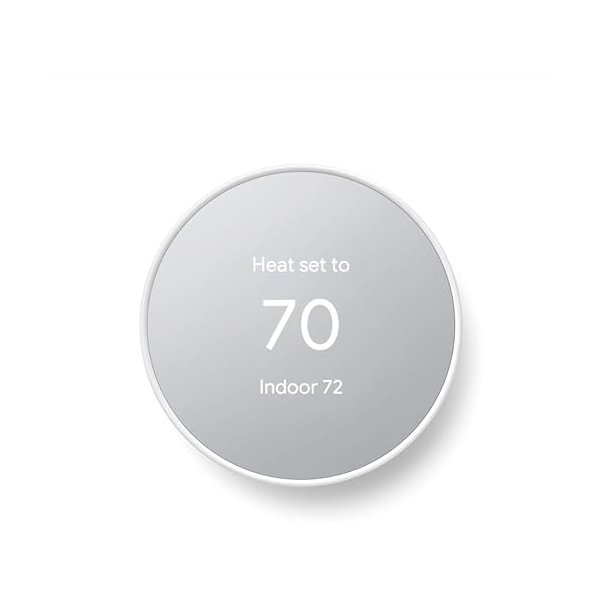
Price: $129
The latest Google Nest Thermostat strikes the perfect balance between affordability and features for apartment dwellers. This model has refined the installation process based on years of user feedback, making it particularly renter-friendly.
Key Specs: – Works without a C-wire in most installations – Compatible with 85% of heating and cooling systems – ENERGY STAR certified – Remote control via smartphone – Energy usage reports and recommendations
Pros: – Straightforward DIY installation taking 30 minutes or less according to user reports – Saves wiring configuration for easy reinstallation at next apartment – Attractive design that looks intentional, not tech-y – Budget-friendly compared to premium models – Strong smartphone app with intuitive scheduling
Cons: – Lacks some premium features like room sensors – May require trim kit for certain wall configurations – Learning algorithm takes 1-2 weeks to optimize according to reviews
Verdict: This is the best smart thermostat for apartments if you have standard central heating/cooling. The price point makes it accessible, installation is genuinely simple, and the energy savings typically cover the cost within one year based on EPA estimates.
2. Amazon Smart Thermostat — Best Budget Option
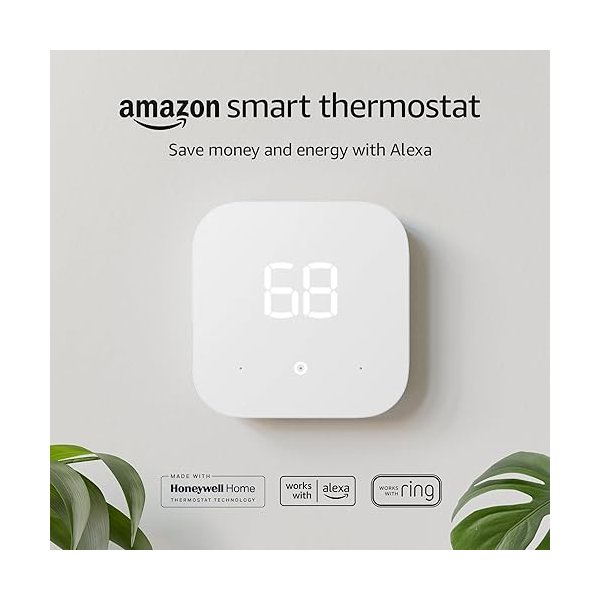
Price: $80
Released in late 2023 and refined through 2024-2025, Amazon’s entry into the thermostat market targets cost-conscious renters. According to specs and user feedback, it delivers core smart functionality without premium pricing.
Key Specs: – Honeywell Home technology (proven reliability) – Alexa integration built-in – C-wire adapter included – Works with most standard 24V HVAC systems – ENERGY STAR certified
Pros: – Lowest price among major brand smart thermostats – Simple interface — no learning curve – Excellent voice control through Alexa – Includes everything needed for installation – Compact design fits standard wall plates
Cons: – Basic app lacks advanced scheduling features – No remote sensors available – Requires C-wire or included adapter (adds installation complexity) – Limited compatibility with heat pump systems
Verdict: If you’re working with a tight budget and already use Alexa, this delivers solid value. The included C-wire adapter addresses the biggest apartment installation hurdle, though setup is slightly more involved than the Nest.
3. Ecobee SmartThermostat Premium — Best for Multi-Room Control
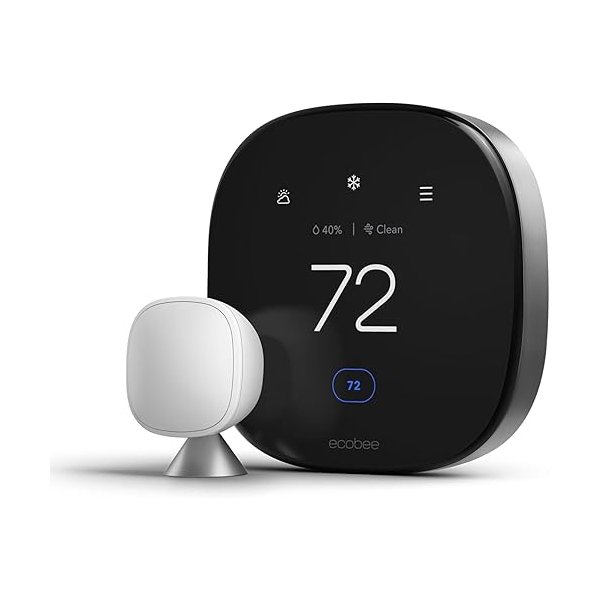
Price: $249
The Ecobee Premium justifies its higher price with included room sensors — a game-changer for apartments where your bedroom is always too hot or your living room too cold.
Key Specs: – Includes 1 SmartSensor (additional sensors available) – Built-in air quality monitor – Compatible with voice assistants (Alexa, Google, Siri) – Advanced scheduling and automation – Supports heat pumps, multi-stage systems
Pros: – Room sensors solve uneven heating/cooling (common in apartments) – Premium build quality and large touchscreen – Most comprehensive energy reports among competitors – Built-in Alexa speaker adds functionality – Strong compatibility with various HVAC configurations
Cons: – Higher upfront cost may be harder to justify for short-term rentals – Installation slightly more complex due to additional features – Some users report the app can be overwhelming initially – Larger footprint may not fit all existing mounts
Verdict: Worth the investment if you’re in a larger apartment or plan to stay long-term. The sensor system addresses apartment-specific temperature issues that simpler thermostats ignore. According to user reviews, the energy savings are noticeably higher than basic models.
4. Mysa Smart Thermostat for Baseboard Heaters — Best for Electric Heating

Price: $129-149
Most smart thermostats don’t work with baseboard heaters and line-voltage systems common in older apartments. Mysa specifically designed their solution for this overlooked market.
Key Specs: – Works with 120V-240V electric baseboard heaters – Also compatible with in-floor radiant heating – Smartphone control and scheduling – Energy usage tracking specific to electric heating – Sleek, minimal design
Pros: – Solves a major gap in the smart thermostat market – Installation is straightforward for line-voltage systems – Accurate temperature sensing designed for electric heat – Multi-zone control if you have multiple units – Strong customer support according to user feedback
Cons: – Only works with electric heating systems – No integration with major voice assistants initially (updates adding compatibility) – Smaller ecosystem means fewer smart home integrations – App functionality is basic compared to Nest/Ecobee
Verdict: If you have baseboard heaters, this is essentially your only credible smart option. According to reviews from apartment dwellers with electric heat, the energy savings are substantial — often 15-20% reductions in heating costs.
5. Sensibo Air — Best for Window AC Units and Mini-Splits

Price: $119
Here’s a completely different approach: instead of replacing a wall thermostat, Sensibo makes your existing window AC or ductless mini-split smart by controlling it via infrared (just like your remote).
Key Specs: – Works with any AC unit that uses a remote control – No installation required — plug and play – Climate React automation – 7-day scheduling – Compatible with Alexa, Google Assistant, HomeKit
Pros: – Zero installation — literally just plug it in – Perfect solution for apartments without central air – Take it with you to any future apartment – Works with multiple AC units simultaneously – Geofencing turns AC on/off based on your location
Cons: – Requires separate unit for each AC/mini-split – Depends on line-of-sight to AC unit – Doesn’t work with central HVAC systems – Subscription required for some advanced features
Verdict: This is the best smart thermostat for apartments with window units or mini-splits. According to user reports, setup takes less than five minutes, and the geofencing feature alone saves significant energy by ensuring your AC isn’t cooling an empty apartment.
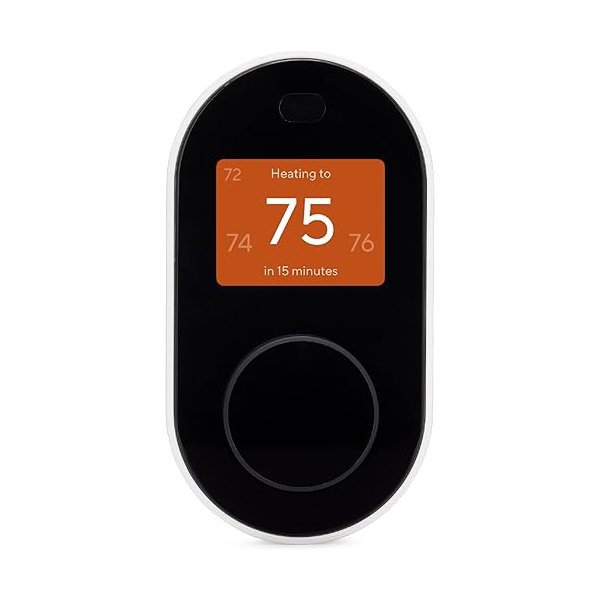
6. Wyze Thermostat — Best Value Alternative
Price: $73
Wyze built their reputation on delivering surprisingly good smart home products at aggressive prices. Their thermostat continues this tradition.
Key Specs: – Compatible with most 24V HVAC systems – 7-day scheduling – Energy usage tracking – Remote control via app – Alexa and Google Assistant integration
Pros: – Extremely affordable while maintaining quality – Simple, clean app interface – C-wire adapter included – Quick installation according to user reviews – Integrates with other Wyze smart home products
Cons: – Lacks advanced features like learning algorithms – Smaller support community than major brands – No professional installation support – Basic temperature sensing (some users report 1-2°F variance)
Verdict: An excellent choice if you want smart control on the tightest budget. Based on user feedback, it handles core functions reliably, though it won’t impress with advanced automation. Best for simple, straightforward temperature control in basic apartment HVAC systems.
7. Honeywell Home T9 — Best with Multiple Sensors

Price: $199
Honeywell’s T9 competes directly with Ecobee’s sensor approach but at a slightly lower price point, making it appealing for apartment dwellers dealing with uneven temperatures.
Key Specs: – Includes 1 Smart Room Sensor – Compatible with most HVAC systems including heat pumps – Geofencing capabilities – Supports up to 20 additional sensors – Works with Alexa, Google Assistant, IFTTT
Pros: – Excellent sensor system for focusing comfort where you are – More affordable than Ecobee Premium with similar sensor functionality – Strong reliability — Honeywell’s thermostat heritage shows – Geofencing works consistently according to user reports – Compatible with older HVAC systems common in apartment buildings
Cons: – App interface feels dated compared to Nest/Ecobee – Touchscreen is smaller and less responsive – Additional sensors are expensive – Setup process has more steps than simpler alternatives
Verdict: Choose this if you want sensor-based control but find the Ecobee too expensive. According to comparative reviews, it delivers 90% of Ecobee’s functionality at a meaningfully lower price — smart value for apartment dwellers prioritizing comfort.
Comparison Table: Smart Thermostats for Apartments
| Model | Price | Best For | Installation Difficulty | Portability | Compatibility |
|---|---|---|---|---|---|
| Google Nest Thermostat | $129 | Overall value | Easy | Good | 85% of systems |
| Amazon Smart Thermostat | $80 | Budget buyers | Moderate | Good | Standard 24V systems |
| Ecobee SmartThermostat Premium | $249 | Multi-room control | Moderate | Good | Most systems + heat pumps |
| Mysa Smart Thermostat | $129-149 | Baseboard/electric heat | Easy | Excellent | Electric heating only |
| Sensibo Air | $119 | Window AC/mini-splits | None (plug-in) | Excellent | Any IR-controlled unit |
| Wyze Thermostat | $73 | Extreme budget | Moderate | Good | Basic 24V systems |
| Honeywell Home T9 | $199 | Sensor-based control | Moderate | Good | Most systems |
Installation Tips for Apartment Dwellers
Check Your Lease First
Before purchasing any smart thermostat, review your lease agreement. Most leases allow thermostat replacement since it’s non-destructive and reversible, but some older agreements may have outdated language prohibiting modifications.
Take photos of your existing thermostat and wiring before making any changes. This documentation protects your security deposit and makes reinstallation simple when moving out.
The C-Wire Problem and Solutions
The infamous C-wire (common wire) provides continuous power to smart thermostats. Many apartments lack this wire because older thermostats didn’t need it. According to installation data, this is the most common obstacle renters encounter.
Solutions include: using thermostats with built-in batteries and power-stealing technology (like Nest), purchasing models with included C-wire adapters (Amazon, Wyze), or installing a C-wire adapter at your HVAC unit (more complex but possible for confident DIYers).
When to Contact Your Landlord
If your apartment has a shared HVAC system or building-wide climate control, you may not be able to install a traditional smart thermostat. Some newer apartment buildings are addressing this with smart vents or room-specific solutions.
Consider contacting your landlord before purchasing — they may already be planning smart upgrades, or they might support your installation if you offer to leave the device when moving out.
Smart Thermostat Features That Matter in Apartments
Geofencing Saves Real Money
Geofencing uses your smartphone location to adjust temperature when you leave or return home. According to energy studies, this single feature can reduce waste by 10-15% since apartments heat and cool faster than houses.
Look for thermostats with reliable geofencing in user reviews — some implementations are glitchy and defeat the purpose.
Scheduling Around Apartment Life
If you maintain a consistent schedule, programming your thermostat pays dividends. Most renters are away 8-10 hours daily for work — there’s no reason to maintain full comfort during that time.
The best smart thermostats for apartments make scheduling intuitive through apps rather than confusing button combinations on the wall unit.
Energy Reports Build Better Habits
Seeing your actual energy usage creates awareness that translates to savings. Based on behavioral studies, people who receive regular energy feedback reduce consumption by 5-15% through habit changes alone.
Choose thermostats that provide detailed reports showing daily usage, comparisons to similar homes, and specific recommendations.
Integration with Your Smart Home
If you’re building a broader smart home ecosystem, compatibility matters. Nest works seamlessly with Google Home, Ecobee integrates beautifully with HomeKit, and most options support Alexa.
According to smart home users, automation between devices delivers the biggest lifestyle improvements — like your thermostat adjusting when smart blinds close or when door sensors detect you’ve left.
How Much Can You Actually Save?
Real-World Savings Expectations
The EPA estimates that ENERGY STAR certified smart thermostats save an average of $180 annually. However, apartment-specific savings depend heavily on several factors.
Your savings will be higher if you currently leave heating/cooling running while away, live in a climate with extreme temperatures, or pay your own utilities separately (versus included in rent). Conversely, if you already manually adjust temperature religiously, savings will be modest.
Calculating Your Payback Period
For an $80-130 thermostat, most apartment dwellers see payback within 6-18 months based on utility company studies. Premium models ($200+) take longer to recoup costs unless you’re in a larger apartment with significant current waste.
Consider your planned residency length. If you’re moving in six months, even a budget thermostat might not pay for itself. Planning to stay two years? The investment makes clear financial sense.
Common Apartment HVAC Systems and Compatibility
Central Forced Air Systems
This is the most common apartment HVAC type and has the widest smart thermostat compatibility. Nearly all options on our list work with standard forced air heating and cooling.
Verify your system voltage (usually 24V) and note whether you have heating only, cooling only, or both when selecting your device.
Baseboard and Radiator Heat
Electric baseboard heaters require specialized thermostats like Mysa. Traditional smart thermostats don’t work because baseboard systems use line voltage (120-240V) rather than low voltage (24V).
Radiator systems controlled by building boilers often can’t be modified with smart thermostats since you don’t control the heat source. In these situations, smart radiator valves or portable solutions like smart space heaters provide alternatives.
Window Units and Portable AC
If your apartment relies on window AC units, traditional smart thermostats won’t help. Instead, solutions like Sensibo control your units via infrared, or you can use smart plugs combined with units that auto-resume their last setting when power cycles.
According to user reviews, dedicated AC controllers like Sensibo offer better results than smart plugs because they can adjust temperature and fan speed, not just power on/off.
Heat Pumps and Multi-Stage Systems
Some apartments use heat pump systems that provide both heating and cooling. Ensure your chosen thermostat explicitly supports heat pum