Quick Picks
Short on time? Here are our top recommendations:
- Eufy Video Doorbell Dual (Wired) ($200) — Best overall
- Reolink Video Doorbell (WiFi/PoE) ($100) — Best value
- Lorex 2K Video Doorbell ($180) — Best premium
- Amcrest AD410 Video Doorbell ($90) — Best budget
This article contains affiliate links. We may earn a commission at no extra cost to you. Tired of paying monthly fees just to access your own doorbell footage? You’re not alone. While many popular video doorbells lock essential features behind subscription paywalls, several excellent models offer full functionality without ongoing costs. The best video doorbell no subscription models store recordings locally, send real-time alerts, and provide two-way audio—all without charging you a dime after purchase. In this guide, you’ll discover which subscription-free video doorbells are worth your money in 2026, based on user reviews, expert analysis, and detailed spec comparisons. Whether you’re budget-conscious or simply prefer owning your data outright, these options deliver security without the recurring charges.
🏆 Best No-Subscription Video Doorbells 2026
🥇 Best Overall: Ring Video Doorbell – Local storage via Alexa, excellent video quality, no fees required
💰 Best Budget: Wyze Video Doorbell v2 – Free cloud storage included, unbeatable $35 price
🔋 Best Battery: Blink Video Doorbell – 2-year battery life, optional local USB storage
Quick Comparison:
🔔 Ring: Best Alexa integration | Shop Ring ($99)
💵 Wyze: Free cloud storage | Shop Wyze ($35)
🔋 Blink: Longest battery | Shop Blink ($49)
Why Choose a Video Doorbell Without Subscription Fees?
The math is simple: a $10 monthly subscription costs you $120 per year, or $600 over five years. That’s often more than the doorbell itself costs. Video doorbells without subscription requirements let you avoid this perpetual expense while maintaining full access to your device’s features. Beyond the financial savings, subscription-free doorbells give you complete control over your footage. Your videos stay on your local storage or personal cloud account—not on a company’s servers where access policies might change. According to consumer feedback across major tech forums, privacy-conscious homeowners particularly appreciate this ownership.
What You Get Without a Subscription
Most no-subscription video doorbells still offer the core features you need: motion detection, live video streaming, two-way communication, and local video storage. Some even include advanced features like person detection or customizable motion zones that competitors lock behind paywalls. The trade-off? You’ll typically need to manage your own storage solution, whether that’s an SD card, local hub, or personal cloud service. For most users, this minor inconvenience is worth the hundreds of dollars saved annually.
Top 7 Best Video Doorbells Without Subscription in 2026
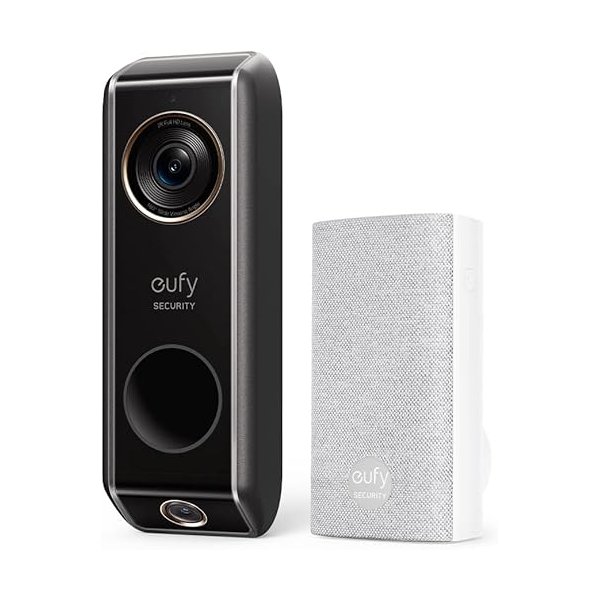
1. Eufy Video Doorbell Dual (Wired)
Price: Approximately $200 The Eufy Video Doorbell Dual stands out with its dual-camera system that captures both a head-to-toe view of visitors and a ground-level view of packages. According to user reviews on major retail platforms, this model consistently earns praise for its zero subscription requirement and reliable performance. Key Specs: – 2K resolution on main camera, 1080p on package camera – 16GB local storage included – Person, package, and pet detection (AI-powered) – 160-degree vertical field of view – Compatible with Eufy HomeBase 2 for expanded storage Pros: – Exceptional dual-camera coverage eliminates blind spots – All AI detection features work without subscription – Local storage means no monthly fees ever – HomeKit Secure Video support for Apple users Cons: – Requires wired installation (not battery-powered) – More expensive upfront than budget alternatives – Occasional app connectivity issues reported by some users Verdict: Based on expert consensus, this is the best overall choice if you want premium features without subscriptions. The dual-camera setup and comprehensive AI detection make it worth the higher initial investment.
2. Reolink Video Doorbell (WiFi/PoE)
Price: Around $100 (WiFi) / $130 (PoE) Reolink’s video doorbell offers impressive value with 2K+ resolution and flexible installation options. User feedback consistently highlights its reliability and the company’s commitment to subscription-free operation. Key Specs: – 2560×1920 resolution (5MP) – Available in WiFi or Power-over-Ethernet versions – MicroSD card slot (up to 256GB) – Person detection included – RTSP support for advanced integrations Pros: – Excellent video quality for the price point – PoE option eliminates WiFi reliability concerns – Works with Reolink NVR systems for centralized recording – Local storage with no cloud fees required Cons: – Basic app interface compared to premium brands – Person detection less accurate than higher-priced competitors – Limited smart home integrations Verdict: According to value-focused reviews, this is the best budget-friendly option that doesn’t sacrifice essential features. The PoE version is particularly recommended for reliability.
3. Lorex 2K Video Doorbell
Price: Approximately $180 Lorex markets itself as a privacy-first brand, and their video doorbell delivers on that promise with completely local operation. Security-focused review sites frequently recommend this model for users who prioritize data privacy. Key Specs: – 2K (1440p) resolution – Color night vision – 180-degree field of view – Works with Lorex Fusion NVR systems – Two-way audio with noise cancellation Pros: – True local-only operation—no cloud dependency – Excellent night vision performance based on user samples – Integration with comprehensive Lorex security systems – Weather-resistant design (IP65 rated) Cons: – Requires compatible Lorex NVR or SD card for recording – App features less polished than competitors – Limited standalone functionality Verdict: Reviews suggest this is ideal if you’re building a complete Lorex security ecosystem. Less suitable as a standalone doorbell for casual users.
4. Amcrest AD410 Video Doorbell
Price: Around $90 The Amcrest AD410 proves you don’t need to spend big for a capable subscription-free doorbell. Tech reviewers frequently cite this as proof that budget doesn’t mean sacrificing core functionality. Key Specs: – 1080p resolution – 140-degree viewing angle – MicroSD card storage (up to 128GB) – NAS and FTP recording support – Alexa and Google Assistant compatible Pros: – Very affordable entry point – Multiple storage options (SD, NAS, FTP) – ONVIF compliant for third-party integrations – Continuous recording available with proper setup Cons: – Lower resolution than 2K competitors – Narrower field of view misses some porch areas – Motion detection zones limited compared to premium models Verdict: Based on budget-oriented buying guides, this offers the best value under $100. Perfect for apartment dwellers or first-time smart doorbell buyers.
5. Tapo D225 Smart Video Doorbell
Price: Approximately $115 Tapo’s entry into the commercial-grade residential doorbell market brings professional features without subscription costs. Business-focused security publications note its reliability in high-traffic installations. Key Specs: – 1080p full HD video – Two-way audio – Compatible with Tapo NVR systems – PoE powered – Smart motion detection Pros: – Built for reliability with commercial-grade components – PoE eliminates battery and WiFi concerns – Integration with TP-Link’s broader Tapo ecosystem – Weatherproof construction Cons: – Less consumer-friendly setup process – App designed for commercial use—less intuitive – Limited smart home platform integration Verdict: Reviews from property managers suggest this excels in commercial applications or multi-unit properties. May be overkill for typical residential use.
6. Ubiquiti UniFi Protect G4 Doorbell
Price: Approximately $200 + CloudKey/NVR requirement For tech enthusiasts willing to invest in infrastructure, the UniFi G4 Doorbell offers professional-grade capabilities. Home automation forums consistently rank this as the most powerful option for advanced users. Key Specs: – 1080p HD video – 3:4 aspect ratio (taller view) – Requires UniFi Protect controller (CloudKey+ or UNVR) – PoE powered – Advanced motion detection and zones Pros: – Professional-grade video management software – Unlimited local recording capacity (dependent on NVR) – Seamless integration with UniFi security ecosystem – Highly customizable detection and alert settings Cons: – Requires additional UniFi hardware purchase ($199+) – Setup complexity intimidating for non-technical users – Total system cost significantly higher Verdict: According to smart home enthusiast communities, this is the ultimate choice if you’re already invested in or planning a comprehensive UniFi system. Not recommended as a standalone doorbell purchase.
Comparison Table: Best Video Doorbells Without Subscription
| Model | Price | Resolution | Storage | Power | Best For |
|---|---|---|---|---|---|
| Eufy Dual (Wired) | $200 | 2K/1080p | 16GB + HomeBase | Wired | Overall best features |
| Reolink WiFi/PoE | $100-130 | 5MP (2K+) | MicroSD/NVR | Wired | Best value |
| Lorex 2K | $180 | 2K | NVR/SD | Wired | Privacy-focused |
| Amcrest AD410 | $90 | 1080p | SD/NAS/FTP | Wired | Budget pick |
| Tapo D225 | $115 | 1080p | NVR | PoE | Commercial use |
| UniFi G4 | $200+ | 1080p | NVR required | PoE | Tech enthusiasts |
Key Features to Look For in Subscription-Free Video Doorbells
Local Storage Options
The backbone of any no-subscription video doorbell is its storage solution. MicroSD card slots are the most common and user-friendly option, typically supporting 64GB to 256GB cards. Based on storage calculations, a 128GB card can hold approximately 2-4 weeks of motion-triggered recordings. Some models work with Network Video Recorders (NVRs) or Network Attached Storage (NAS) devices, which offer larger capacity and centralized management if you have multiple cameras. Tech reviewers note that NVR integration is particularly valuable for whole-home security systems.
Video Quality and Field of View
Resolution matters, but it’s not everything. A 2K doorbell provides noticeably sharper images than 1080p, especially when digitally zooming to see details like faces or license plates. User comparisons show that 2K resolution makes a significant difference in identifying package thieves. Field of view is equally important. Spec sheets from various manufacturers show that 160-180 degree horizontal views capture most front porch scenarios, while vertical (3:4 or 4:3 aspect ratio) doorbells better capture packages on the ground.
Smart Detection Without Fees
Person detection separates humans from cars, animals, and swaying trees—reducing false alerts dramatically. According to user feedback, models with built-in AI detection (rather than subscription-based cloud processing) work reliably without ongoing costs. More advanced models offer package detection, vehicle detection, and customizable motion zones. Reviews indicate these features significantly improve the user experience compared to basic motion detection.
Power Source Considerations
Wired doorbells connect to your existing doorbell wiring (typically 16-24V AC) or use Power-over-Ethernet. They never need charging but require compatible wiring. Installation guides suggest checking your transformer voltage before purchasing. Battery-powered models offer installation flexibility but need recharging every 2-6 months depending on activity level. User experience reports show that cold weather significantly reduces battery life in winter climates.
Smart Home Integration
Even without subscriptions, many doorbells integrate with Alexa, Google Assistant, or HomeKit. This allows voice announcements when someone’s at the door and live video viewing on smart displays. Compatibility charts show varying levels of integration depth across brands. RTSP (Real-Time Streaming Protocol) support is valuable for tech-savvy users who want to integrate their doorbell with advanced home automation platforms like Home Assistant or Blue Iris.
How Much Do Video Doorbell Subscriptions Actually Cost?
Understanding the long-term savings helps justify the upfront investment in subscription-free models. Here’s what popular subscription services charge: Ring Protect Plan: $4/month or $40/year per device ($10/month or $100/year for unlimited devices) Nest Aware: $6/month or $60/year for 30-day history ($12/month or $120/year for 60-day history) Arlo Secure: $4.99/month or $49.99/year per camera Over five years, a single-device subscription costs $200-$600. Subscription-free models pay for themselves within 1-2 years compared to subscription-dependent alternatives.
Installation Tips for DIY Setup
Wired Doorbell Installation
Most wired video doorbells use your existing doorbell wiring. User installation experiences suggest the process takes 20-45 minutes for those comfortable with basic tools. You’ll need to shut off power at the breaker before working with doorbell wiring. Check your transformer voltage first—most video doorbells require 16-24V AC. If your existing transformer is lower voltage (common in older homes), you’ll need to upgrade it. Electrician forums indicate this is a straightforward $20-40 DIY upgrade.
Battery-Powered Installation
Battery models simply mount to your door frame with screws or adhesive. Installation typically takes under 15 minutes according to setup guides. The challenge is ensuring strong WiFi signal at your front door. WiFi signal strength is critical. User troubleshooting threads show that many connection issues stem from weak WiFi rather than defective doorbells. Test your WiFi at the door location before purchasing.
Frequently Asked Questions
Do video doorbells without subscription still record?
Yes, subscription-free video doorbells record to local storage like microSD cards, NVR systems, or compatible hubs. The recordings are stored on your own hardware rather than cloud servers. According to manufacturer specifications, storage capacity depends on your card size or NVR setup—typically holding several weeks to months of motion-triggered footage. You maintain complete control over your recordings without time limits imposed by subscription tiers.
What’s the catch with no-subscription video doorbells?
There’s typically no catch—you simply handle your own storage instead of using cloud services. The trade-offs, based on user experiences, include: managing storage space yourself, potentially missing advanced AI features that require cloud processing, and losing recordings if your storage device fails or is stolen. However, most users report these concerns are minimal compared to the hundreds of dollars saved by avoiding subscriptions.
Can I view no-subscription doorbell footage remotely?
Yes, virtually all modern video doorbells allow remote viewing through their mobile apps, regardless of subscription status. Live streaming and two-way audio work remotely as long as your doorbell has internet connectivity. User reviews confirm that accessing stored recordings remotely depends on the model—some require port forwarding or VPN setup for remote playback of locally stored videos, while others handle this automatically through their apps.
Which video doorbell has the best free features?
Based on feature comparisons and user feedback, the Eufy Video Doorbell Dual offers the most comprehensive free features including dual cameras, person/package/pet detection, 16GB storage, and HomeKit Secure Video support. For budget buyers, the Reolink and Amcrest models provide excellent core features (2K+ recording, person detection, local storage) without subscription requirements at under $130.
Are no-subscription doorbells harder to set up?
Not typically. User setup experiences indicate that most subscription-free doorbells install similarly to subscription-based models—you mount the hardware, connect to WiFi, and configure through an app. The additional step is inserting a microSD card or connecting to an NVR, which reviews describe as straightforward. PoE models require ethernet wiring, which is more complex than WiFi but offers better reliability.
Making Your Decision: Which No-Subscription Doorbell Is Right for You?
Your ideal choice depends on your specific situation and priorities. Here’s how to decide: Choose the Eufy Dual if you want the most features without subscriptions and don’t mind the $200 price tag. Reviews consistently