
Quick Picks
Short on time? Here are the best home backup batteries for 2026:
- EcoFlow DELTA Pro 3 (~$2,800) — Best overall
- Jackery HomePower 3600 Plus with 2 Solar Panels (~$2,300) — Best value with solar
- Bluetti Apex 300 + B300K Battery (5.5kWh) (~$2,600) — Most capacity for the money
- Anker SOLIX F3800 Plus + BP3800 Battery (~$4,300) — Most powerful output
- Jackery Solar Generator 5000 Plus, 10kWh Bundle (~$7,100) — Best for multi-day whole-home backup
A gas generator keeps the lights on during an outage, but it’s loud, needs fuel, and has to run outside. A home backup battery does the same job silently, indoors, with no fumes. The newest models are big enough to run most of a house: they put out 240 volts for well pumps, dryers, and central air, store 4 to 10+ kWh of energy, and recharge from solar panels, the grid, or a generator.
They also switch on fast. Several models act as a UPS (uninterruptible power supply), taking over in milliseconds when the grid fails, so your Wi-Fi, computers, and fridge never notice. Paired with a transfer switch or home panel, they can power selected circuits directly, without extension cords.
These are big purchases, from about $2,300 to $7,000, so we focused on what matters: capacity, output, expansion, and how each one connects to your home. Every listing was checked on Amazon to make sure it’s the exact product or bundle we describe. For smaller outages and camping, our guide to portable power stations covers models under 2kWh. If you’d rather run on fuel, see our portable generators guide.
Home Backup Battery vs Generator
A battery is silent, makes no fumes, can sit indoors, needs no fuel or maintenance, and switches over instantly. It’s limited by stored energy: once it’s empty, you need sun, grid power, or a generator to recharge it.
A generator runs as long as you have fuel, which matters for week-long outages, but it’s loud, must stay outdoors, and needs regular maintenance.
Many homes combine both: the battery runs the house quietly, and a generator or solar panels top it up during long outages. Several batteries here have dedicated generator inputs for exactly this.
How Much Battery Do You Need?
Capacity is measured in kilowatt-hours (kWh). A rough guide for a typical home during an outage:
- Refrigerator: about 1 to 2 kWh per day
- Gas furnace blower: about 3 to 6 kWh per day in cold weather
- Wi-Fi, lights, phones, TV: about 1 to 2 kWh per day
- Sump or well pump: 1 to 3 kWh per day, depending on use
- Central AC or electric heat: far more, often 20+ kWh per day
Running the essentials (fridge, furnace blower, lights, and internet) usually takes 5 to 10 kWh per day. A 4kWh battery covers about a day of essentials; 10kWh covers two to three days, longer with solar.
Output (watts) matters too: it’s how much you can run at once. 3,600W to 6,000W covers essentials plus a big appliance, and 240V output is needed for well pumps, dryers, and many central AC units.
What to Look For in a Home Backup Battery
LFP (LiFePO4) chemistry. All the picks here use lithium iron phosphate cells, which last thousands of cycles and are safer than older lithium chemistries.
240V output. Essential for well pumps, central AC, and dryers.
Expandability. Add extra batteries later as your budget allows.
Charging speed and solar input. High solar input recharges faster during multi-day outages.
Home connection. A transfer switch or home power panel lets the battery run your home circuits directly. Plan on an electrician for installation.
UPS switchover. Fast switchover keeps computers and networking gear running without a reboot.
The Best Home Backup Batteries for 2026
EcoFlow DELTA Pro 3 — Best Overall
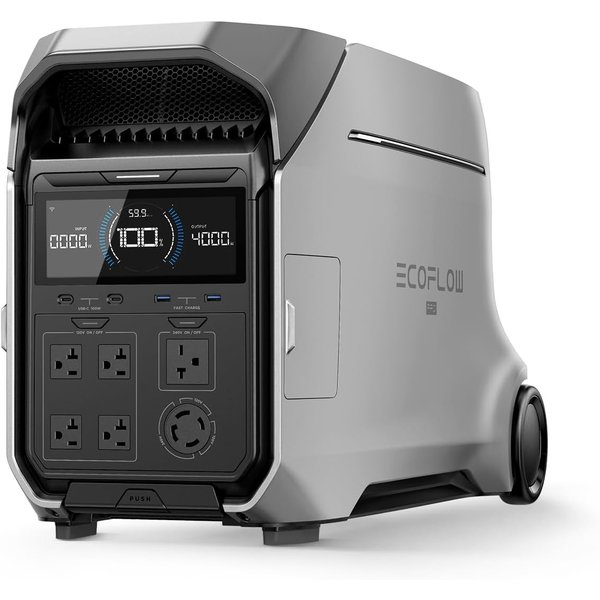
The DELTA Pro 3 is the best all-around home backup battery, with over 700 reviews averaging 4.3 stars. It stores 4,096Wh in long-life LFP cells and puts out 4,000W of continuous power (6,000W with X-Boost) at both 120V and 240V, enough to run nearly any essential appliance, including a 1 HP well pump or a 3-ton central AC, according to EcoFlow.
It’s built to grow. Add extra batteries or EcoFlow’s Smart Generator to expand to 48kWh, enough for several days of whole-home backup, and link units to scale output up to 12,000W. You can recharge it 7 different ways, including wall outlets, solar panels, a gas generator, and combinations of them.
It’s remarkably quiet, as low as 30 dB, so it can sit in a living space. A 10-millisecond switchover works as a UPS for computers, networking gear, and NAS drives, so a blackout doesn’t interrupt anything. The battery pack is IP65 rated, and EcoFlow backs it with a 5-year warranty. Wheels and a handle make it movable, though at this size you’ll mostly roll it, not carry it.
Pros:
- 4,096Wh LFP battery with 120V and 240V output
- Expandable to 48kWh
- 10ms UPS switchover
- Whisper-quiet at about 30 dB
- 7 charging methods and a 5-year warranty
Cons:
- Expensive, and expansion batteries add up
- Heavy; needs to be rolled
- Whole-home wiring requires extra hardware and an electrician
Jackery HomePower 3600 Plus with 2 Solar Panels — Best Value with Solar
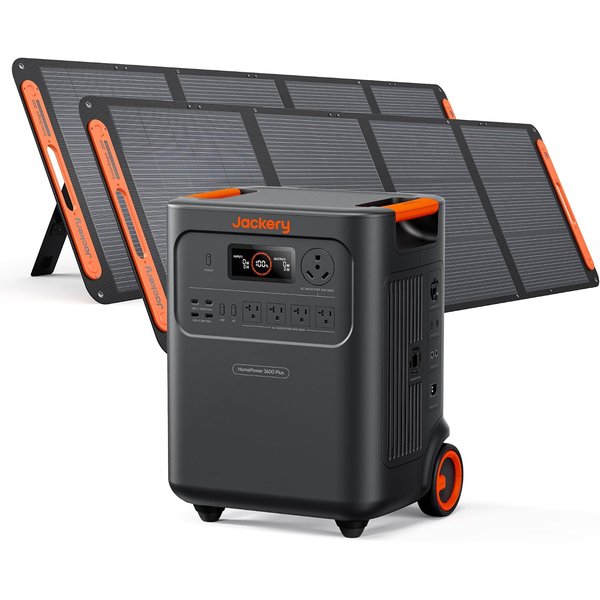
Jackery’s HomePower 3600 Plus is the best value for a complete solar backup kit. This bundle includes the 3,584Wh power station and two 200W solar panels, so you can recharge from the sun during a multi-day outage. It’s highly rated at 4.5 stars.
It delivers 3,600W of output, enough to run pumps, heaters, and even a dryer, and you can connect two units in parallel for 7,200W and 240V power. Capacity expands to 21kWh per unit with extra batteries. Charging is fast: about 2 hours from empty using AC and solar together, 2.5 hours from a wall outlet, or 4 hours on solar alone. It also accepts a gas generator.
Jackery uses high-temperature-resistant ceramic membrane cells designed to prevent thermal runaway, rated for 6,000 cycles and a 10-year lifespan. It’s also the lightest power station of its capacity class according to Jackery, with wheels and a telescoping handle. Pair it with Jackery’s manual transfer switch to power home circuits.
Pros:
- Solar panels included
- 3,584Wh and 3,600W output
- Fast 2-hour hybrid recharge
- Expandable to 21kWh
- Lightweight for its capacity
Cons:
- 240V requires two units in parallel
- Lower output than the Anker or EcoFlow
- Panels ship separately
Bluetti Apex 300 + B300K Battery (5.5kWh) — Most Capacity for the Money
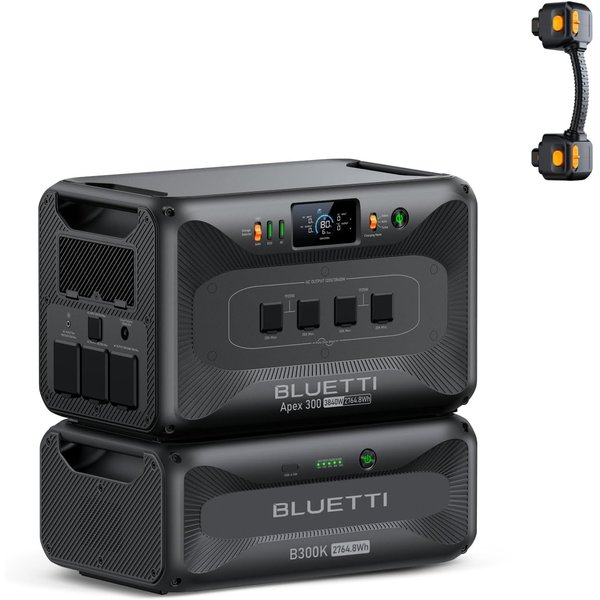
If you want the most stored energy for your money, the Bluetti Apex 300 bundle delivers 5.5kWh, the Apex 300 power station plus a B300K expansion battery, for less than many 4kWh units. That’s well over a day of essentials.
It outputs 3,840W continuously with 7,680W surge for motor startups, and supports 120V and 240V at the same time, so you can run a refrigerator, a window AC, and an EV charger together. Six AC outlets run appliances directly. Charging is flexible: up to 2,400W of built-in solar input (6,400W expanded), 80% from a wall outlet in 45 minutes, or a generator.
Bluetti’s second-generation LiFePO4 cells are rated for 6,000+ cycles and a 17-year lifespan, the longest here, and the system passed 33 extreme-condition tests. The battery ships separately from the power station.
Pros:
- 5.5kWh for the price
- 120V and 240V at the same time
- 7,680W surge for motors
- Fast AC charging and big solar input
- 17-year rated lifespan
Cons:
- Lower continuous output than the Anker
- Two heavy boxes to place
- Battery and station ship separately
Anker SOLIX F3800 Plus + BP3800 Battery — Most Powerful Output
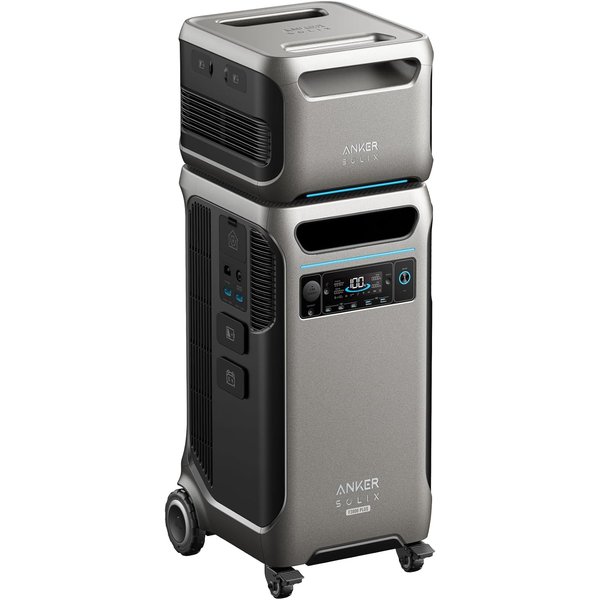
Anker’s F3800 Plus is the most powerful battery here, putting out 6,000W continuously, which Anker says is 58% more than other power stations at the same capacity. With 120V and 240V output, it can run large appliances like a dryer alongside your essentials. This bundle pairs it with a BP3800 expansion battery, doubling capacity to about 7.7kWh.
It’s designed to grow into true whole-home backup. Expand to 26.9kWh with six batteries, or connect two units with 12 batteries for 53.8kWh, enough for weeks of power. It recharges in as little as 63 minutes using solar and a generator together, accepts up to 3,200W of solar, and has a 6,000W generator bypass for 240V gas generators. Anker’s Home Power Panel (sold separately) connects it to your home circuits.
Built with EV-grade LFP cells, smart temperature management, and an impact-resistant design, it’s rated for a 10-year lifespan and covered by a 5-year warranty. It’s expensive, but for big homes with heavy loads, the output is worth it.
Pros:
- 6,000W continuous output
- About 7.7kWh in this bundle, expandable to 53.8kWh
- 120V and 240V
- 3,200W solar input and generator bypass
- 5-year warranty
Cons:
- Expensive
- Very heavy when stacked
- Home Power Panel sold separately
Jackery Solar Generator 5000 Plus, 10kWh Bundle — Best for Multi-Day Whole-Home Backup
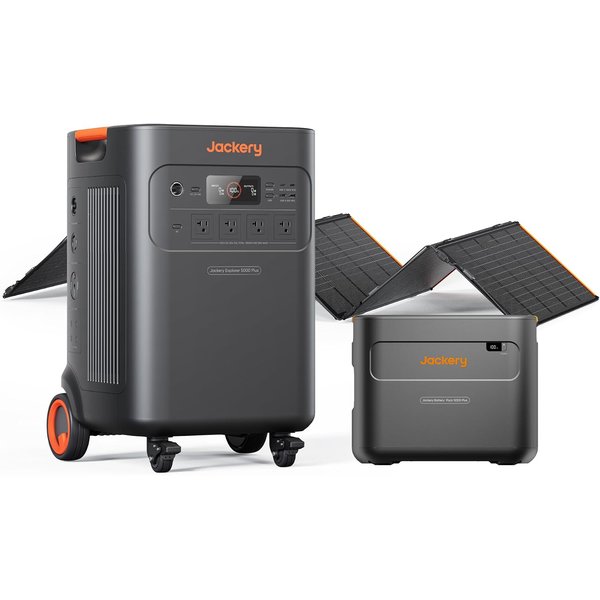
For homes that lose power for days at a time, this Jackery bundle is the closest thing to a permanent home battery you can buy off the shelf. It includes the Explorer 5000 Plus, an extra battery, and a solar panel, for about 10kWh of storage, expandable all the way to 60kWh.
Output is the highest here at 7,200W continuous with 14,400W surge, at 120V and 240V. Jackery says that’s enough to run a 5-ton central AC or an electric water heater. Solar recharging is fast: up to 4,000W of solar input can refill it in about 2 hours with enough panels, which is what makes long outages manageable.
Pair it with Jackery’s 60A Smart Transfer Switch (sold separately) to power up to 12 circuits at 120V or 6 at 240V from your panel. LFP cells with ChargeShield 2.0 are rated for about 11 years of daily use. It’s a newer bundle with few reviews so far, and the price is high, but it’s the most capable system on this list.
Pros:
- About 10kWh, expandable to 60kWh
- 7,200W output with 14,400W surge
- 120V and 240V for central AC and water heaters
- Up to 4,000W solar input
- Transfer switch powers up to 12 circuits
Cons:
- Most expensive pick
- Newer, with few reviews
- Transfer switch sold separately
Home Backup Battery Comparison
| Battery | Best For | Price | Capacity | Output | Voltage | Max Expansion |
|---|---|---|---|---|---|---|
| EcoFlow DELTA Pro 3 | Overall | ~$2,800 | 4.1kWh | 4,000W | 120V/240V | 48kWh |
| Jackery 3600 Plus + panels | Value with solar | ~$2,300 | 3.6kWh | 3,600W | 120V (240V paralleled) | 21kWh |
| Bluetti Apex 300 + B300K | Capacity per dollar | ~$2,600 | 5.5kWh | 3,840W | 120V/240V | Expandable |
| Anker F3800 Plus + BP3800 | Most output | ~$4,300 | ~7.7kWh | 6,000W | 120V/240V | 53.8kWh |
| Jackery 5000 Plus Bundle | Multi-day backup | ~$7,100 | ~10kWh | 7,200W | 120V/240V | 60kWh |
How to Connect a Battery to Your Home
Extension cords are the simplest option: plug essentials directly into the battery’s outlets.
A transfer switch or home panel lets the battery power hardwired circuits like your furnace, well pump, and kitchen outlets. EcoFlow, Anker, and Jackery all sell home connection hardware. An electrician should install it.
Solar panels turn a battery into a renewable backup system. Portable panels set up in minutes during an outage; roof-mounted solar requires professional installation.
Get the Most From Your Backup Battery
- Keep it charged at around 80% to 100% during storm season.
- Prioritize loads: fridge, furnace blower, internet, and sump pump first.
- Use efficient appliances: LED lights and a smart thermostat stretch your capacity.
- Watch for freezing: a smart freeze alarm warns you if the house gets too cold.
- Protect the plumbing: a smart water shutoff valve can stop a burst pipe while you’re away.
How to Choose
Want the best all-around home battery? The EcoFlow DELTA Pro 3.
Want solar included at a lower price? The Jackery HomePower 3600 Plus kit.
Want the most kWh for your money? The Bluetti Apex 300 bundle.
Need maximum output for big appliances? The Anker SOLIX F3800 Plus.
Need several days of whole-home backup? The Jackery 5000 Plus 10kWh bundle.
Frequently Asked Questions
Can a battery power my whole house?
It can power a lot of it. Batteries with 240V output and 6,000W or more can run central AC, well pumps, and water heaters, but large loads drain them quickly. Most people back up essential circuits and add capacity or solar for long outages.
How long will a home backup battery last during an outage?
It depends on what you run. Essentials like a fridge, furnace blower, lights, and internet use about 5 to 10 kWh per day, so a 4kWh battery lasts about a day, and a 10kWh system lasts two to three days. Solar panels can extend that indefinitely in sunny weather.
Do I need an electrician?
Not for plugging appliances into the battery. To power hardwired circuits through a transfer switch or home panel, yes. Have a licensed electrician install the connection.
Can I use a home battery indoors?
Yes. Unlike gas generators, batteries produce no exhaust, so they’re safe indoors. Keep them in a dry, ventilated spot away from heat sources.
Are there tax credits for home batteries?
Federal and state incentives for home batteries change frequently and usually depend on how the battery is installed and charged, such as with solar. Check current rules or ask a tax professional before you buy.
The Bottom Line
For most homes, the EcoFlow DELTA Pro 3 is the best home backup battery: 4kWh, 240V output, UPS switchover, and room to expand to 48kWh. The Jackery 3600 Plus kit is the best value with solar included, the Bluetti Apex 300 gives the most capacity per dollar, the Anker F3800 Plus has the most output, and the Jackery 5000 Plus bundle is built for multi-day whole-home backup.