Quick Picks
Short on time? Here are the best portable generators for home backup in 2026:
- Westinghouse 5000W Dual Fuel Inverter (~$950) — Best overall
- WEN DF680iX 6800W Dual Fuel Inverter (~$800) — Best value for more power
- DuroMax XP13000EH 13,000W Dual Fuel (~$1,300) — Best for whole-home backup
- Honda EU2200i Inverter (~$1,200) — Quietest and most reliable
- Champion 2500W Dual Fuel Inverter with CO Shield (~$575) — Best budget pick
- EcoFlow Smart Generator (Dual Fuel) (~$1,260) — Best for EcoFlow power station owners
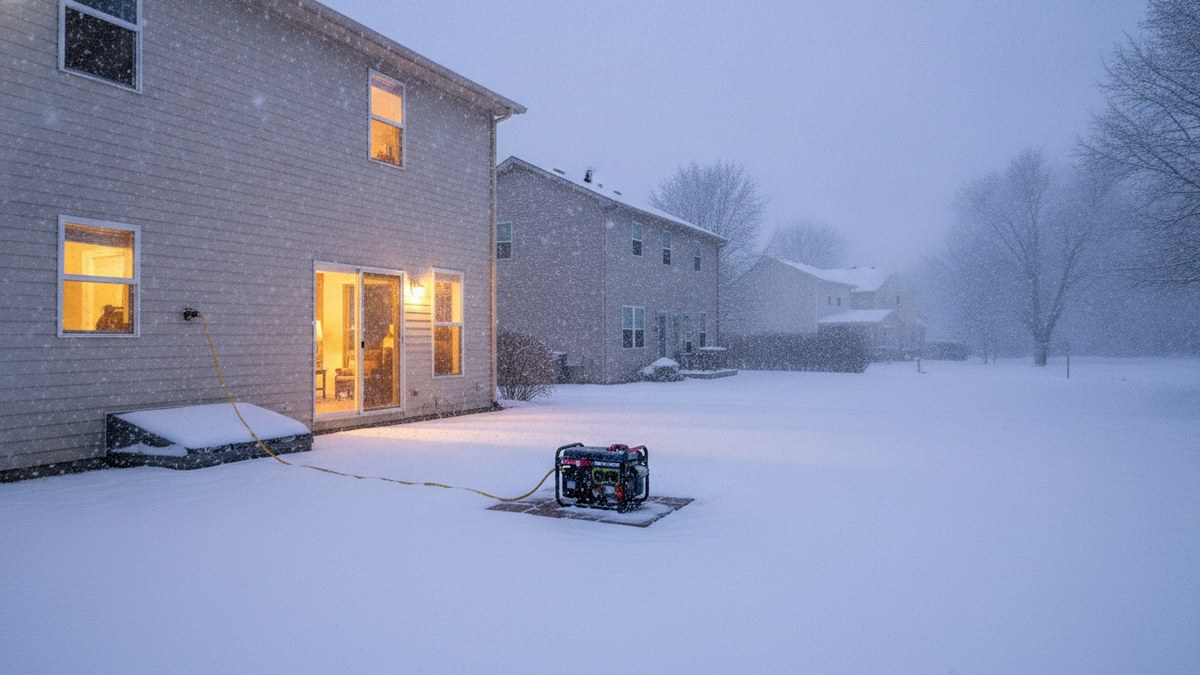
Winter storms are the most common cause of long power outages. Ice brings down lines, crews take days to reach every street, and a house without power gets cold fast. Your furnace blower, refrigerator, sump pump, well pump, and phone chargers all stop. A portable generator keeps the essentials running until the lights come back.
Generators have gotten smarter and safer. Many now start with a key fob or phone app, show remaining run time on a digital display, and shut themselves off automatically if carbon monoxide builds up nearby. Dual fuel models run on gasoline or propane, which matters during a storm, when gas stations may be closed but a propane tank stores for years.
We picked generators for every need, from a quiet 2,200-watt inverter that runs the fridge and furnace to a 13,000-watt model that can power most of a home through a transfer switch. Every listing was checked on Amazon to make sure it’s the exact generator we describe. If you need quiet indoor power for electronics during short outages, a battery portable power station is a better fit, and some pair with a generator for longer outages.
Safety first: never run a generator indoors, in a garage, or near windows and doors, even with a door open. Carbon monoxide from generators kills people every winter. Keep it at least 20 feet from the house with the exhaust pointed away, and have working CO alarms inside.
Inverter vs Conventional Generators
Inverter generators produce clean, stable power that’s safe for computers, TVs, and modern furnace controls. They’re much quieter, more fuel efficient, and lighter. The trade-off is a higher price per watt and lower maximum output.
Conventional (open-frame) generators produce more watts for less money and can power a whole home through a transfer switch. They’re loud and use more fuel, and their power is less clean, although many are fine for appliances.
For most homes, a 4,000 to 7,000 watt dual fuel inverter is the sweet spot: enough for the fridge, furnace blower, sump pump, lights, and chargers, quiet enough not to bother the neighbors, and efficient enough to run overnight.
How Much Generator Do You Need?
Add up the running watts of what you need during an outage, then make sure the generator’s starting (peak) watts cover the biggest motor starting up. Typical running watts:
- Refrigerator: 700 to 800 W (starting 1,200 to 2,200 W)
- Furnace blower (gas furnace): 600 to 800 W
- Sump pump (1/2 hp): about 1,000 W (starting about 2,000 W)
- Well pump: 1,000 to 2,000 W, often 240V
- Lights, Wi-Fi, TV, chargers: 300 to 600 W
- Space heater: about 1,500 W (a big load; a smart space heater on low uses less)
- Window AC (summer): 500 to 1,500 W
A fridge, furnace, sump pump, and lights come to about 3,000 to 3,500 running watts, which is why 4,000 to 5,000 watt generators are so popular. Electric water heaters, ranges, dryers, and central AC need a large generator and a transfer switch.
What to Look For in a Home Backup Generator
Dual fuel. Gasoline is easy to find before a storm. Propane stores indefinitely, burns cleaner, and keeps carburetors from gumming up between uses. Having both is the best insurance.
CO safety shutoff. Sensors like Champion’s CO Shield, Honda’s CO-MINDER, and WEN’s Watchdog turn the generator off if carbon monoxide rises to dangerous levels. Look for this on any generator you buy.
Electric or remote start. Pull-starting a cold engine in a snowstorm is miserable. Electric start, a key fob, or an app make it one push.
Run time. Look for 8+ hours at a typical load so it runs through the night on one tank.
Outlets. A TT-30R (RV) or L14-30R outlet can connect to a transfer switch or power inlet box. For whole-home use, look for a 50-amp outlet.
Noise. Inverters run at about 50 to 60 dBA, roughly conversation level. Open-frame generators are often 70+ dBA.
The Best Portable Generators for Home Backup
Westinghouse 5000W Dual Fuel Inverter — Best Overall
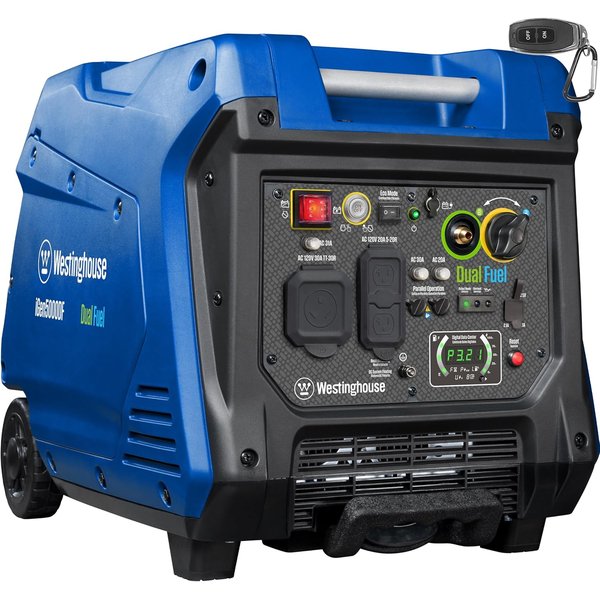
The Westinghouse 5000 is the generator we’d buy for most homes. It produces 5,000 peak watts and 3,900 running watts of clean inverter power, enough for a refrigerator, furnace blower, sump pump, lights, and chargers at the same time, and it runs on gasoline or propane. With over 1,700 reviews averaging 4.7 stars, it’s one of the best-rated generators on Amazon.
Starting it is easy: use the included remote key fob, the electric start button, or the backup recoil. A rotating digital display shows fuel level, power output, remaining run time, voltage, and lifetime hours, so you always know how long you have before refueling. It’s quiet, as low as 52 dBA, and efficient: up to 18 hours on a 3.4 gallon tank in Economy Mode.
You get a standard duplex household outlet, two USB ports, and an RV-ready TT-30R 30-amp outlet that can feed a transfer switch or power inlet box. It’s parallel capable, so you can link a second inverter later for more power. Westinghouse backs it with a 3-year warranty and a nationwide service network. Note that there’s no 240V outlet, so it won’t run a well pump that needs 240V.
Pros:
- 3,900 running watts of clean inverter power
- Gas or propane
- Remote key fob plus electric start
- Up to 18 hours on a tank
- Digital display with remaining run time
Cons:
- No 240V outlet
- Heavy to lift, though it has wheels and a handle
- No automatic CO shutoff listed on this model
WEN DF680iX 6800W Dual Fuel Inverter — Best Value for More Power
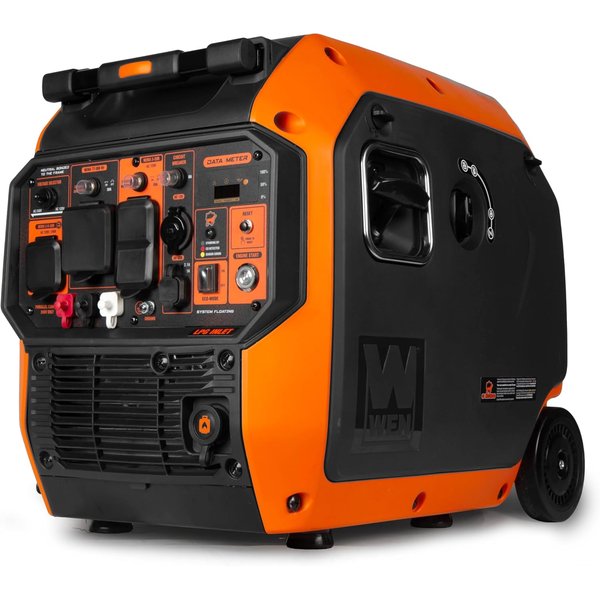
If you need more than 4,000 watts but want the quiet and clean power of an inverter, the WEN DF680iX is the best value. Its 224cc engine produces 6,800 surge and 5,100 running watts on gasoline (6,000 and 4,500 on propane), enough to add a well pump, microwave, or second fridge to the essentials.
The key upgrade over the Westinghouse is 240V output. A L14-30R 120V/240V receptacle can feed a 240V transfer switch or inlet box, and WEN’s bonded-neutral 240V configuration can even provide low-power Level 2 charging for electric vehicles during an outage. You also get two standard 120V outlets, an RV-ready TT-30R, 12V DC, and two USB ports, plus a voltage selector switch.
Safety and maintenance are well covered. The WEN Watchdog CO sensor shuts the generator off if carbon monoxide reaches dangerous levels, and a fuel shutoff burns the remaining fuel out of the carburetor before stopping, which helps prevent clogged carburetors between storms. Electric start, onboard wheels, a telescoping handle, and a tool-free propane quick-connector with a 6-foot regulator hose make it easy to use.
Pros:
- 5,100 running watts of inverter power
- 120V/240V L14-30R outlet for transfer switches
- CO Watchdog automatic shutdown
- Fuel shutoff reduces maintenance
- Electric start and propane quick-connect
Cons:
- Heavier than smaller inverters
- No remote or app start
- Louder than the Westinghouse under heavy load
DuroMax XP13000EH 13,000W Dual Fuel — Best for Whole-Home Backup
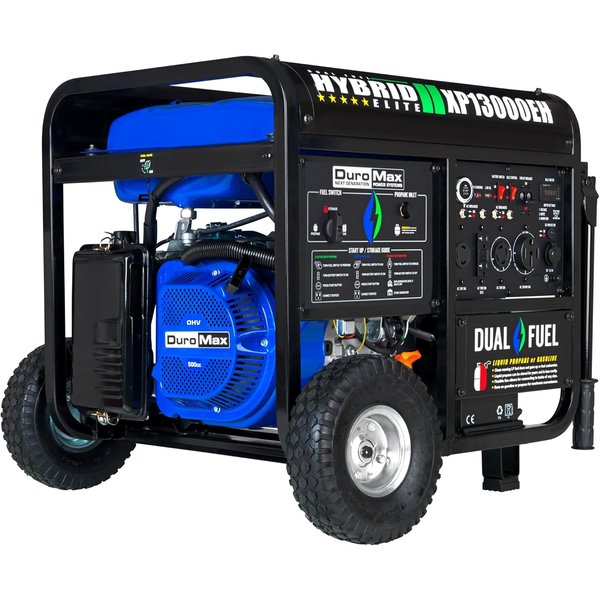
When you want to run most of the house, including a well pump, electric water heater, or central heating system, you need serious watts. The DuroMax XP13000EH delivers 13,000 watts on gasoline or propane for far less than a standby generator. With over 4,000 reviews averaging 4.5 stars, it’s the most reviewed generator in this guide.
It’s built like a tank: a heavy-duty all-metal frame and power panel with no plastic parts, 100% copper windings that run cooler and last longer than aluminum, and no-flat tires for rolling across snow or gravel. A front-facing panel lets you switch fuel types in seconds with push-button electric start.
The most important outlet is the transfer switch-ready 50-amp outlet. Have an electrician install a transfer switch or inlet box, and you can power the circuits you choose straight from your panel, instead of running extension cords. This is a conventional generator, not an inverter, so it’s loud and uses more fuel, and it’s best kept well away from the house.
Pros:
- 13,000 watts for whole-home backup
- 50-amp transfer switch-ready outlet
- All-metal frame and copper windings
- Dual fuel with quick fuel switching
- Huge review base
Cons:
- Loud: not an inverter
- Heavy; needs a flat path to roll it
- Needs a transfer switch for whole-home use (electrician recommended)
Honda EU2200i Inverter — Quietest and Most Reliable
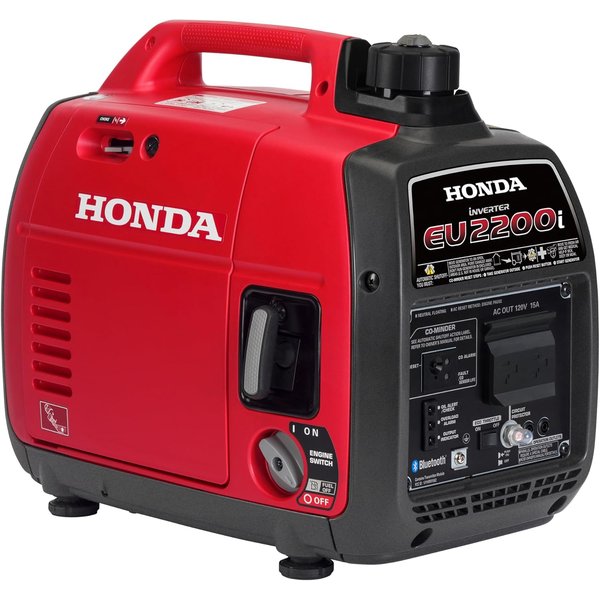
Honda’s EU2200i is the generator other inverters get compared to. It’s famously reliable, starts easily after months in storage, and runs at 48 to 57 dBA, quieter than a normal conversation. Over 3,200 reviews average 4.7 stars.
It’s also the smartest generator here for its size. Honda’s My Generator app connects over Bluetooth to monitor output, show service reminders, and stop the generator wirelessly, so you don’t have to go out into the cold to shut it down. CO-MINDER continuously monitors carbon monoxide and shuts the generator down before levels become dangerous.
At 2,200 watts, it’s sized for essentials: a refrigerator, a gas furnace blower, lights, and chargers, though not all at once with a sump pump starting. For more power, you can pair it with a second compatible Honda inverter. It runs on gasoline only, and Honda backs it with a 3-year residential warranty. Note that this model isn’t sold in California.
Pros:
- Quietest generator here at 48–57 dBA
- Legendary Honda reliability
- Bluetooth app with wireless stop and service reminders
- CO-MINDER automatic shutdown
- Light enough to carry
Cons:
- 2,200 watts covers only the essentials
- Gasoline only
- Expensive per watt
Champion 2500W Dual Fuel Inverter with CO Shield — Best Budget Pick
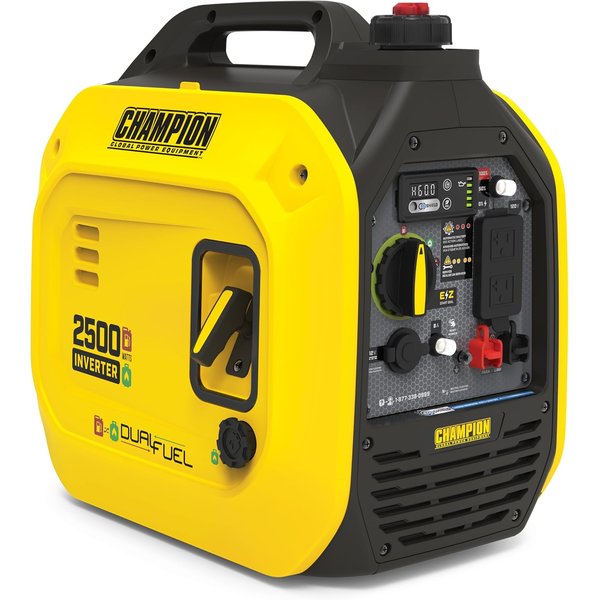
For less than half the price of the Honda, the Champion 2500 gives you a quiet inverter that runs on gasoline or propane right out of the box. It produces 2,500 starting and 1,850 running watts on gas (1,665 running on propane), enough for a refrigerator, lights, a furnace blower, and phone chargers.
It’s quiet at 53 dBA from 23 feet, and the run time is excellent: up to 11.5 hours on gas or 25 hours on propane, so a propane tank can get you through a full day and night. CO Shield automatically shuts the generator off if carbon monoxide builds up. The clean inverter power (less than 3% THD) is safe for laptops and TVs.
Outlets are basic: a covered 120V duplex and a 12V automotive outlet, with no RV or transfer switch outlet. But an optional parallel kit lets you link it to another Champion inverter or power station for more power later. Champion includes a 3-year warranty and free lifetime technical support.
Pros:
- Low price for a dual fuel inverter
- CO Shield automatic shutoff
- Up to 25 hours on propane
- Quiet at 53 dBA
- Parallel capable
Cons:
- 1,850 running watts is limited
- No RV or transfer switch outlet
- Recoil start only
EcoFlow Smart Generator (Dual Fuel) — Best for EcoFlow Power Station Owners
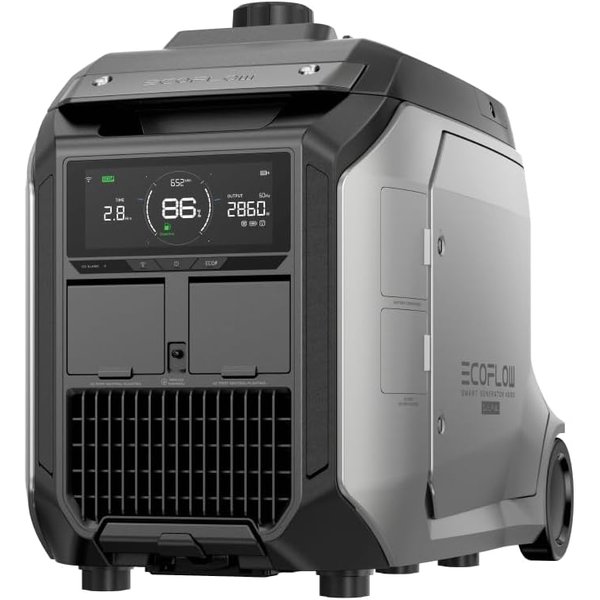
EcoFlow’s Smart Generator is different from everything else here. It’s designed to charge an EcoFlow battery rather than power your appliances directly. Paired with a DELTA Pro 3 or DELTA Pro (with updated firmware), it delivers 3,200W of DC fast charging, and EcoFlow says it uses 40% less fuel than charging through a regular generator.
The smart part is automatic start. The generator can start itself when your battery runs low, in a quiet night-care mode, after solar charging (PV-priority mode), or with smart reverse charging. That means your home runs quietly on battery most of the time, and the generator only kicks on when needed. The EcoFlow app monitors energy use and equipment status, gives maintenance prompts, and sends alerts for CO concentration, temperature, engine oil, and overloads, with automatic shutdowns for safety.
It runs on gasoline or propane: EcoFlow rates a 20 lb propane tank at up to 24kWh of power and a full gas tank at about 8kWh. If you already own a DELTA Pro, this turns it into an all-week backup system. If you don’t, a regular inverter generator is simpler and cheaper.
Pros:
- Automatic start when your battery runs low
- Efficient DC fast charging for DELTA Pro and DELTA Pro 3
- App monitoring with CO and safety alerts
- Dual fuel
- Quiet battery-first backup
Cons:
- Only useful with compatible EcoFlow power stations
- Doesn’t directly power appliances like other generators
- Expensive
Portable Generator Comparison
| Generator | Best For | Price | Running Watts | Fuel | Start | CO Shutoff |
|---|---|---|---|---|---|---|
| Westinghouse 5000 | Overall | ~$950 | 3,900 | Gas, propane | Remote, electric, recoil | Not listed |
| WEN DF680iX | More power value | ~$800 | 5,100 | Gas, propane | Electric | Yes (Watchdog) |
| DuroMax XP13000EH | Whole home | ~$1,300 | 13,000 (peak) | Gas, propane | Electric | Not listed |
| Honda EU2200i | Quiet, reliable | ~$1,200 | 1,800 | Gas | Recoil, app stop | Yes (CO-MINDER) |
| Champion 2500 | Budget | ~$575 | 1,850 | Gas, propane | Recoil | Yes (CO Shield) |
| EcoFlow Smart Generator | EcoFlow owners | ~$1,260 | 3,200 DC charging | Gas, propane | App, automatic | CO alerts + shutoff |
How to Connect a Generator to Your Home
Extension cords are the simplest option: run heavy-duty outdoor cords from the generator to the appliances you need. Use cords rated for the load and keep connections out of snow and water.
A transfer switch or power inlet box is the best option. An electrician installs an inlet on the outside of the house and a transfer switch or interlock at your panel. You plug the generator into the inlet with one cord and choose which circuits to power, including hardwired loads like a furnace or well pump.
Never backfeed by plugging a generator into a wall outlet with a double-ended cord. It can electrocute utility workers repairing the lines and start fires.
Winter Storm Prep Checklist
- Store fuel safely: keep stabilized gasoline in approved cans and a full propane tank or two.
- Run the generator monthly for 15 to 20 minutes so it starts when you need it.
- Have CO alarms inside on every level. A smart smoke and CO detector alerts your phone even when you’re away.
- Protect your pipes: a smart freeze alarm warns you if indoor temperatures drop during an outage, and water leak detectors catch burst pipes early.
- Keep a battery backup for electronics: a power station runs Wi-Fi, phones, and medical devices silently while the generator handles the big loads.
How to Choose
Want the best all-around home backup generator? The Westinghouse 5000.
Need more power or 240V for a well pump? The WEN DF680iX.
Want to power most of the house? The DuroMax XP13000EH with a transfer switch.
Want the quietest, most reliable generator? The Honda EU2200i.
On a budget? The Champion 2500.
Already own an EcoFlow DELTA Pro? The EcoFlow Smart Generator.
Frequently Asked Questions
How big a generator do I need to run my house?
For essentials (fridge, furnace blower, sump pump, lights, and chargers), 4,000 to 5,000 watts is usually enough. To add a well pump, a second fridge, or a microwave, look at 6,000 to 8,000 watts. Running most of a home, including electric water heaters or central AC, takes 10,000+ watts and a transfer switch.
Can I run a generator in my garage with the door open?
No. Never run a generator in a garage, basement, shed, or any enclosed or partly enclosed space, even with doors and windows open. Carbon monoxide can build to deadly levels in minutes. Keep it at least 20 feet from the house with the exhaust pointed away from doors and windows.
Is propane or gasoline better for a generator?
Each has advantages. Gasoline produces a bit more power and is easy to buy before a storm. Propane stores for years without going bad, burns cleaner, and is often still available after a storm when gas stations are closed. Dual fuel generators let you use whichever you have.
Can a portable generator run my furnace?
Yes, a gas furnace’s blower and controls usually need 600 to 800 watts. Most furnaces are hardwired, so you’ll need a transfer switch or inlet box, or an electrician-installed furnace plug. Inverter generators are best because furnace control boards are sensitive to unstable power.
Are portable generators worth it compared to a power station?
They do different jobs. A power station is silent, safe indoors, and ideal for electronics and short outages, but it runs out of charge. A generator produces power as long as you have fuel, which matters during multi-day winter outages. Many homes use both.
The Bottom Line
For most homes, the Westinghouse 5000W Dual Fuel Inverter is the best portable generator for home backup: enough clean power for the essentials, remote start, and up to 18 hours of run time. The WEN DF680iX adds 240V power and a CO shutoff for less, the DuroMax XP13000EH can power most of a home, and the Honda EU2200i is the quietest and most dependable. On a budget, the Champion 2500 covers the essentials with CO Shield protection.