Quick Picks
Short on time? Here are our top smart scales for 2026:
- WITHINGS Body Smart (~$85) — Best overall
- Garmin Index S2 (~$200) — Best for athletes
- Wyze Smart Scale Ultra BodyScan (~$99) — Best mid-range
- WITHINGS Body Scan (~$300) — Best for serious health tracking
- Wyze Smart Scale X (~$31) — Best budget
- Etekcity Smart Scale (~$20) — Cheapest pick
Why a Smart Scale Beats a Regular Bathroom Scale
A regular bathroom scale gives you one number: your weight. That number jumps around day to day based on water, food, and time of day, which makes it almost useless for tracking real progress. A smart scale solves two problems at once.
First, it remembers. Every time you step on, the reading syncs over WiFi or Bluetooth to an app on your phone, so you get a chart of where you’re trending over weeks and months instead of one anxiety-inducing number each morning. The trend line is what actually matters.
Second, a smart scale measures more than weight. Using a tiny, harmless electrical signal sent through your feet (a method called bioelectrical impedance), it estimates your body fat percentage, muscle mass, water percentage, bone mass, and more. If you’re lifting weights, dieting, or just trying to stay healthy, watching body fat go down while muscle holds steady tells you far more than the scale weight alone.
The catch: not all smart scales are equal. Body fat readings vary in accuracy, app ecosystems differ wildly (some sync to Apple Health, some don’t), and multi-user support matters a lot if your whole household will use it. We sorted through the options and picked six that nail the basics — reliable syncing, useful apps, and trustworthy trend data — across every price point from $20 to $300.
If you’re just getting into connected gadgets, our smart home for beginners guide walks through how WiFi devices and apps fit together.
The 6 Best Smart Scales for 2026
1. WITHINGS Body Smart — Best Overall
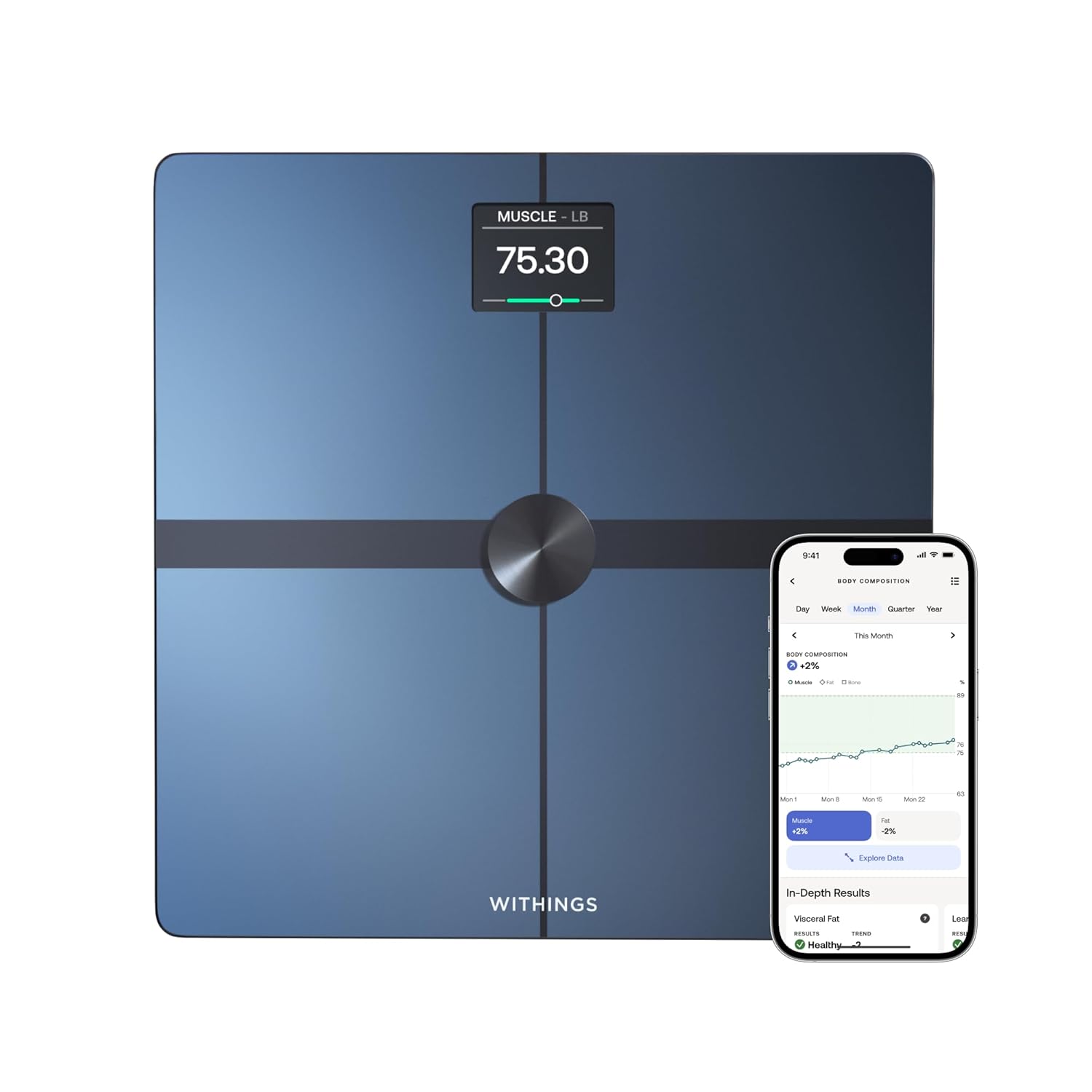
If you want one scale that does almost everything right without costing a fortune, the Body Smart is it. Withings has been making connected health devices for over a decade, and that maturity shows in the app and the syncing reliability — the two things cheaper scales get wrong.
It connects over both WiFi and Bluetooth, so once it’s set up you never touch your phone to record a weigh-in. Just step on, and your weight, body fat, muscle mass, water percentage, BMI, and heart rate land in the Withings Health Mate app automatically. The app is genuinely good: clean trend charts, a “weight trend” feature that smooths out daily water fluctuations, and an “Eyes Closed” mode that hides the number on the scale if you’d rather only see your trend in the app.
It supports up to 8 users with automatic recognition, syncs to Apple Health and Google Fit, and works with Fitbit. The high-resolution display shows weather and step count too. For most people, this is the sweet spot of accuracy, features, and price.
Specs: WiFi + Bluetooth | body fat, muscle, water, BMI, heart rate | 8 users | Apple Health, Google Fit, Fitbit | ~$85
Pros:
- Excellent, mature app with smart trend smoothing
- WiFi auto-sync — never touch your phone to log
- 8-user support with auto recognition
- Heart rate measurement built in
Cons:
- Some advanced metrics need a Withings+ subscription
- Glass top shows footprints easily
2. Garmin Index S2 — Best for Athletes
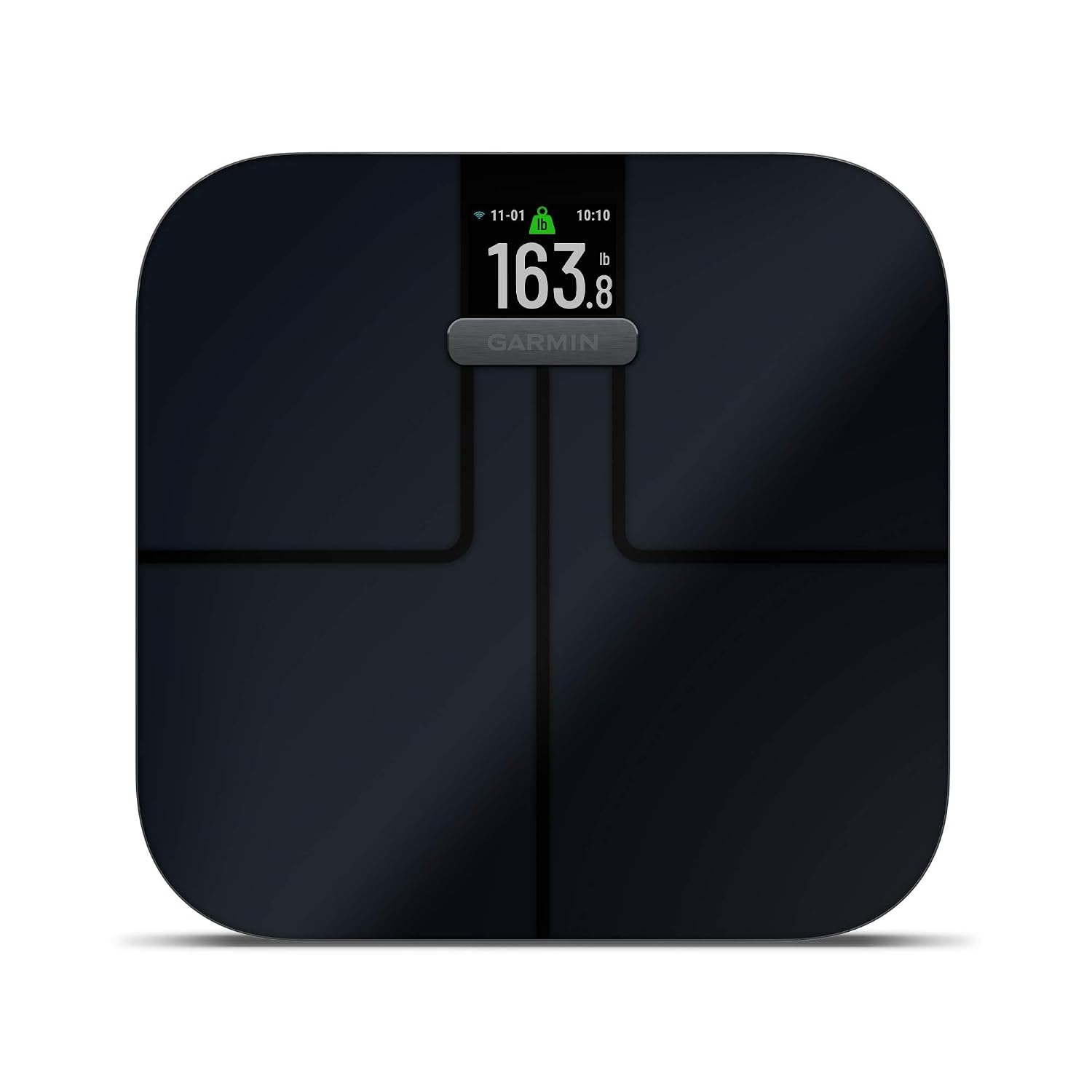
If you already wear a Garmin watch or train seriously, the Index S2 is the obvious pick. Its whole reason to exist is feeding your weight and body composition straight into Garmin Connect, where it sits alongside your runs, rides, sleep, and recovery data. That single-ecosystem view is something no other scale here matches for Garmin users.
It measures weight, body fat, muscle mass, bone mass, body water, and BMI, all syncing over WiFi to Garmin Connect. The color display shows a trend graph right on the scale, plus a daily weather forecast — a small touch that’s surprisingly nice first thing in the morning. It handles up to 16 user profiles, which is the most in this roundup.
The trade-off is the ecosystem. The Index S2 is designed to live in Garmin Connect. It does not sync to Apple Health or Google Fit directly, so if you’re not already in Garmin’s world, you’ll get more value (and spend less) elsewhere. But for Garmin loyalists, this is a no-brainer.
Specs: WiFi | body fat, muscle, bone, water, BMI | 16 users | Garmin Connect only | ~$200
Pros:
- Deep integration with Garmin Connect and watches
- On-scale trend graph and weather
- Supports up to 16 users
- Long battery life on AA batteries
Cons:
- Locked to Garmin Connect — no Apple Health / Google Fit
- Expensive if you don’t own a Garmin watch
3. Wyze Smart Scale Ultra BodyScan — Best Mid-Range
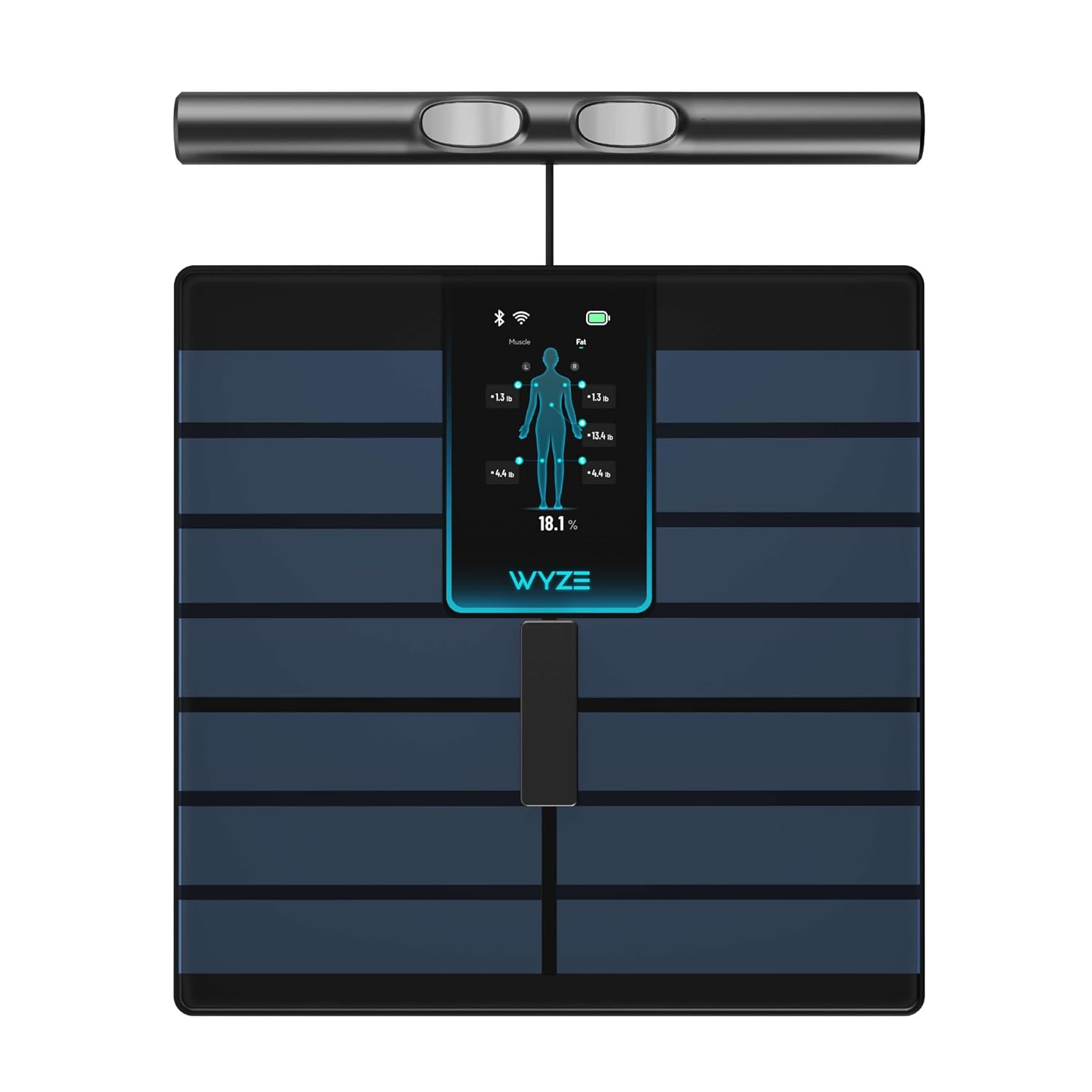
The Wyze Smart Scale Ultra brings a feature you usually only see on $300+ scales down to around $100: a detachable handle for segmental analysis. You step on, then pick up the handle bar and hold it, which lets the scale send its measurement signal through your arms as well as your legs. That gives you a per-limb breakdown — left arm, right arm, torso, left leg, right leg — instead of one whole-body average.
For anyone correcting a muscle imbalance or rehabbing an injury, that limb-by-limb data is genuinely useful and hard to find at this price. The bright color display on the scale shows a body map with your stats, and everything syncs over WiFi and Bluetooth to the Wyze app, which also ties into Wyze’s broader smart home lineup if you use their cameras and plugs.
It tracks weight, BMI, body fat, muscle mass, body water, and the segmental measurements, supports multiple users, and syncs to Apple Health and Google Fit. The Wyze app isn’t quite as polished as Withings’, but at this price with a handle included, it’s a lot of scale for the money.
Specs: WiFi + Bluetooth | segmental body composition with handle | 400 lb capacity | multi-user | Apple Health, Google Fit | ~$99
Pros:
- Segmental (per-limb) analysis at a mid-range price
- Bright color display with on-scale body map
- WiFi + Bluetooth, Apple Health and Google Fit sync
- Ties into the wider Wyze ecosystem
Cons:
- App is less refined than Withings or Garmin
- Handle adds a step to each full weigh-in
4. WITHINGS Body Scan — Best for Serious Health Tracking
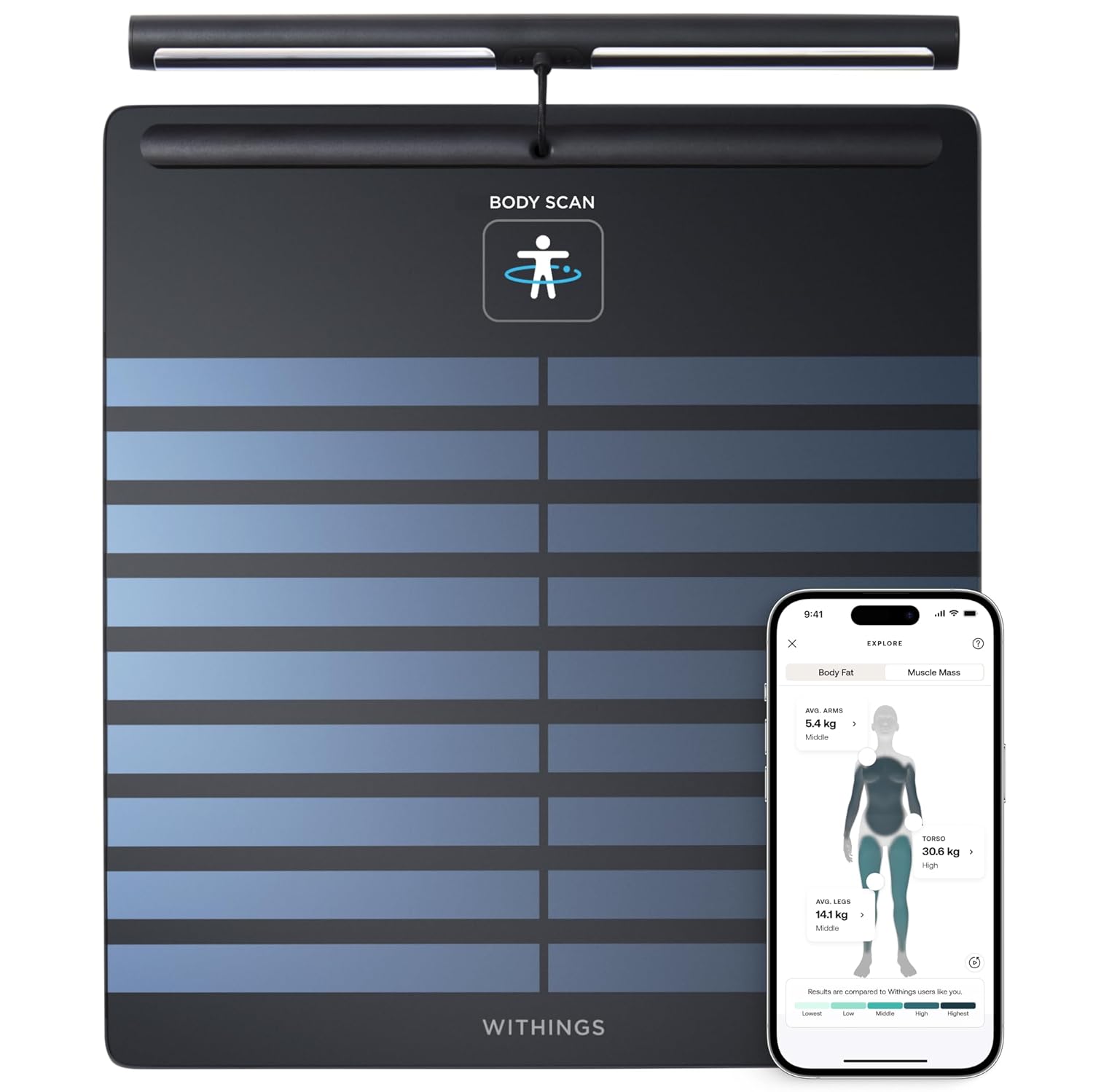
The Body Scan is the most advanced consumer scale Withings makes, and it shows. A retractable handle lifts out of the deck for a 6-lead reading that delivers segmental body composition (arms, legs, torso), plus health metrics that go well beyond weight: vascular age estimation, a 6-lead ECG to check for irregular heart rhythm, heart rate, and even an electrodermal activity reading taken through your feet.
This is the scale to buy if you’re tracking your health closely, working with a doctor or trainer, or simply want the deepest data set available without going to a clinic. It syncs over WiFi to the same excellent Health Mate app, supports multiple users with automatic recognition, and works with Apple Health and Google Fit.
Two honest caveats. First, it’s $300 — clearly a premium buy, and overkill if you just want body fat trends. Second, some of the standout features (segmental breakdown, vascular age, and certain heart insights) are gated behind a Withings+ subscription after an initial trial. If you’ll actually use the clinical-grade metrics, it’s worth it. If not, the Body Smart above gives you 80% of the value for under a third of the price.
Specs: WiFi | segmental analysis, 6-lead ECG, vascular age, heart rate | multi-user | Apple Health, Google Fit | ~$300
Pros:
- Deepest health data of any scale here (ECG, vascular age)
- Segmental body composition via retractable handle
- Same polished Health Mate app and reliable WiFi sync
- Multi-user auto recognition
Cons:
- Expensive at ~$300
- Best features require a Withings+ subscription
5. Wyze Smart Scale X — Best Budget
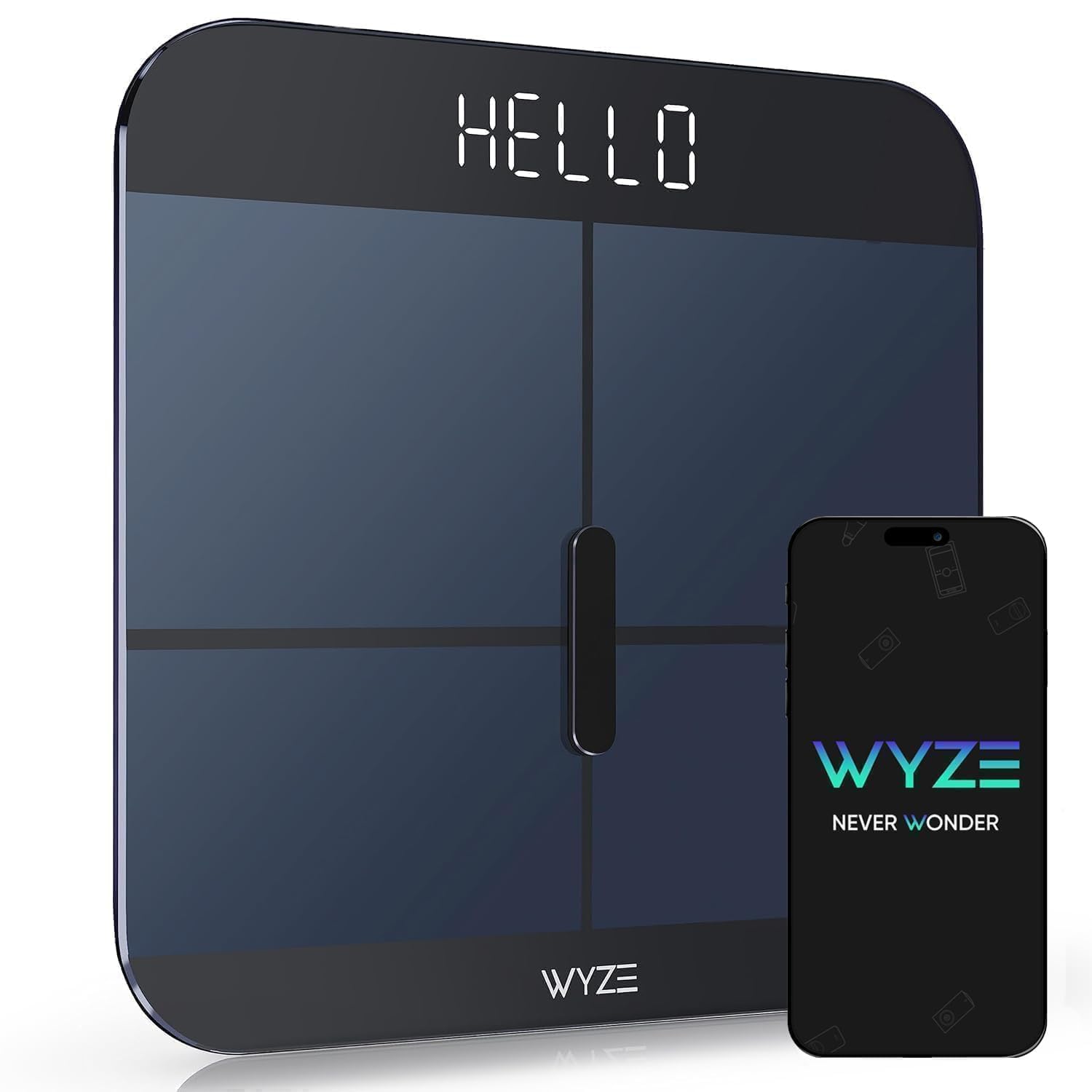
At around $30, the Wyze Smart Scale X is the easiest scale here to recommend to anyone who just wants connected body-composition tracking without overthinking it. It covers all the core metrics — weight, BMI, body fat, muscle mass, body water, bone mass, heart rate — and syncs them over Bluetooth to the Wyze app.
It’s friendly to share, too: it recognizes different users automatically and has dedicated Baby Mode (weigh yourself holding a baby, and it subtracts your weight) and Pet Mode. The app pushes data to Apple Health and Google Fit, so your weigh-ins flow into whatever fitness app you already live in.
Being budget-priced, it’s Bluetooth-only rather than WiFi, which means your phone needs to be nearby and the app open-ish for a weigh-in to sync. That’s a minor inconvenience, not a dealbreaker. For the money, it’s the best value in connected scales and a great first smart scale.
Specs: Bluetooth | body fat, muscle, water, bone, heart rate | multi-user, Baby & Pet modes | Apple Health, Google Fit | 400 lb | ~$31
Pros:
- Full body composition metrics for about $30
- Baby Mode and Pet Mode
- Syncs to Apple Health and Google Fit
- Auto user recognition
Cons:
- Bluetooth only (no WiFi auto-sync)
- Phone must be nearby to record readings
6. Etekcity Smart Scale — Cheapest Pick
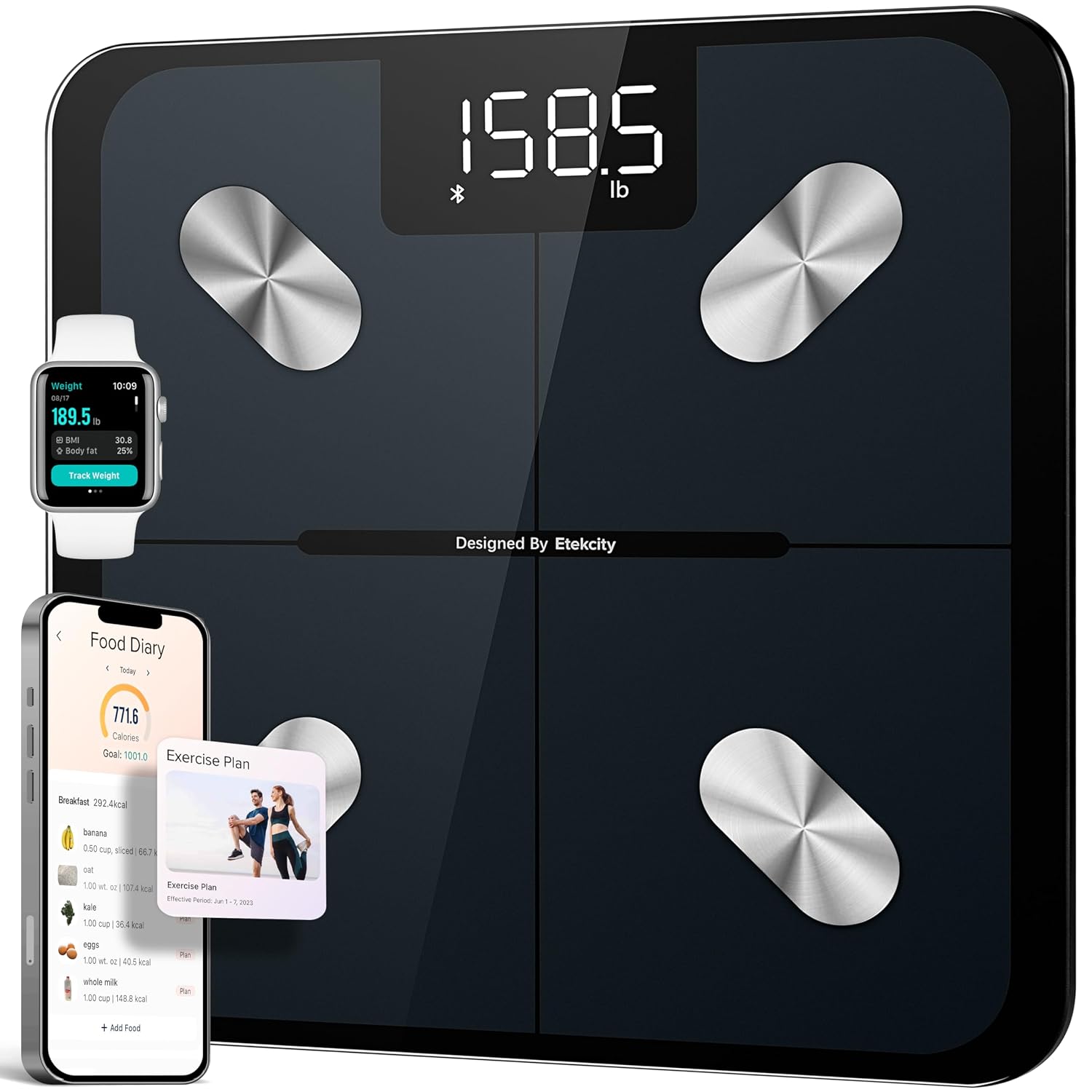
When you want a smart scale for as little money as possible, the Etekcity Smart Scale is hard to beat at around $20. It’s a no-frills Bluetooth scale that still does the important things: weight plus body fat, muscle mass, BMI, body water, and a handful of other composition metrics, all logged to the VeSync app.
It syncs to Apple Health, Google Fit, Fitbit, and Samsung Health, which is broader app support than you’d expect at this price, and it’s FSA/HSA eligible — meaning in the US you can often buy it with pre-tax health spending dollars. It supports unlimited users in the app, so the whole household can track separately.
You’re giving up WiFi and the slick hardware of pricier models, and the body-fat readings should be treated as a rough trend rather than gospel. But as an entry point into smart weight tracking — or a cheap second scale for a guest bathroom — it’s a smart buy that punches above its price.
Specs: Bluetooth | body fat, muscle, BMI, water | unlimited app users | Apple Health, Google Fit, Fitbit, Samsung Health | FSA/HSA eligible | ~$20
Pros:
- Cheapest smart scale here (~$20)
- Wide app support, including Samsung Health and Fitbit
- FSA/HSA eligible
- Unlimited user profiles in the app
Cons:
- Bluetooth only, basic hardware
- Body composition accuracy is approximate
Smart Scale Comparison Table
| Scale | Connectivity | Body Composition | Users | App Ecosystem | Price |
|---|---|---|---|---|---|
| WITHINGS Body Smart | WiFi + Bluetooth | Fat, muscle, water, heart rate | 8 | Apple Health, Google Fit, Fitbit | ~$85 |
| Garmin Index S2 | WiFi | Fat, muscle, bone, water | 16 | Garmin Connect | ~$200 |
| Wyze Scale Ultra BodyScan | WiFi + Bluetooth | Segmental (per-limb) | Multi | Apple Health, Google Fit | ~$99 |
| WITHINGS Body Scan | WiFi | Segmental, ECG, vascular age | Multi | Apple Health, Google Fit | ~$300 |
| Wyze Smart Scale X | Bluetooth | Fat, muscle, water, bone, HR | Multi | Apple Health, Google Fit | ~$31 |
| Etekcity Smart Scale | Bluetooth | Fat, muscle, BMI, water | Unlimited | Apple Health, Google Fit, Fitbit, Samsung | ~$20 |
How to Choose a Smart Scale: Buying Guide
How accurate is body composition, really?
Be realistic about what these scales measure. Body-fat and muscle readings come from bioelectrical impedance analysis (BIA) — a tiny electrical current sent through your body. Because the current takes the path of least resistance, the reading is affected by hydration, when you last ate, recent exercise, and even skin temperature. A scale can read your body fat several points higher in the morning than the evening simply because you’re more hydrated.
So treat the absolute number with a grain of salt. What’s actually valuable is the trend measured under consistent conditions. Weigh in at the same time of day (first thing in the morning, after the bathroom, before eating and drinking is the gold standard), and watch the direction over weeks. A scale that says you’re 22% body fat might be off by a few points, but if it consistently shows that number trending down, that’s real, useful information.
Scales with more electrodes (8-electrode models, or those with a handle) read both your upper and lower body and tend to give more representative numbers than basic foot-only scales. None of them replace a DEXA scan for precision — they’re for tracking, not diagnosis.
WiFi vs Bluetooth: which connection do you need?
This is the difference that affects daily use the most.
WiFi scales (Withings Body Smart, Garmin Index S2, Wyze Ultra, Withings Body Scan) connect to your home network directly. Step on, and the reading uploads to the cloud and your app on its own — your phone can be in another room or switched off. This is the more convenient experience and worth paying up for if you weigh in regularly.
Bluetooth scales (Wyze Scale X, Etekcity) talk only to your phone. For a weigh-in to record, your phone needs to be nearby with Bluetooth on, and ideally you open the app afterward to sync. It works fine, it’s just an extra small step. Bluetooth scales are cheaper, which is exactly why they dominate the budget tier.
If multiple people in your house weigh in at different times, WiFi is much smoother because nobody has to grab a specific phone first.
App ecosystem: Apple Health, Google Fit, Fitbit, Samsung Health
Your scale’s data is only as useful as where it can go. Before buying, check that the scale syncs with the health app you already use:
- Apple Health (iPhone): Withings, Wyze, and Etekcity all sync here. Garmin does not push to Apple Health directly.
- Google Fit (Android): Supported by Withings, Wyze, and Etekcity.
- Fitbit: Withings and Etekcity sync to Fitbit, which is handy if you wear a Fitbit tracker.
- Samsung Health: Etekcity supports this; check current app compatibility for the others, as it changes.
- Garmin Connect: The Garmin Index S2 lives here exclusively. If you wear a Garmin watch, that’s a feature; if you don’t, it’s a limitation.
The rule of thumb: buy the scale that feeds your existing fitness app, not a new one. Fragmented data across three apps is worse than one decent app you actually open.
Multi-user support
If your scale will be shared, look at two things: how many user profiles it supports, and whether it recognizes people automatically. The better scales (Withings, Garmin) tell users apart by weight and previous readings, so each person just steps on and their data files itself. Cheaper scales may require you to confirm who you are in the app, or assign readings manually. The Garmin Index S2 leads here with 16 profiles; Withings Body Smart handles 8; the Etekcity supports unlimited profiles in its app. For a couple or a family, automatic recognition is the feature that keeps everyone actually using it.
Athlete mode, baby mode, and pregnancy
A few situational features worth knowing about:
- Athlete mode adjusts the body-fat calculation for people with high muscle mass and low fat, who can otherwise read inaccurately on standard BIA formulas. If you train hard, look for it.
- Baby/infant mode (on the Wyze scales) lets you weigh yourself holding a baby and subtracts your weight to give the baby’s — great for tracking a newborn between pediatrician visits.
- Pet mode does the same thing for pets.
- Pregnancy mode/tracking is offered by some apps (Withings Health Mate has a pregnancy tracker). Note that BIA body-composition readings are generally not recommended during pregnancy — the scales typically switch to weight-only, which is what you want anyway.
What the metrics actually mean
A quick translation so the app screen makes sense:
- Body fat % — proportion of your weight that’s fat. The headline composition number.
- Muscle mass — weight of your muscle. You want this stable or rising while fat falls.
- Body water % — hydration level; explains a lot of day-to-day weight noise.
- Bone mass — weight of your bones; changes very slowly, mostly a reference figure.
- BMI — weight relative to height. Simple but ignores muscle, so athletes read “overweight” wrongly. Body fat % is more useful.
- Visceral fat — fat around your organs; a more meaningful health risk indicator than total body fat.
- Basal metabolic rate (BMR) — estimated calories you burn at rest, handy for setting a diet target.
You don’t need to track all of them. For most people, weight trend + body fat % + muscle mass is the useful trio; the rest is context.
Pairing a smart scale with other connected gear is a common move — see our roundups of smart home gifts for mom and smart home gifts for dad for more health-and-wellness gadget ideas.
Frequently Asked Questions
Are smart scales accurate for body fat?
They’re accurate enough for tracking trends, not for a precise one-time number. Bioelectrical impedance readings shift with hydration, food, and time of day, so the absolute body-fat percentage can be off by a few points compared to a DEXA scan. The fix is consistency: weigh in at the same time under the same conditions and watch the direction over weeks. The trend is reliable even when the exact number isn’t.
Do I need WiFi, or is Bluetooth fine?
Bluetooth is perfectly fine if you don’t mind keeping your phone nearby and opening the app to sync. WiFi is more convenient because readings upload automatically with no phone required, which matters most in shared households where people weigh in at different times. If you weigh in daily and want zero friction, pay up for WiFi. Otherwise, a Bluetooth scale like the Wyze Scale X saves you money.
Will a smart scale sync with Apple Health or Google Fit?
Most do. Withings, Wyze, and Etekcity all sync to both Apple Health and Google Fit, and Withings and Etekcity also feed Fitbit. The main exception is the Garmin Index S2, which syncs only to Garmin Connect. Always confirm the scale supports your specific app before buying — that’s the feature that determines whether the data is actually useful to you.
Can the whole family use one smart scale?
Yes. All six picks support multiple users. The better models (Withings, Garmin) recognize each person automatically by weight and history, so everyone just steps on. The Garmin Index S2 supports up to 16 profiles, Withings Body Smart 8, and the Etekcity allows unlimited profiles in its app. Auto recognition is the feature that keeps a shared scale from becoming annoying.
Are smart scales safe? Can I use one with a pacemaker or during pregnancy?
The electrical current is extremely small and harmless to the vast majority of people. However, manufacturers generally advise that people with pacemakers or other implanted electronic medical devices avoid the body-composition (impedance) feature, since it sends a current through the body. During pregnancy, composition readings aren’t recommended — most scales switch to weight-only, which is all you need. When in doubt, use the scale for weight only, or check with your doctor.
How do I get the most accurate readings?
Weigh in first thing in the morning, after using the bathroom, before eating or drinking. Use the scale on a hard, flat floor (not carpet), with bare feet, and stand still. Keep the conditions the same every time. Consistency matters far more than any single reading — the trend line you build is what tells you whether things are moving in the right direction.
The Bottom Line
For most people, the WITHINGS Body Smart is the smart scale to buy — it’s accurate, syncs over WiFi to a genuinely good app, handles the whole family, and costs around $85. Athletes already in the Garmin world should grab the Garmin Index S2 for seamless Garmin Connect integration. Want per-limb data without the premium price? The Wyze Smart Scale Ultra BodyScan brings segmental analysis to about $100. If you want the deepest health metrics available, the WITHINGS Body Scan delivers clinical-grade data at $300.
On a budget, the Wyze Smart Scale X at ~$30 gives you full body composition and Apple Health / Google Fit syncing, and the Etekcity Smart Scale at ~$20 is the cheapest way to start tracking. Whichever you pick, the real win is the same: stop obsessing over one daily number, and start watching the trend.