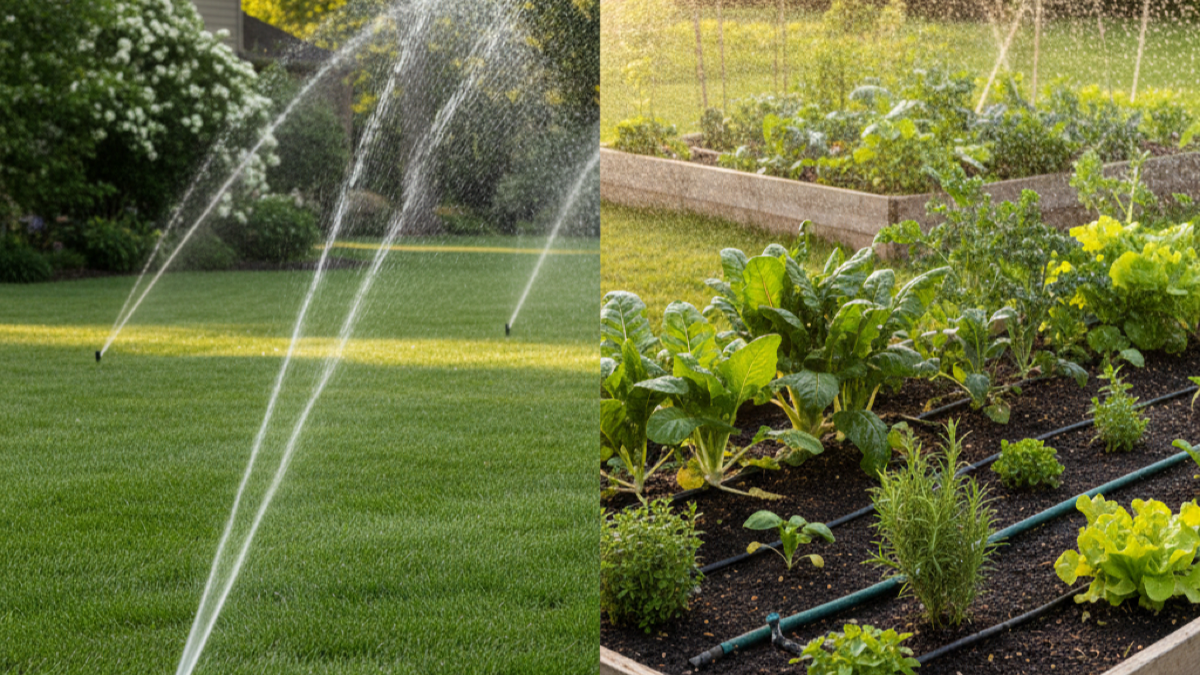
It’s the long weekend, you’re finally tackling the yard, and you’ve decided this is the year watering gets automated. Then you start shopping and hit a wall: half the products are wall-mounted boxes full of wires, the other half screw onto your outdoor faucet, and nobody explains which one you actually need. They look like they do the same job. They don’t.
The short version: a smart sprinkler controller runs an in-ground irrigation system — the underground pipes and pop-up heads installed in your lawn. A smart hose timer screws onto your garden spigot and runs whatever you connect to it: a drip line, a soaker hose, a sprinkler on a stand. One is plumbing you already have buried in the ground; the other is a gadget you thread on in five minutes. Buy the wrong one and you’ll either have a controller with nothing to control or a timer that can’t touch your real sprinkler system.
This guide sorts it out fast. We’ll cover what actually separates the two, give you a simple “choose this if” checklist, and point you to the two best picks on each side so you can buy with confidence and get back to the grill. If you already know which camp you’re in, jump straight to our full roundups: the best smart sprinkler controllers for in-ground systems, or the best smart hose timers for faucet-mounted watering.
What’s the Actual Difference?
The confusion is understandable — both connect to WiFi, both run schedules from an app, and both can skip watering when rain is forecast. The difference is entirely about what they connect to on the water side.
A smart sprinkler controller is a low-voltage control box. It replaces the old timer that’s probably bolted to your garage or basement wall right now. It doesn’t touch water at all — it sends 24-volt signals down the existing zone wires to open and close the underground valves that feed your in-ground sprinkler heads. If you have pop-up sprinklers that rise out of the lawn, buried PVC pipe, and a box on the wall with a row of wire terminals, you have an in-ground system, and a controller is what runs it. Installation is a 20–30 minute job with a screwdriver: you move the labeled zone wires from the old box to the new one.
A smart hose timer is a battery-powered valve with a faucet thread on one end and a hose thread on the other. It screws directly onto your outdoor spigot, no wiring, no plumbing. Whatever you connect downstream — a drip kit for the raised beds, a soaker hose snaking through the flower garden, an oscillating sprinkler for a small lawn patch — runs on the schedule you set in the app. Most run on AA batteries and many use a small indoor WiFi hub so the valve can sit far from your router.
So the dividing line is simple: do you have an in-ground system or not? Everything else follows from that one answer.
Choose a Smart Sprinkler Controller If…
A smart sprinkler controller is the right call when you already have irrigation infrastructure in the ground. Specifically:
- You have an existing in-ground sprinkler system. Pop-up heads, buried lines, and a timer box on the wall. The controller swaps in for that box.
- You water multiple zones. Most homes have 4–8 zones (front lawn, back lawn, side beds, etc.), each on its own valve. Controllers handle 6, 8, or 16 zones from a single unit.
- You have a medium-to-large lawn. In-ground systems exist precisely because dragging hoses around a big yard is miserable. The controller makes that automatic system smart.
- You want hyperlocal weather intelligence. The better controllers pull data from the nearest weather station and calculate watering down to the individual zone, factoring in soil type, slope, and sun exposure.
- You’re comfortable moving a few labeled wires. It’s genuinely a screwdriver job, but if low-voltage wiring makes you uneasy, a technician will swap it for $50–100.
If that’s you, the in-ground controller is the obvious tool. See our full breakdown in the best smart sprinkler controllers guide — and the two picks below cover most homeowners.
Choose a Smart Hose Timer If…
A smart hose timer is the right call when you don’t have (or don’t want to mess with) an in-ground system. Specifically:
- You don’t have an in-ground sprinkler system. No buried pipes, no wall box — just an outdoor faucet. The timer threads right on.
- You’re watering raised beds, containers, or a vegetable garden. This is the hose timer’s sweet spot. Run a drip line off the spigot and let it handle the tomatoes.
- You use drip lines or soaker hoses. Hose timers feed standard 1/2-inch drip tubing through a pressure regulator beautifully.
- You rent, or don’t want to install anything permanent. Nothing is wired or plumbed in. It unscrews and comes with you when you move.
- You only need one to a few zones. Single-faucet timers run one hose; 2- and 4-port models split a spigot into independent zones for different beds.
If that’s you, skip the controller entirely. Our best smart hose timers guide has the full lineup, and the two picks below are the ones most people should start with.
Side-by-Side Comparison
| Smart Sprinkler Controller | Smart Hose Timer | |
|---|---|---|
| Connects to | Existing in-ground irrigation system | Outdoor faucet / spigot |
| Installation | Wire zone cables into the unit (~20–30 min) | Screw onto faucet (~5 min) |
| Zones | 6, 8, or 16 underground zones | 1 to 4 hose lines |
| Power | Plug-in (wall outlet) | AA batteries (+ plug-in WiFi hub on most) |
| Best for | Lawns with in-ground sprinklers | Raised beds, gardens, drip lines, small lawns |
| Typical price | ~$100–230 | ~$70–150 |
| Renter-friendly? | No (permanent install) | Yes (unscrews, comes with you) |
| Weather skip | Yes (hyperlocal on better models) | Yes on WiFi models |
The pattern is clear: the controller is the higher-investment, permanent solution for a system that’s already in your yard, and the hose timer is the cheap, flexible, screw-it-on answer for gardens and rentals.
The Best Smart Sprinkler Controllers (Top 2 Picks)
If you landed in the controller camp, these are the two we’d buy. Both are covered in full in our smart sprinkler controllers roundup.
Rachio Smart Sprinkler Controller (8-Zone) — Best Overall
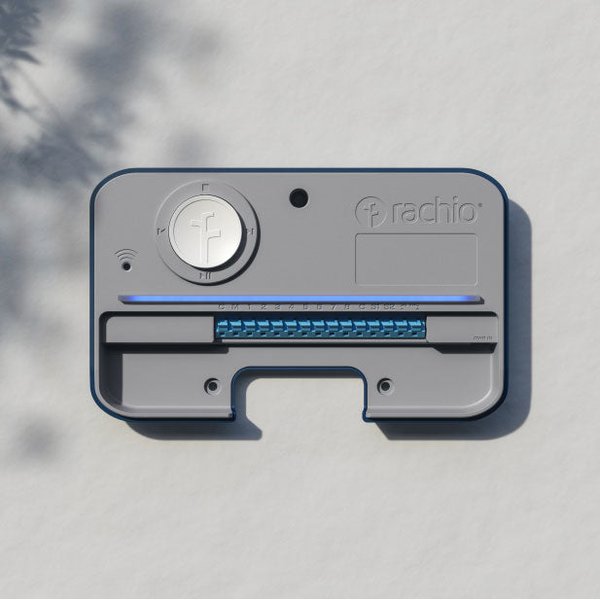
The Rachio has been the gold standard in smart irrigation for years, and the reason is its Weather Intelligence. Instead of a vague regional forecast, it pulls data from the nearest weather station and calculates exactly how much water each zone needs, accounting for rain, wind, humidity, temperature, soil type, slope, and sprinkler head type. It’s one of the very few controllers with Apple HomeKit support alongside Alexa and Google Assistant, so you can run watering from whatever ecosystem you already use.
Setup is the classic wire-swap: mount it where the old timer was, move the labeled zone wires over, connect WiFi, and the app walks you through configuring each zone. Independent studies put average water savings around 30% versus a fixed-schedule timer — enough that the controller often pays for itself within a year on the water bill alone. The dual-band WiFi (2.4 and 5 GHz) also means fewer dropouts than budget controllers. The main downside is price: it’s the most expensive option here, and the outdoor enclosure is sold separately. But for a full in-ground system, it’s still the one to beat.
Orbit B-hyve XR (8-Zone) — Best Budget In-Ground
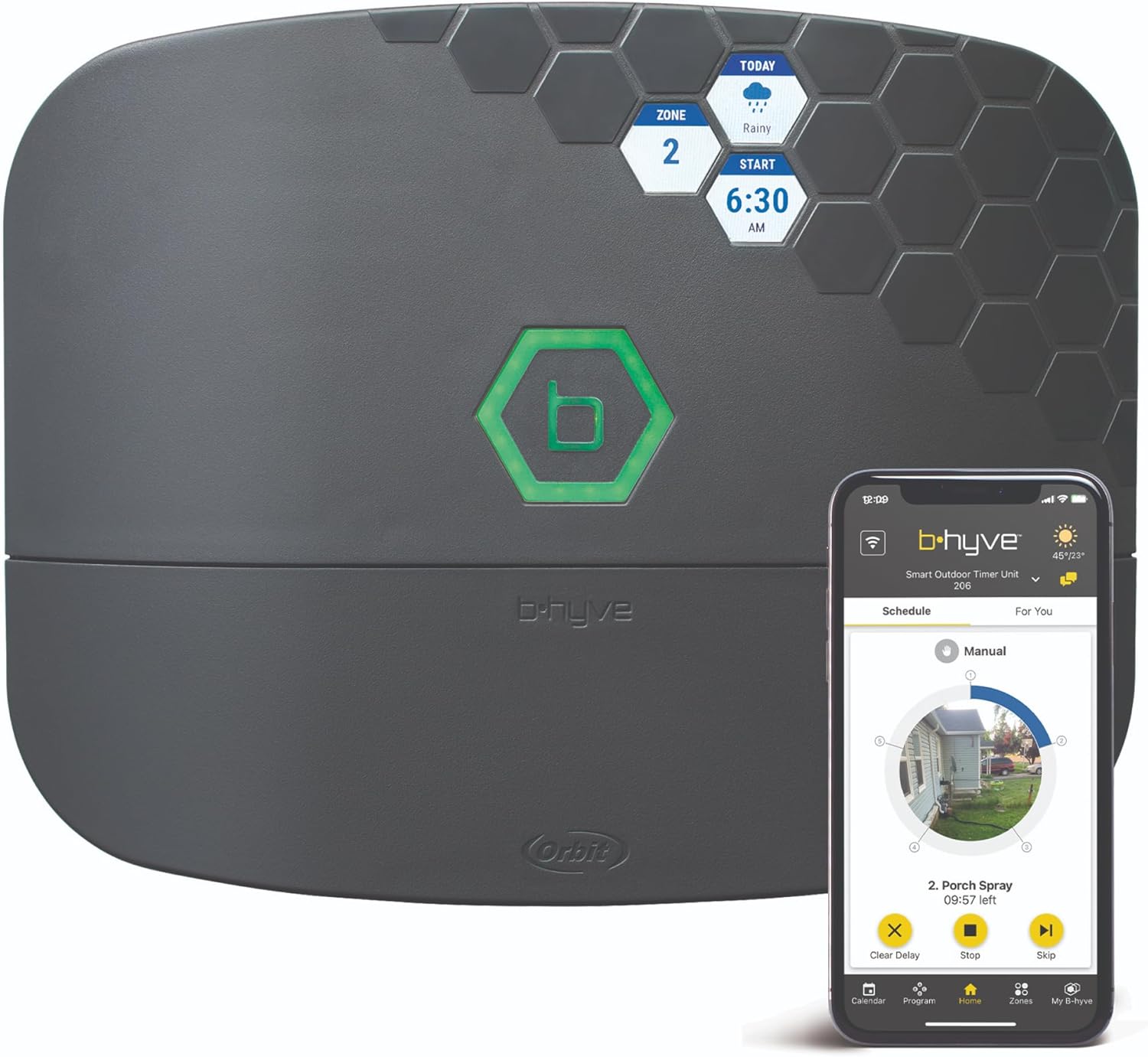
If the Rachio’s price gives you pause, the Orbit B-hyve XR delivers most of the smarts for roughly half the cost. Orbit has been making irrigation gear for over 50 years, and the B-hyve line brings that into the smart-home era. Its WeatherSense system uses local weather data to skip watering before rain and adjust for temperature — not quite as granular as Rachio’s hyperlocal approach, but it’s EPA WaterSense certified, so the savings are real and it may qualify for utility rebates in some areas.
The standout feature is the on-unit color touchscreen. Unlike app-only controllers, you can run zones and change settings right on the box — handy if your WiFi drops or your phone dies. It works with Alexa and Google Assistant (no HomeKit), and the app, while a step behind Rachio’s polish, is perfectly functional for scheduling. For a homeowner who wants smart, weather-aware watering on an existing system without spending $200+, the B-hyve XR is the value pick.
The Best Smart Hose Timers (Top 2 Picks)
If you landed in the hose-timer camp, start with one of these. Both are covered in full in our smart hose timers roundup.
Rachio Smart Hose Timer (1 Valve + 1 WiFi Hub) — Best Overall
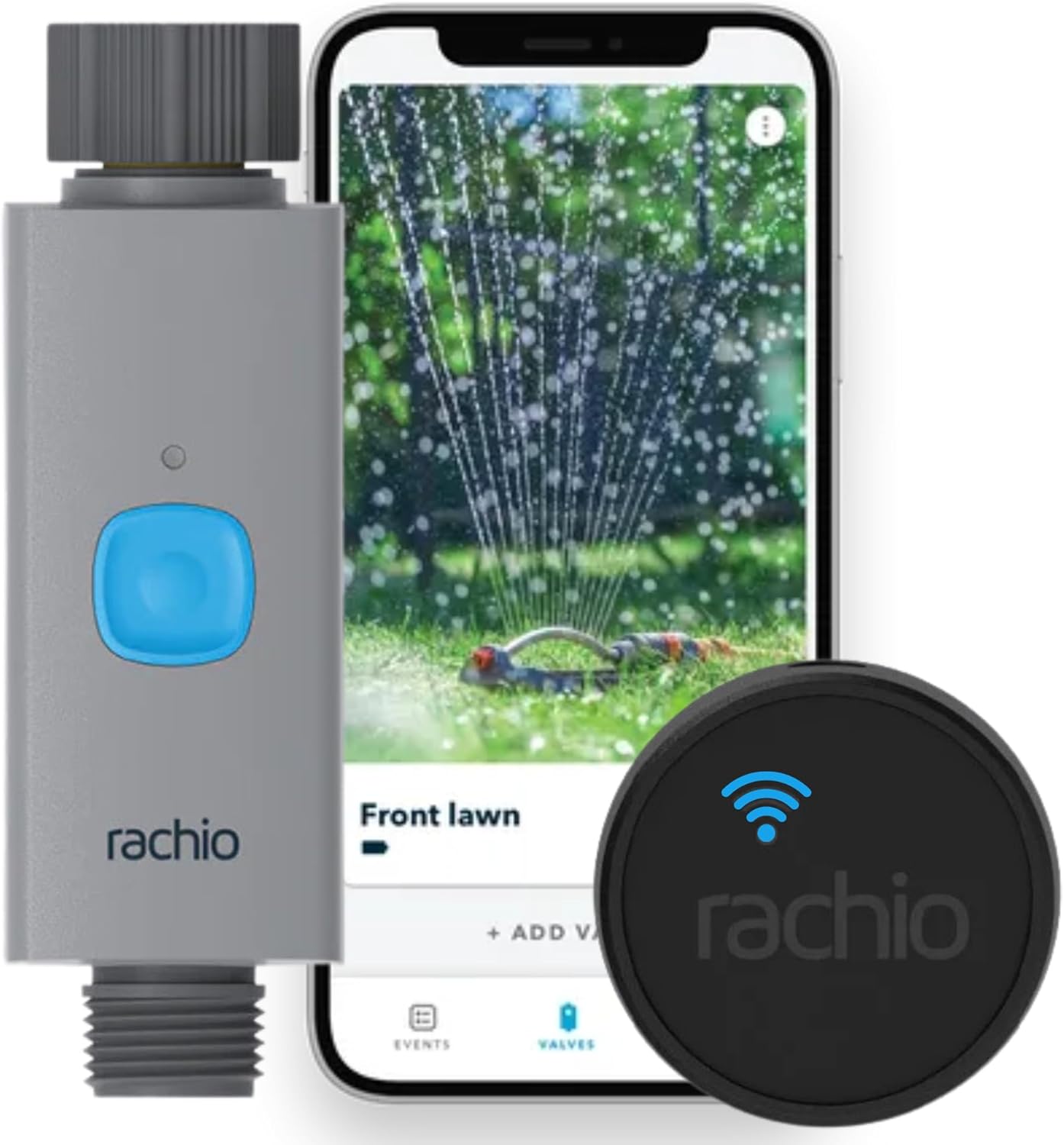
Rachio took the same weather-aware brain from its sprinkler controllers and shrank it down to a faucet timer, and it’s the one most people should buy. The kit includes one valve plus a WiFi hub: you screw the valve onto the spigot (it has a solid brass connection, not plastic threads that strip), pop in AA batteries, plug the hub into an indoor outlet, and pair through the Rachio app. The hub handling WiFi means the valve can sit on the far side of the house without losing signal.
The reason it wins is the same Smart Schedule that powers Rachio’s controllers — it pulls hyperlocal forecasts and automatically skips for rain, freeze, wind, and saturation. No other hose timer does this as well. The piston valve also keeps water pressure higher than the cheaper diaphragm valves, which matters if you’re running drip lines. And you can expand to up to 4 valves on a single hub later, so a one-bed setup grows into a whole-garden system without buying a new hub. It costs a bit more than budget WiFi timers, but it’s the best “set it and forget it” experience on a spigot.
Orbit B-hyve Smart Hose Timer with WiFi Hub (21004) — Best Budget Wi-Fi
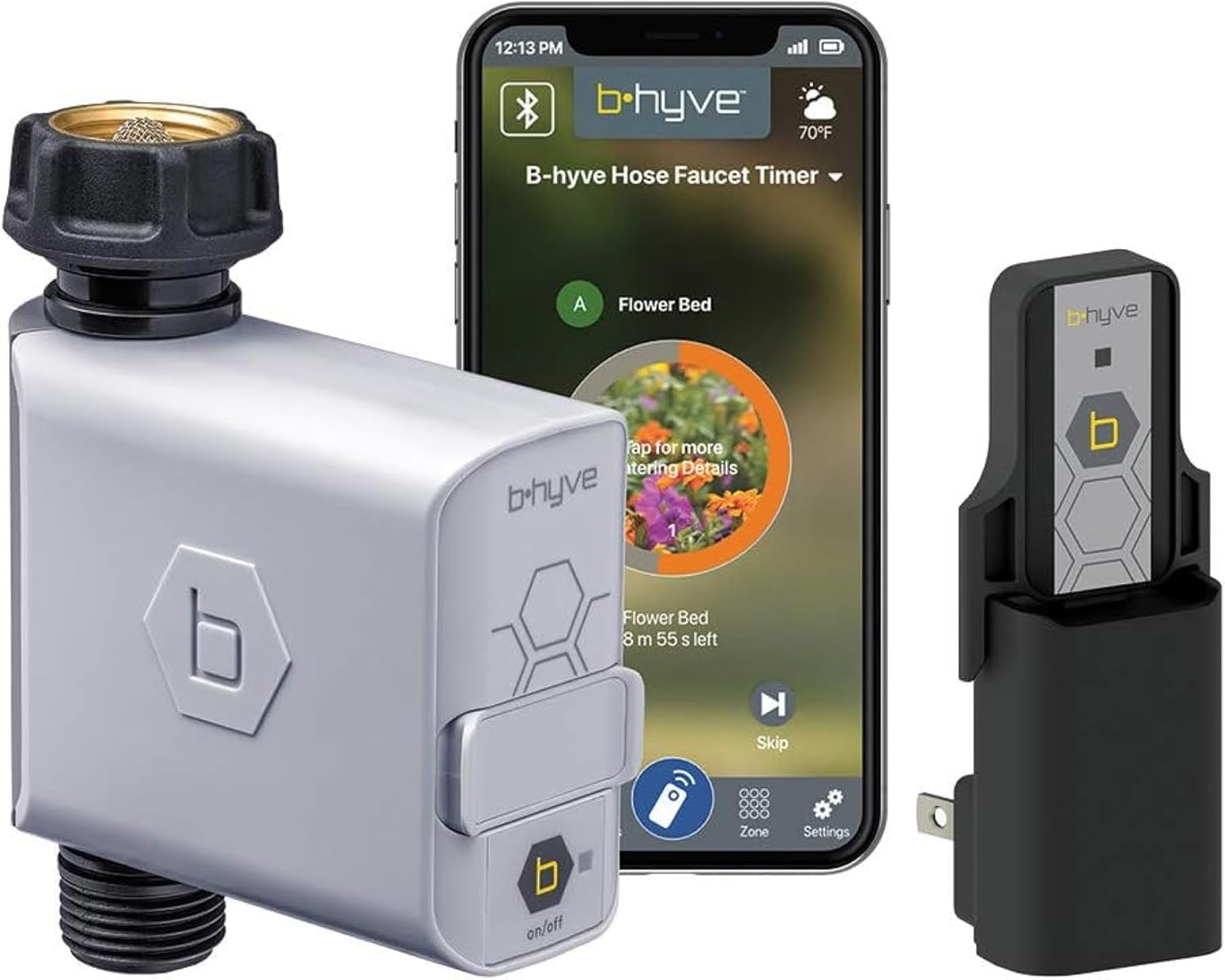
The Orbit B-hyve 21004 is where most people start, and for good reason. It pairs a single-outlet faucet timer with a WiFi hub, costs noticeably less than the Rachio, and still nails the most important smart feature: it skips watering when rain is forecast. It’s EPA WaterSense certified, which can mean utility rebates depending on where you live, and the hub also works with other B-hyve gear if you later add timers or an in-ground controller.
Setup mirrors the Rachio — screw on the timer, add AA batteries, plug in the hub, pair in the B-hyve app, then build schedules manually or let Smart Watering pull from the nearest weather station. What you trade at this price is polish: the app feels a bit older than Rachio’s, and the faucet threads are plastic, so hand-tighten rather than wrenching it on. But for a single drip line, a small lawn, or a vegetable garden, it’s the best-value WiFi timer you can buy, and it has years of proven reliability behind it.
Can You Use Both?
Plenty of homeowners do, and it’s often the smartest setup. A common scenario: an in-ground system handles the main lawn, so a sprinkler controller runs that, while a hose timer on the backyard spigot handles the raised vegetable beds and the patio container garden that the in-ground heads never reach. They’re solving two different watering problems on the same property.
If you go this route, buying within one brand keeps things tidy. Rachio’s app, for instance, manages both a Rachio controller and a Rachio hose timer on the same account, and Orbit’s B-hyve app does the same across its controllers and timers. One app, one login, both halves of the yard.
FAQ
Can I use a smart hose timer instead of a sprinkler controller?
Only if you don’t have an in-ground system. A hose timer can’t control buried valves — it just runs whatever you screw onto the faucet. If you have pop-up sprinklers in the lawn, you need a controller. If you’re watering beds and containers with hoses and drip lines, the timer is exactly right.
Do smart hose timers work with smart home systems?
Yes. WiFi hose timers like the Rachio and Orbit B-hyve work with Alexa and Google Assistant for voice control, and you can run them from their apps anywhere. For Apple HomeKit users, there’s a Thread-enabled option (the Eve Aqua) covered in our hose timers guide. Bluetooth-only timers are simpler and cheaper but limit you to nearby control.
Which one saves more water?
Both save 20–50% versus a dumb fixed-schedule timer, and the savings come from the same place: skipping watering when rain is on the way. In-ground controllers like Rachio tend to have the most granular, zone-by-zone weather intelligence, so on a large multi-zone lawn they’ll typically save the most in absolute gallons. On a small garden, a WiFi hose timer with weather skip captures most of the benefit for a fraction of the cost.
Do I need a separate hub for a WiFi hose timer?
Most WiFi hose timers include a hub in the box (both picks above do). The hub plugs into an indoor outlet within range of the valve and talks to the timer over a low-power radio, so the valve can sit far from your router. Sprinkler controllers don’t need a separate hub — they’re plugged in and connect to WiFi directly.
What if I’m not sure whether I have an in-ground system?
Look for three things: pop-up sprinkler heads that rise out of the lawn when watering, a timer box mounted on a wall in the garage or basement with a row of wired terminals, and small valve boxes (green lids) flush with the ground in the yard. If you have those, it’s an in-ground system — get a controller. If your only outdoor water source is a faucet you screw a hose onto, get a hose timer.
Can a hose timer run a drip irrigation system?
Yes — that’s one of its best uses. Feed standard 1/2-inch drip tubing off the timer through a pressure regulator and filter (most drip kits include one). The Rachio’s piston valve is especially gentle on drip emitters because it maintains steadier pressure than diaphragm-style timers.
Bottom Line
The decision comes down to one question: do you have an in-ground sprinkler system? If yes, you need a smart sprinkler controller — it replaces the wall box and runs your buried zones with serious weather intelligence. The Rachio 8-zone is the best overall, and the Orbit B-hyve XR is the budget pick that still does the job well.
If no — if you’re watering raised beds, a vegetable garden, containers, or a small lawn off a single faucet, or you rent and can’t install anything — a smart hose timer is the right tool. The Rachio Smart Hose Timer is the best overall, and the Orbit B-hyve 21004 is the value pick. And if you’ve got both a real lawn and a serious garden, running both is a perfectly sensible setup.
Ready to pick a specific model? Dig into our full guides: the best smart sprinkler controllers for 2026 and the best smart hose timers for 2026. To round out the yard, a robot lawn mower takes mowing off your plate, and a smart outdoor plug automates landscape lighting and seasonal decorations on a schedule.