Quick Picks
Short on time? Here are our top robot vacuum picks for 2026, one for every budget:
- Roborock Qrevo CurvX (~$1,000) — Best overall
- eufy X10 Pro Omni (~$480) — Best value
- iRobot Roomba Combo j5+ (~$395) — Best from a trusted brand
- Shark Matrix Plus (~$270) — Best for carpets
- eufy Robot Vacuum 11S MAX (~$170) — Best ultra-budget
- Roborock Q5 Max+ (~$160) — Best budget self-empty
Why 2026 Is a Great Year to Buy a Robot Vacuum
Robot vacuums used to be a gimmick — they bumped around randomly, missed half the floor, and clogged on the first sock they found. That era is over. In 2026, even mid-range robots map your home with lasers, dodge cables and shoes, and empty their own dustbins for weeks at a time. Prices have dropped too: features that cost $1,200 two years ago now show up on $400 models.
That also means the market is crowded and confusing. Suction numbers have ballooned into the tens of thousands of Pascals, every brand has its own dock acronym, and the difference between a great $200 robot and a frustrating one comes down to a single spec most listings bury. This guide cuts through it.
We focused on all-purpose “best overall” use — robots that handle a mix of hard floors and carpet in a typical home. If you have a specific need, we’ve got dedicated guides: our best robot vacuum and mop combo roundup if mopping is your priority, and our best robot vacuum for pet hair guide if you’re fighting fur. Below are the six general-purpose robots that earned a spot across every price tier.
The 6 Best Robot Vacuums of 2026
1. Roborock Qrevo CurvX — Best Overall
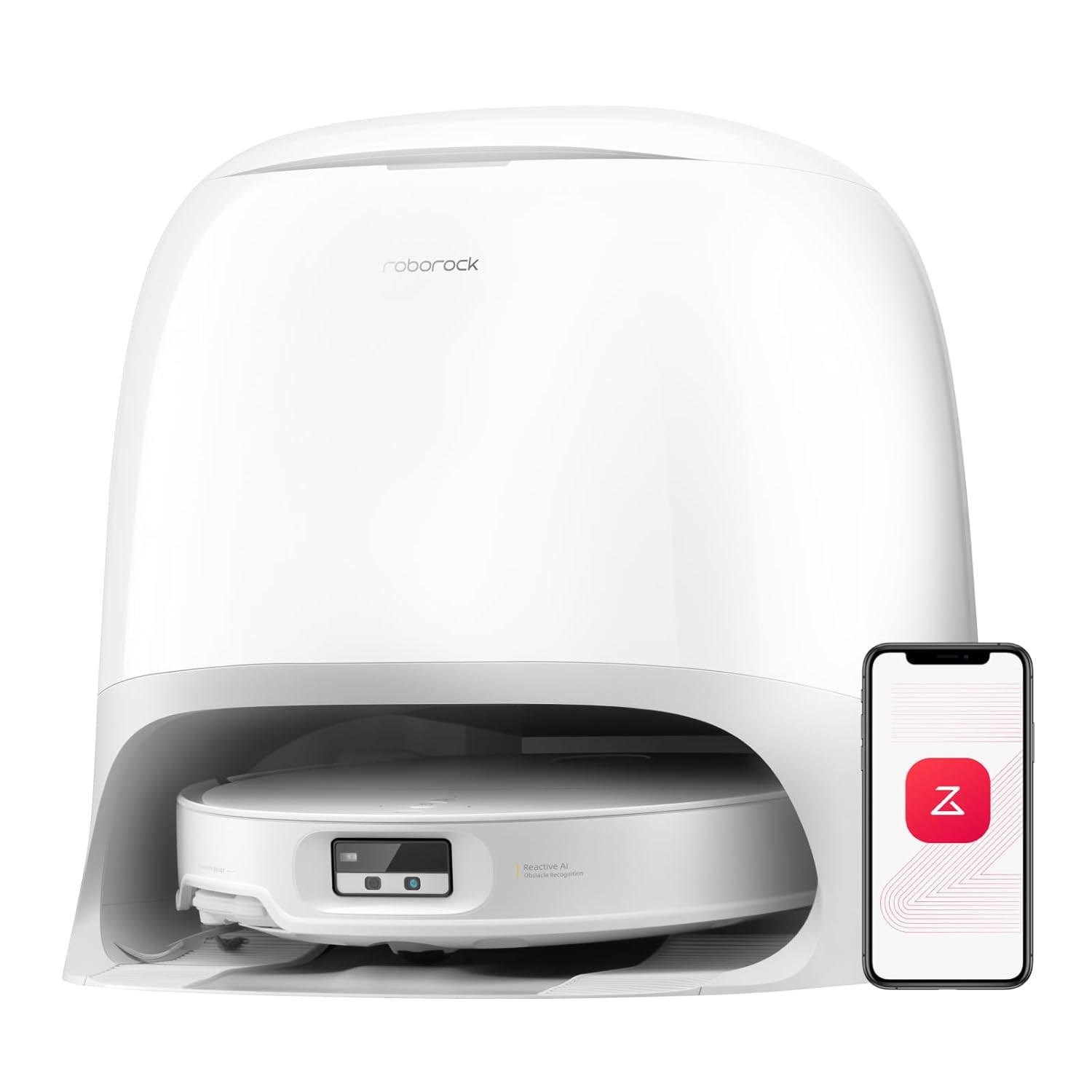
The Qrevo CurvX is the robot to beat in 2026. Its headline number is a staggering 22,000Pa of suction — easily the most powerful on this list and enough to pull embedded grit out of medium and high-pile carpet. But raw suction isn’t why it’s our top pick. It’s the combination of that power with a genuinely clever body and a dock that handles nearly all the maintenance.
At just 3.14 inches tall, the CurvX is one of the slimmest full-featured robots you can buy, so it slides under sofas, beds, and low cabinets that send taller robots bouncing off. Roborock’s AdaptiLift chassis lets it climb over thresholds and door transitions that strand other models. Navigation uses reactive AI obstacle recognition, so it avoids cables, socks, and pet messes instead of plowing through them.
The dock is the full package: it empties the dustbin, washes the mop pads with hot water, and dries them with warm air so they don’t get musty between runs. The zero-tangle brush design keeps long hair from wrapping around the roller, which is the single most annoying chore on older robots. If you want one robot that does everything well and you don’t want to think about it much, this is it.
Specs: 22,000Pa suction | Zero-tangle brush | Reactive AI obstacle recognition | AdaptiLift chassis | 3.14” ultra-slim body | Auto hot-water mop washing + drying | Self-emptying dock | ~$1,000
Pros:
- Class-leading 22,000Pa suction
- Ultra-slim 3.14” body fits under low furniture
- AdaptiLift chassis climbs thresholds others can’t
- Full self-maintaining dock (empty, wash, dry)
Cons:
- Most expensive robot on this list
- The big self-maintaining dock needs floor space
- More robot than someone with all hard floors needs
2. eufy X10 Pro Omni — Best Value
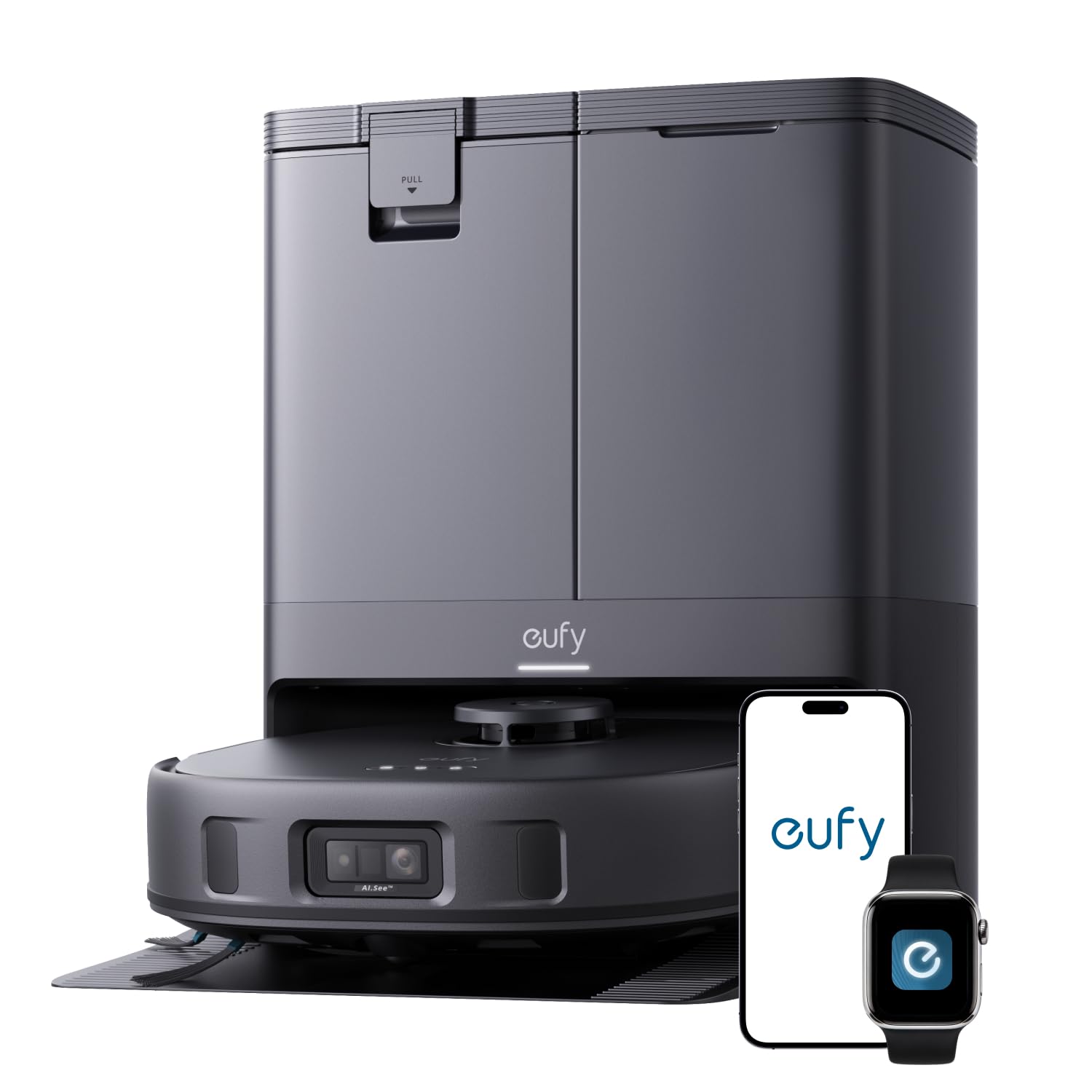
The eufy X10 Pro Omni is the robot we recommend to most people. For around $480 — less than half the price of our top pick — you get a self-emptying, self-washing, self-refilling omni-dock that does the kind of hands-off maintenance that cost $1,000+ not long ago. It’s the clearest example of how far prices have fallen.
It runs 8,000Pa of suction, which is plenty for hard floors and low-to-medium carpet, and uses dual spinning mop pads that lift 12mm automatically when the robot detects carpet — so your rugs stay dry. AI obstacle avoidance keeps it from eating charging cables and shoes, and the navigation builds an accurate map of your home for room-by-room cleaning.
What really sells the X10 Pro Omni is the dock. After each run, it empties the dust, washes the mop pads, and dries them with hot air, then refills the robot’s clean-water tank for the next pass. You’re looking at weeks of true hands-free operation. The eufy app is one of the friendlier ones out there, which matters if this is your first robot. It’s the value champion of 2026.
Specs: 8,000Pa suction | Dual spinning mops with 12mm auto-lift | Carpet detection | AI obstacle avoidance | Self-emptying + self-washing + self-refilling omni-dock | ~$480
Pros:
- Full self-maintaining omni-dock at a mid-range price
- Auto mop-lift keeps carpets dry
- Beginner-friendly app
- Strong all-around cleaning for the money
Cons:
- 8,000Pa is solid but not flagship-level
- Dock footprint is sizable
- Mop is good for maintenance, not deep stains
3. iRobot Roomba Combo j5+ — Best From a Trusted Brand
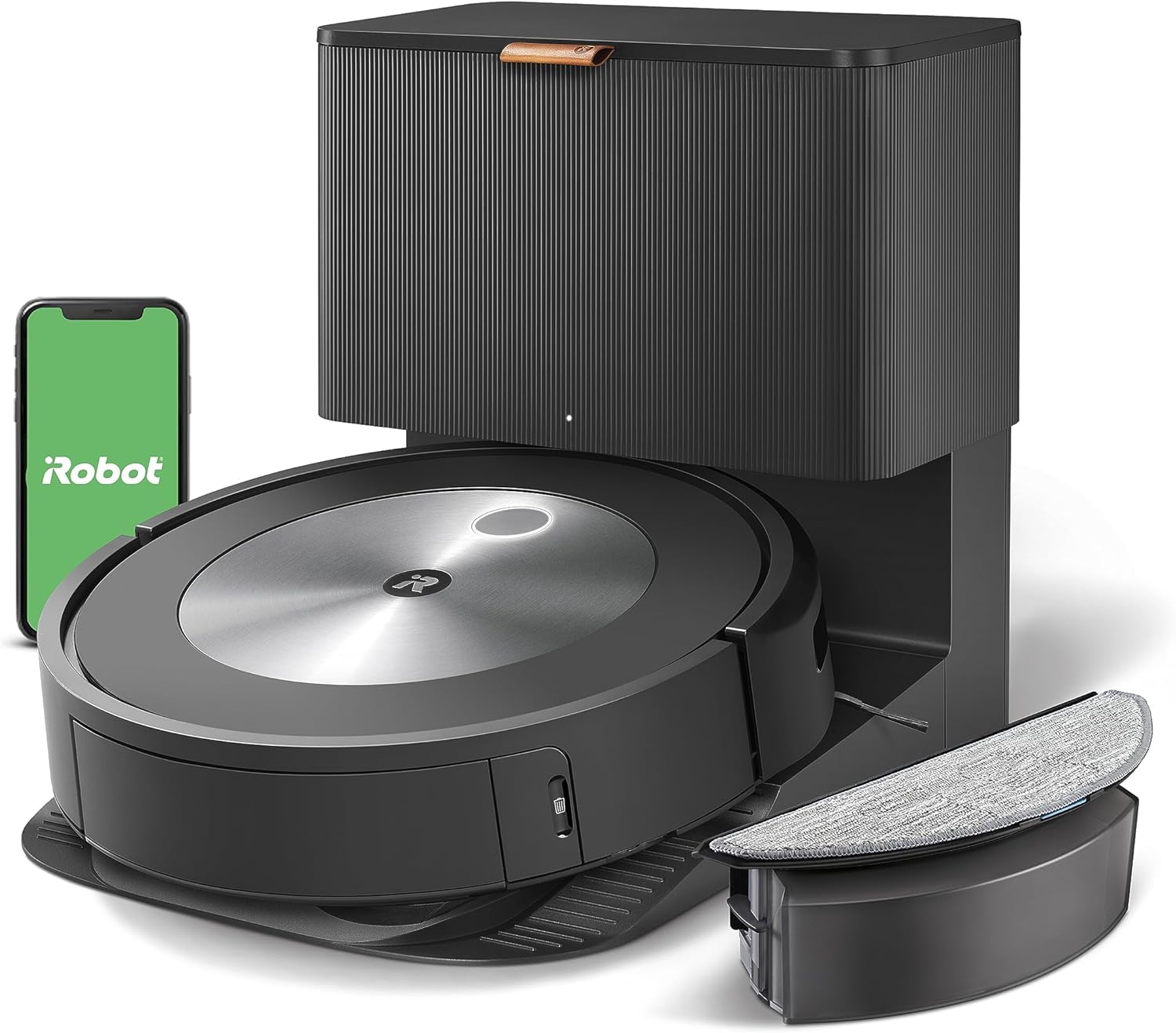
iRobot invented the category, and the Roomba Combo j5+ is the pick for people who want a name they recognize with US-based support behind it. At around $395 it vacuums and mops, empties itself for up to 60 days, and brings iRobot’s best-in-class obstacle avoidance — the j-series is famous for spotting and dodging pet waste, with iRobot’s “P.O.O.P.” guarantee promising a free replacement if it ever fails to.
The Combo j5+ uses a swappable bin design: drop in the mopping bin when you want to mop hard floors, or the standard bin when you just want to vacuum. The iRobot Home app then lets you set No Mop Zones so it never drags a wet pad across carpet. Smart Mapping means you can tell it to clean a single room (“clean the kitchen”) by voice through Alexa or Google.
It’s not the highest-suction or most automated robot here — there’s no mop self-washing, and you swap bins by hand — but iRobot’s obstacle recognition and navigation are genuinely excellent, and the self-empty Clean Base means you go two months without touching the dustbin. For a lot of buyers, brand confidence and reliable obstacle avoidance are worth more than a spec sheet.
Specs: 4-stage cleaning | Swappable vacuum/mop bins | Self-emptying Clean Base (60 days) | PrecisionVision obstacle avoidance + pet-waste guarantee | Smart Mapping | Works with Alexa/Google | ~$395
Pros:
- Best-in-class obstacle avoidance (pet-waste guarantee)
- Self-empties for up to 60 days
- Trusted brand with strong US support
- Smart Mapping with room-specific voice control
Cons:
- Mopping requires manually swapping the bin
- No mop self-washing or drying
- Suction not stated in Pa, trails the eufy/Roborock picks on carpet
4. Shark Matrix Plus — Best for Carpets
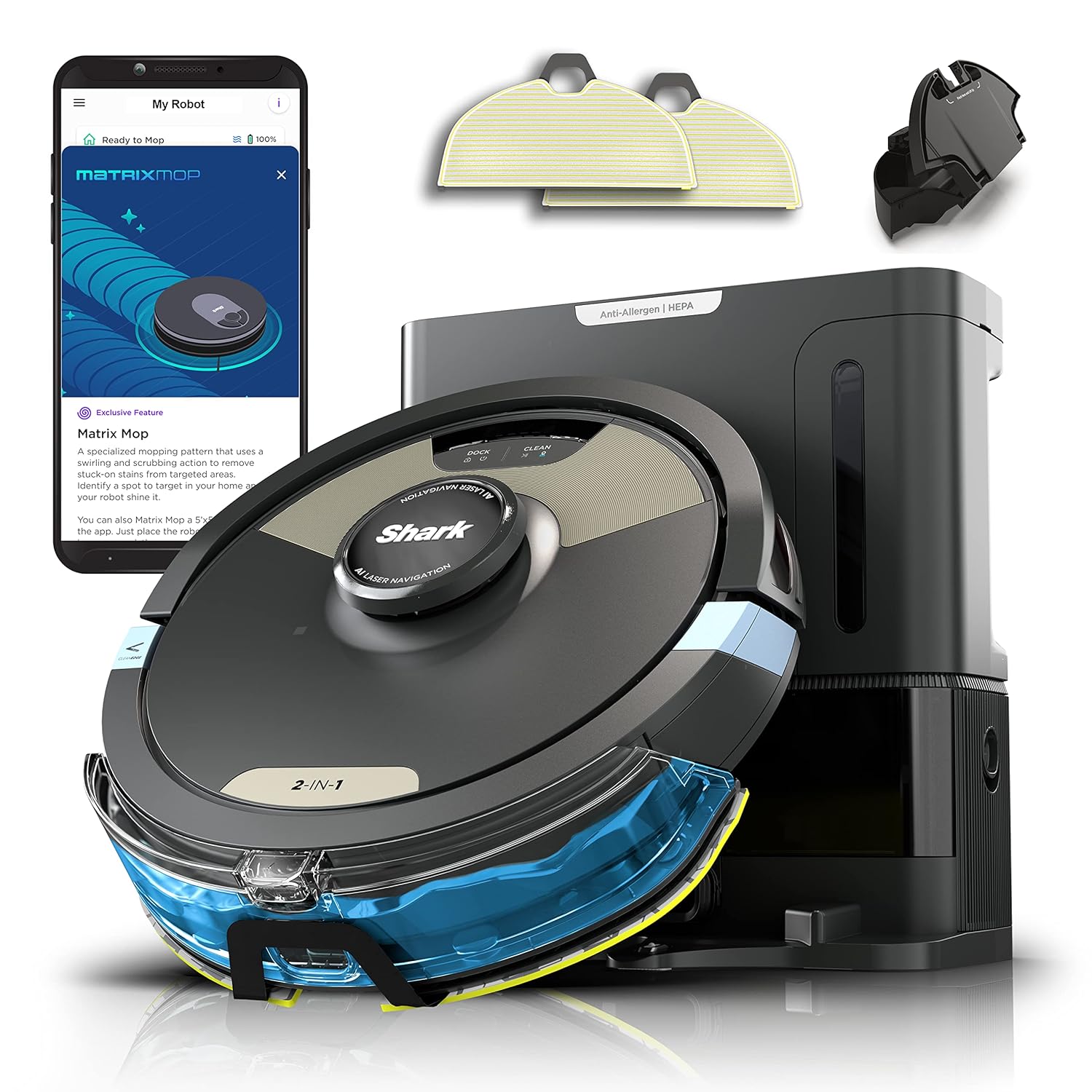
If your home is mostly carpet, the Shark Matrix Plus is built for you. Its signature trick is Matrix Clean — instead of cleaning in single straight passes like most robots, it cleans in an overlapping grid pattern, going over each area from multiple directions. On carpet, where debris hides down in the fibers, that repeated cross-cleaning pulls up noticeably more than a single pass.
At around $270 it’s a 2-in-1 vacuum and mop with a self-empty base that holds up to 60 days of debris, plus a HEPA filter that traps fine dust and allergens — a real plus if anyone in the house has allergies. CleanEdge technology blasts air to push debris out of corners and along baseboards toward the brush, and LiDAR navigation maps your home accurately for systematic, room-by-room cleaning.
The sonic mopping handles light spills on hard floors, though carpet-heavy homes will mostly use the vacuum. It’s WiFi-connected with full app control and voice support. For the price, this is one of the most carpet-capable robots you can buy, and the self-empty base keeps maintenance low.
Specs: 2-in-1 vacuum + sonic mop | Matrix Clean grid pattern | LiDAR navigation | Self-empty base (60-day capacity) | HEPA filtration | CleanEdge corner cleaning | WiFi + voice | ~$270
Pros:
- Matrix grid cleaning excels on carpet
- HEPA filtration for allergy sufferers
- Self-empty base at a mid-budget price
- Accurate LiDAR mapping
Cons:
- Mopping is basic compared to omni-dock robots
- No mop self-washing
- Grid cleaning takes longer per run
5. eufy Robot Vacuum 11S MAX — Best Ultra-Budget
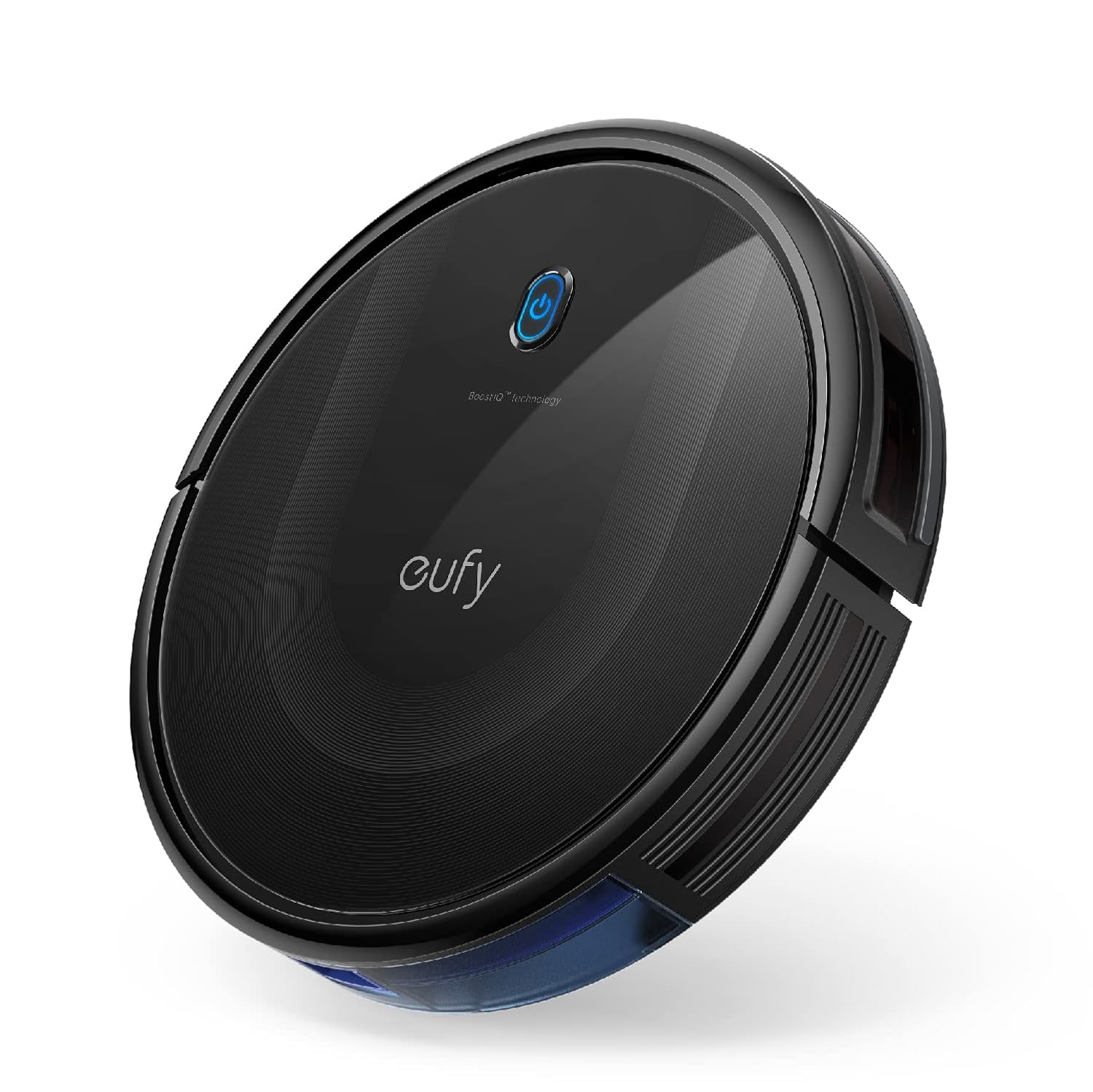
Not everyone needs lasers and self-emptying docks. If you have a smaller apartment, mostly hard floors, and you just want something that quietly keeps the dust down, the eufy 11S MAX is a no-fuss classic that’s been a best-seller for good reason. At around $170 it’s the cheapest pick on this list, and it does one thing well: simple, quiet, reliable vacuuming.
It’s a “bounce navigation” robot — it doesn’t map your home, it moves in a methodical pattern and changes direction off walls and furniture. That’s the trade-off at this price: it won’t clean room-by-room on command or remember a map, but on a single floor without a complicated layout it covers the space fine. At just 2.85 inches tall it’s one of the slimmest robots made, so it slips under beds and couches taller robots can’t reach. It runs around 100 minutes per charge at a low 55dB — quiet enough to run while you’re home.
There’s no WiFi or app — you control it with the included remote and the buttons on top. For some buyers that’s a downside; for others, it’s a feature. If you want smart features and mapping, step up to the picks above. If you want a cheap, dependable robot that just works, this is the one.
Specs: ~2,000Pa BoostIQ suction | 2.85” ultra-slim body | ~100-min runtime | 55dB quiet operation | Self-charging | Remote control (no app/WiFi) | ~$170
Pros:
- Cheapest reliable robot here
- Ultra-slim — fits under low furniture
- Very quiet at 55dB
- Dead simple to set up and use
Cons:
- No mapping — bounce navigation only
- No WiFi, app, or voice control
- No self-empty dock; empty the bin by hand
6. Roborock Q5 Max+ — Best Budget Self-Empty
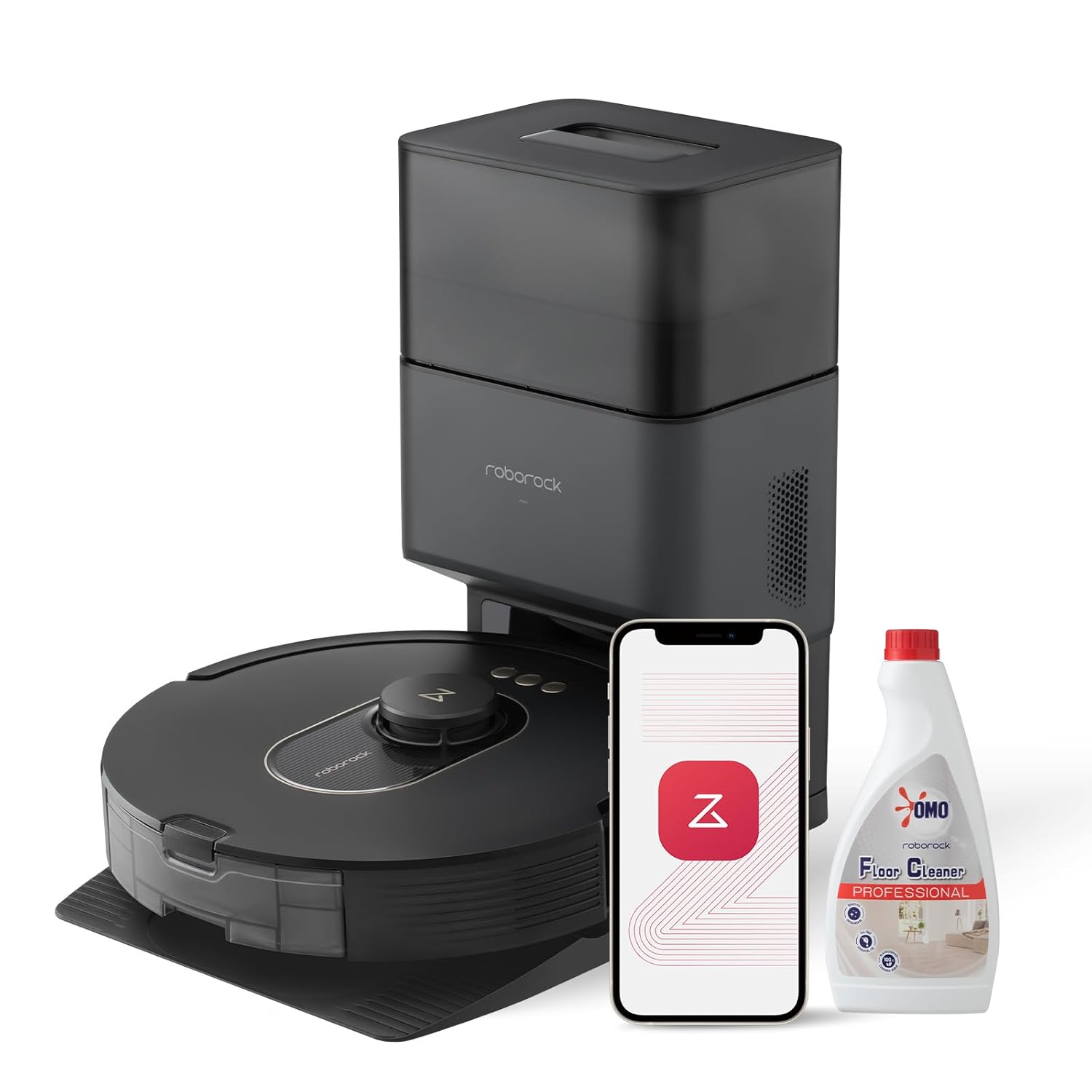
Here’s the sleeper deal of 2026. The Roborock Q5 Max+ pairs proper LiDAR navigation with a self-empty dock for around $160 — a combination you almost never see at this price. LiDAR is the dividing line in robot vacuums: it’s the difference between a robot that maps your home and cleans systematically, and one that bumps around randomly missing spots. Getting it on a sub-$200 robot, with a self-empty dock thrown in, is genuinely rare.
The 5,500Pa of suction is well-matched to hard floors and low-pile carpet, and the DuoRoller brush resists tangling from hair. Because it maps your home, you get the full Roborock app experience: room-by-room cleaning, no-go zones, scheduling, and the same clean interface as Roborock’s flagships. The self-empty dock means the robot dumps its own dustbin for about seven weeks before you touch it.
This is a vacuum-first robot — it doesn’t mop — so if mopping matters, look at the eufy X10 Pro Omni above or our robot vacuum and mop combo guide. But if you want a smart, accurate, self-emptying vacuum and you’re watching your budget, nothing else at $160 comes close.
Specs: 5,500Pa suction | PreciSense LiDAR navigation | DuoRoller anti-tangle brush | Self-empty dock (~7 weeks) | Roborock app: mapping, no-go zones, scheduling | Works with Alexa | ~$160
Pros:
- LiDAR mapping at a budget price — rare
- Self-empty dock included at ~$160
- Excellent Roborock app with full mapping features
- Anti-tangle DuoRoller brush
Cons:
- Vacuum only — no mopping
- 5,500Pa struggles with deep carpet
- No fancy obstacle camera (handles common obstacles, not all)
Robot Vacuum Comparison Table
| Model | Suction | Self-Empty | Mops? | Navigation | Best For | Price |
|---|---|---|---|---|---|---|
| Roborock Qrevo CurvX | 22,000Pa | Yes | Yes (wash + dry) | Reactive AI | Best overall | ~$1,000 |
| eufy X10 Pro Omni | 8,000Pa | Yes | Yes (wash + dry) | AI obstacle | Best value | ~$480 |
| iRobot Roomba Combo j5+ | Not stated | Yes (60 days) | Yes (swap bin) | PrecisionVision | Trusted brand | ~$395 |
| Shark Matrix Plus | Not stated | Yes (60 days) | Yes (sonic) | LiDAR | Carpets | ~$270 |
| eufy 11S MAX | ~2,000Pa | No | No | Bounce | Ultra-budget | ~$170 |
| Roborock Q5 Max+ | 5,500Pa | Yes (~7 wks) | No | LiDAR | Budget self-empty | ~$160 |
How to Choose a Robot Vacuum: Buying Guide
Suction Power (Pa) — and Why the Big Numbers Mislead
Suction is measured in Pascals (Pa). More is better, but with diminishing returns and a lot of marketing inflation. Here’s the honest breakdown:
- Hard floors only: Almost any robot works. Even 2,000Pa picks up everyday dust and crumbs fine.
- Low-pile carpet and rugs: Aim for 4,000–8,000Pa to lift debris out of the fibers.
- Medium and high-pile carpet: This is where high suction earns its keep. Look for 8,000Pa or more; the 22,000Pa Qrevo CurvX is built for exactly this.
Don’t fixate on the headline Pa number alone. Brush design, airflow, and how well the robot maintains contact with the floor matter just as much as the raw figure.
Self-Empty Docks — The Best Quality-of-Life Upgrade
A self-empty dock is a base station the robot returns to and dumps its dustbin into automatically, so you deal with debris every 6–8 weeks instead of after every clean. It’s the one feature that most changes how a robot feels to live with. Every pick here has one except the ultra-budget eufy 11S MAX — if you can stretch the budget, get a self-empty model.
Mopping: Nice to Have, Not Magic
Many 2026 robots mop as well as vacuum. The quality varies a lot:
- Swap-bin mopping (Roomba Combo j5+): You manually switch to a mop bin. Works, but it’s a hands-on step.
- Spinning pad mopping (eufy X10 Pro Omni, Qrevo CurvX): Rotating pads actively scrub; the best ones self-wash and dry at the dock.
- Sonic mopping (Shark Matrix Plus): Vibrating pad for light spills on hard floors.
For everyday maintenance, robot mopping keeps floors looking clean. For dried-on stains and sticky messes, you’ll still spot-mop by hand occasionally. If mopping is your main goal, read our dedicated robot vacuum and mop combo guide.
Navigation: LiDAR vs. Camera vs. Bounce
How a robot “sees” your home determines how well it cleans:
- LiDAR (laser) navigation (Q5 Max+, Shark Matrix Plus): A spinning laser builds an accurate map. The robot cleans in tidy rows, knows where it’s been, and supports no-go zones and room-by-room cleaning. This is the gold standard, and it now appears on budget models.
- Camera / AI vision (Roomba j5+, eufy X10): Uses cameras to map and, crucially, to identify and avoid obstacles like cables and pet messes. Often paired with LiDAR on premium models.
- Bounce / gyroscope navigation (eufy 11S MAX): No map. The robot moves in a pattern and changes direction off walls. Fine for small, simple single-floor spaces; less efficient in larger or complex homes.
The practical rule: for anything bigger than a small apartment, get a robot with LiDAR or camera mapping. The jump in cleaning quality and coverage is dramatic.
Pet Hair and Anti-Tangle Brushes
If you have pets, the make-or-break feature is the brush roll. Cheap robots have bristle brushes that hair wraps around into a solid mat you have to cut off with scissors. Newer designs — Roborock’s DuoRoller, the Qrevo’s zero-tangle brush — are shaped to shed hair into the bin instead of collecting it. High suction helps too. For multi-pet homes, our best robot vacuum for pet hair guide goes deeper, but any pick here with an anti-tangle brush is a solid start.
Hard Floors vs. Carpet
Match the robot to your floors. Mostly hard floors? Suction matters less, so a budget LiDAR robot like the Q5 Max+ is plenty, and a good mop is a bonus. Lots of carpet? Prioritize high suction and a robot that auto-lifts its mop over rugs (the eufy X10 Pro Omni and Qrevo CurvX both do this) so it doesn’t soak your carpet while mopping the kitchen.
Battery Life and Runtime
Runtime ranges from about 90 minutes on budget robots to 180+ on larger models. For most homes this rarely matters, because smart robots automatically return to the dock, recharge, and resume where they left off. Only large multi-room homes need to prioritize long runtime — and all the smart picks here support recharge-and-resume anyway.
Smart Home Integration
Every smart robot here works with Alexa and Google Home, so you can start a clean by voice or fold it into routines. If you’re building out a smart home, our smart home for beginners guide walks through where a robot vacuum fits, and our Alexa vs. Google Home comparison can help you pick the voice platform to standardize on.
FAQ
How much should I spend on a robot vacuum?
It depends on your floors and how hands-off you want to be. Under $200, the Roborock Q5 Max+ gets you LiDAR mapping and self-emptying — a genuinely smart robot. Around $400–500, the eufy X10 Pro Omni adds full mopping with a self-washing dock and is the sweet spot for most people. Above $800, you’re paying for maximum suction and the slimmest, most automated bodies like the Qrevo CurvX. There’s a great robot at every one of these prices in 2026.
Do I really need a self-emptying dock?
You don’t need one, but it’s the single biggest quality-of-life feature. Without it, you empty a small dustbin after most cleans. With it, the robot dumps its own bin into a larger base and you deal with debris every 6–8 weeks. Once you’ve lived with one, going back is hard. Only skip it if you’re on a tight ultra-budget like the eufy 11S MAX.
Are robot vacuums good for pet hair?
The good ones are excellent, but the brush design matters more than anything. Look for an anti-tangle brush (like Roborock’s DuoRoller) so hair doesn’t wrap into a mat, plus higher suction for carpet. Self-emptying is also a big help since pet homes fill the bin fast. For multi-pet households, see our best robot vacuum for pet hair guide.
Can a robot vacuum replace my regular vacuum?
For day-to-day maintenance, mostly yes — a good robot keeps floors consistently clean so you reach for the upright far less. But you’ll still want a regular or handheld vacuum for stairs, deep-cleaning high-pile carpet, upholstery, and the car. Think of the robot as handling the everyday baseline so the manual vacuum becomes an occasional deep-clean tool.
Will a robot vacuum damage hardwood floors?
No. Robot vacuums are safe on sealed hardwood — they use soft brushes and rubber rollers. The only thing to watch is mopping: models that mop use controlled, light water dispensing (a fine mist, not a flood), and the better ones auto-lift the mop over rugs and carpet. If you have unsealed or older hardwood, use the lowest water setting when mopping, or stick to a vacuum-only model.
LiDAR or camera navigation — which is better?
They solve slightly different problems. LiDAR is best for accurate mapping and systematic, efficient cleaning — it works in the dark and builds a precise floor plan. Camera (AI vision) navigation is best for identifying and dodging specific obstacles like cables, socks, and pet messes. The most capable robots, like the Qrevo CurvX, combine both. For budget buyers, LiDAR alone (as on the Q5 Max+) delivers the bigger jump in everyday cleaning quality.
Bottom Line
The best robot vacuum is the one that matches your floors and your budget. For most people, the eufy X10 Pro Omni hits the sweet spot — full self-emptying, self-washing mopping for under $500. If you want the best of everything and the slimmest body, the Roborock Qrevo CurvX is the 2026 flagship to beat. On a budget, the Roborock Q5 Max+ proves you can get LiDAR mapping and a self-empty dock for around $160, and the eufy 11S MAX is the dependable no-frills pick if you just want quiet, simple cleaning. Whichever tier you land in, today’s robots are smart enough to actually save you time — and that wasn’t true even a couple of years ago.